| Year |
Title |
Workstreams |
| |
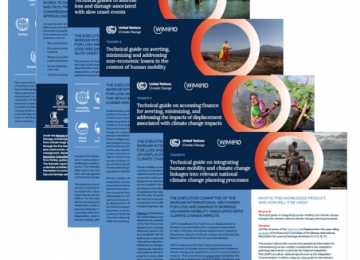
Technical guide on averting, minimizing and addressing non-economic losses in the context of human mobility. Forthcoming under NELs PoA Activity 7 and TFD PoA Activity 4. Teaser
|
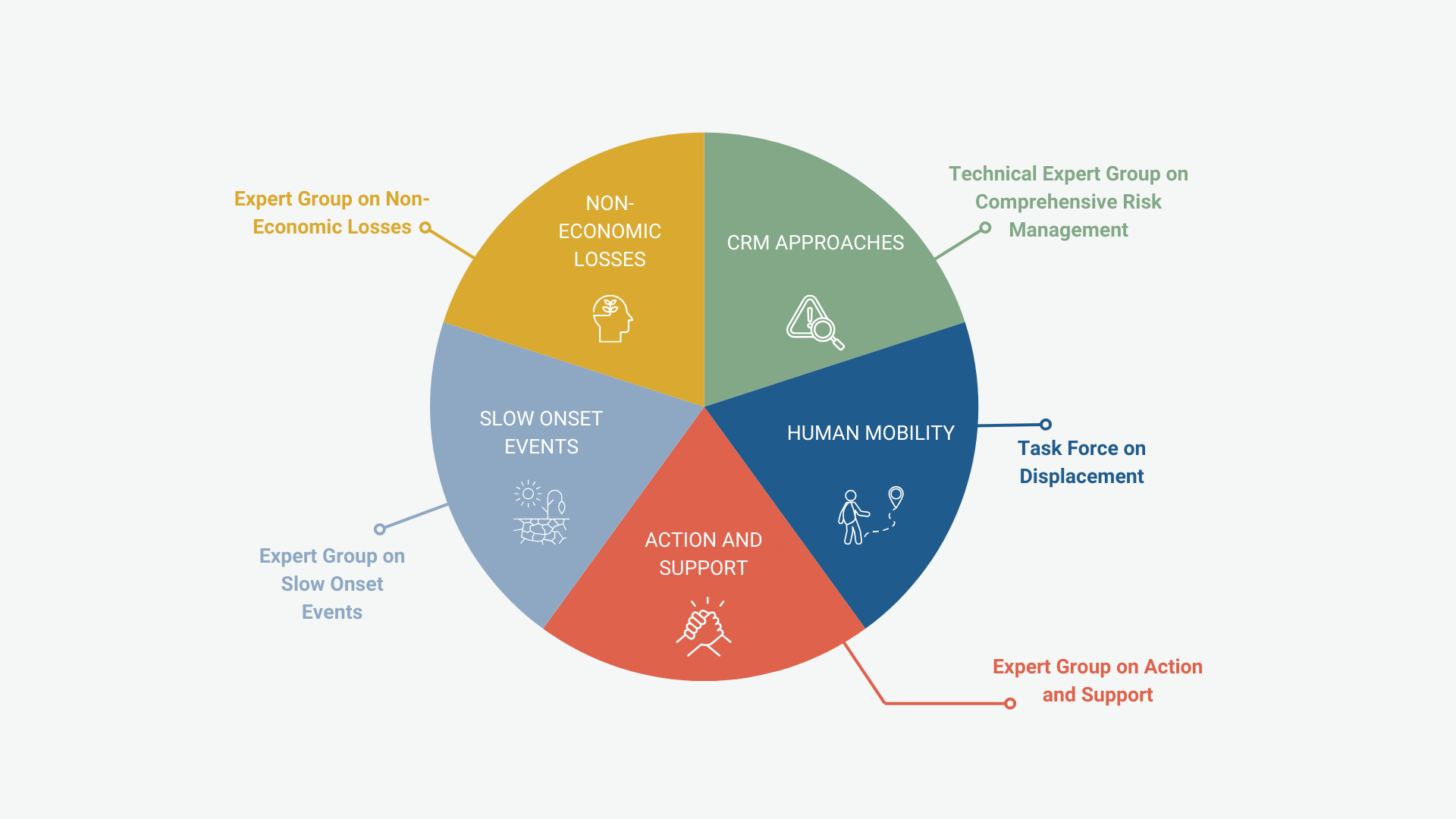
Non-economic losses and Human mobility |
| |
Technical guides on glacial retreat and desertification. Forthcoming under SOEs PoA Activity 3 and 4. Teaser
|
Slow onset events |
| 2026 |
Technical guide on accessing financial resources aiming to advert, minimize and address the impacts of displacement associated with the adverse effects of climate change
|
Human mobility
|
|
2025
|
Compendium on comprehensive risk management approaches. vol 2 |
Comprehensive risk management |
| 2025 |
Technical guide on sea level rise
|
Slow onset events |
|
2024
|
Technical paper on non-economic losses: featuring loss of territory and habitability, ecosystem services and biodiversity, and cultural heritage
|
Non-economic losses
|
|
2024
|
Technical guide on integrating human mobility and climate change linkages into relevant national climate change planning processes (Versión en español >>> and Русская версия >>>)
|
Human mobility
|
|
2024
|
Case studies of the projects funded by the Green Climate Fund in relation to the strategic workstreams of the Warsaw International Mechanism for loss and damage
|
Action and support
|
|
2021
|
Booklet: Face to Face with the Warsaw International Mechanism
|
|
|
2020
|
Policy brief on technologies for averting, minimizing and addressing loss and damage in coastal zones
|
Comprehensive risk management
|
|
2019
|
Updated Compendium on Comprehensive Risk Management Approaches
|
Comprehensive risk management
|
|
2019
|
Synopsis of the updated Compendium on Comprehensive Risk Management Approaches
|
Comprehensive risk management
|
|
2019
|
Brochure of the Task Force on Displacement
|
Human mobility
|
|
2018
|
Report of the Task Force on Displacement
|
Human mobility
|
|
2018
|
Mapping Human Mobility and Climate Change in Relevant National Policies and Institutional Frameworks (synopsis)
|
Human mobility
|
|
2019
|
Technical paper on the sources of and modalities for accessing financial support for addressing loss and damage |
|
|
2018
|
Synthesizing the State of Knowledge to Better Understand Displacement related to Slow Onset Events (synopsis)
|
Human mobility
|
|
2018
|
Mapping Workplans of Bodies/Work Programmes under the UNFCCC on Displacement (synopsis)
|
Human mobility
|
|
2018
|
Mapping Human Mobility (Migration, Displacement and Planned Relocation) and Climate Change in International Processes, Policies and Legal Frameworks (synopsis)
|
Human mobility
|
|
2018
|
United Nations System’s Mandates with respect to Averting, Minimizing and Addressing Displacement related to Climate Change: Considerations for the Future (synopsis)
|
Human mobility
|
|
2018
|
Mapping of Existing International/Regional Guidance/Tools on Averting, Minimizing and Addressing Displacement and Durable Solutions (synopsis)
|
Human mobility
|
|
2018
|
Systematic Data Collection and Monitoring of Displacement and its Impacts at Local, National, Regional and International Level (synopsis)
|
Human mobility
|
|
2018
|
Scope of work undertaken on slow onset events (SOEs) as reported by partners in the SOEs database
|
Slow onset events
|
|
2017
|
Technical paper - Opportunities and options for integrating climate change adaptation with the Sustainable Development Goals and the Sendai Framework for Disaster Risk Reduction 2015–2030 |
|
|
2017
|
Breaking new ground: risk financing for slow onset events
|
Slow onset events
|
|
2017
|
Compendium on Comprehensive Risk Management Approaches
|
Comprehensive risk management
|
|
2016
|
Information paper on best practices, challenges and lessons learned from existing financial instruments at all levels that address the risk of loss and damage associated with the adverse effects of climate change
|
Action and support
|
|
2016
|
Shining the light on non-economic losses: challenges, risks and lessons learned for addressing them
|
Non-economic losses
|
|
2015
|
Stocktaking of organizations working on slow onset events and the scope of their current efforts
|
Slow onset events
|
| 2013 |
Warsaw International Mechanism for Loss and Damage and its Executive Committee established
|
|
| |
Relevant documents developed in the context of the SBI work programme on loss and damage
|
|
| 2013 |
Technical paper on gaps in existing institutional arrangements within and outside of the Convention to address loss and damage, including those related to slow onset events
|
|
| 2013 |
Report on the expert meeting to consider future needs, including capacity needs associated with possible approaches to address slow onset events.
|
Slow onset events |
| 2013 |
Technical paper on non-economic losses in the context of the work programme on loss and damage
|
Non-economic losses |
| 2012 |
Technical paper on slow onset events
|
Slow onset events |
| 2012 |
Report on the regional expert meetings on a range of approaches to address loss and damage associated with the adverse effects of climate change, including impacts related to extreme weather events and slow onset events.
|
|
| 2012 |
A literature review on the topics in the context of thematic area 2 of the work programme on loss and damage: a range of approaches to address loss and damage associated with the adverse effects of climate change.
|
|
| 2012 |
Report on the expert meeting on assessing the risk of loss and damage associated with the adverse effects of climate change. Note by the secretariat.
|
|
| 2012 |
Technical paper on current knowledge on relevant methodologies and data requirements as well as lessons learned and gaps identified at different levels, in assessing the risk of loss and damage associated with the adverse effects of climate change.
|
|
| 2011 |
Synthesis report on views and information on the thematic areas in the implementation of the work programme.
|
|
| 2011 |
Synthesis report on views and information on the elements to be included in the work programme on loss and damage.
|
|