Credit: UN Climate Change
Ten years ago, the Paris Agreement was adopted at COP 21. A decade on, it’s clear that this global framework has underpinned a decade of real-world progress, even as much more is still needed.
Without the Paris Agreement, humanity would be headed for unsurvivable temperature rises, of up to five degrees Celsius. But through climate cooperation and national efforts and plans, projected temperatures have now been brought down to around half of that. This still remains far short of what is scientifically required to avert the worst climate impacts, but it also shows just how far humanity has come. Meanwhile in the real economy, renewable energy overtook coal last year as the world’s top energy source, and investment in renewables was double that of fossil fuels.
Similarly, our report on National Adaptation Plans shows that governments are building the foundations for more climate-resilient economies and societies, while Biennial Transparency Reports show Parties are increasingly putting the Paris Agreement into practice.
It is also clear that significantly more support is needed on multiple fronts, particularly by vulnerable developing countries, to ensure all are able to strengthen climate policies and boost implementation. This is vital to protecting all peoples and economies and ensuring all nations can share fully in the vast benefits of bolder climate actions.
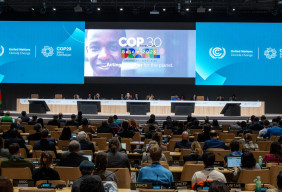
The fourth quarter (Q4) of course delivered COP 30 in Belém, where despite strong headwinds, all Parties unanimously agreed that the global transition is now “irreversible” and that the “Paris Agreement is working” and resolved to make it go further and faster.
We of course fully acknowledge that as at every COP, some Parties wanted the COP 30 negotiated outcomes to go further, and we understand the frustrations involved in reaching unanimous word-by-word agreement among nearly 200 countries. At the same time, it is important not to lose sight of the significant agreements and progress that was achieved at COP 30, building on the major steps forward agreed at all recent COPs.
Under the Presidency of Brazil, COP 30 delivered a breakthrough new Just Transition agreement. For the first time, Parties collectively affirmed that achieving the goals of the Paris Agreement is inseparable from the social realities of the transition itself. The decision makes clear that climate action must be rights-based, inclusive and equitable, tailored to national circumstances, and, above all, people-centered.
COP 30 also delivered an agreement to triple adaptation finance to ensure more countries have the support they need, as well as major progress across the Climate Action Agenda, across the six axes laid out by the COP 30 Presidency.
This progress included a 1 trillion USD agreement on clean grids and infrastructure, and hundreds of millions of hectares of forest, land and oceans protected or restored, to name just a few major steps forward delivered at COP 30 under this vital part of the Paris Agreement. In these and other ways, COP 30 marked the beginning of a new era of accelerating implementation, in which we must keep striving to bring the multilateral process closer to real economies, for the benefit of people, communities and economies everywhere.
COP 30 also capped another productive year, as is apparent in the below quarterly report of key activities in Q4.
Looking ahead, through the many opportunities and challenges 2026 will bring, the secretariat will keep working tirelessly to deliver fully and efficiently on all ou mandates, in support of Parties and all other stakeholders. Across all functions of the secretariat, my colleagues and I look forward to working with you to drive forward more progress, for people, prosperity and planet.
Simon Stiell
Executive Secretary, UN Climate Change