UN Climate Change Quarterly Update: Q2 2025
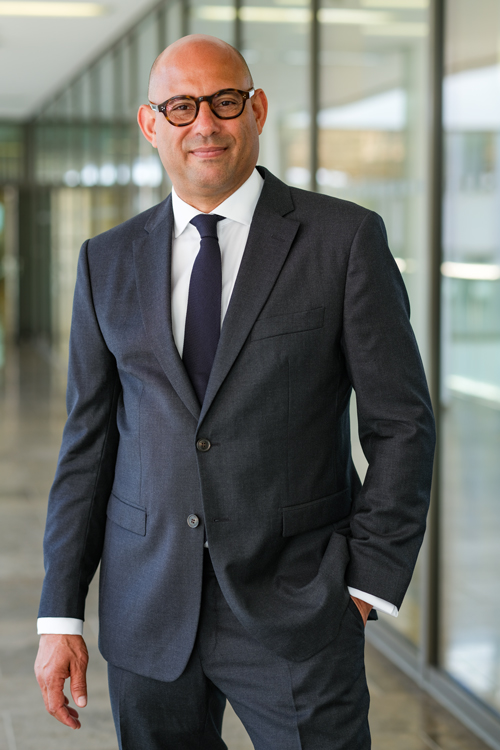
Simon Stiell portrait
Credit: UN Climate Change

Although the June Climate Meetings in Bonn were an important moment in our process, we still have so much more to do to keep 1.5°C alive before we meet again in Belém this November. We must find a way to get to the hard decisions sooner. Negotiators will need to sit together between sessions to find common ground and advance solutions. We must go further, faster, and fairer.

To that end, Parties will arrive in Belém already armed with several vital reports, including our own synthesis reports on Nationally Determined Contributions and Biennial Transparency Reports, as well as a progress report on National Adaptation Plans. These will sit alongside other important contributions such as the UNEP emissions gap and adaptation gap reports.

Together, these five reports will paint a picture that not only acknowledges the real progress made, but more importantly shows what more needs to be done. How Parties respond to these reports, and how they demonstrate a collective commitment to do more in each year, will be one of the key measures of success for COP 30.

I also welcome Brazil’s fourth official letter, which underscores the urgent need to accelerate implementation and deliver real-world benefits for communities everywhere. Building on this momentum, the successful launch of the two Climate Weeks this year – the first in Panama in Q2 and the second in Ethiopia in Q3 – serves as an important bridge for negotiators to advance progress towards COP 30 outcomes and to showcase the tangible benefits of climate action. Now more than ever, we need to show the world that climate cooperation can deliver.

Simon Stiell
Executive Secretary, UN Climate Change

A blue sea star (Linckia laevigata) photographed on a largely dead reef on the Coral Coast on Fiji's largest island, Viti Levu.

Adaptation came to the fore at the June Climate Meetings (SB 62), with conclusions on the “indicators” for the Global Goal on Adaptation. Technical experts prepared a consolidated list of 490 indicator options to measure progress towards targets in the UAE Framework for Global Climate Resilience. SB 62 resulted in guidance to refine and reduce this list to 100 indicators by August.

In Q3, experts will verify that the indicators align with the guidance, conduct peer reviews, and perform quality control checks. They are expected to submit a refined list of potential indicators and a technical report in August 2025, before Parties aim to agree on a final list at COP 30.

The Least Developed Countries Expert Group will launch updated technical guidelines for national adaptation plans (NAPs) in August 2025. These include guidance on NAP implementation, strategies to achieve adaptation targets, and resource mobilization approaches. Regional workshops are also being organized to strengthen countries’ capacity to implement their NAPs.

So far, 64 developing countries and 10 developed countries have submitted their NAPs. A task force is assisting least developed countries and small island developing States to meet the year-end deadline to formulate their NAPs. Work on the NAP progress report is underway and will be launched in October 2025.

A young woman inspects solar panels.

The third dialogue under the Just Transition Work Programme (JTWP) – which took place in May during the first Climate Week of 2025 in Panama – focused on approaches to enhancing adaptation and climate resilience in the context of just transitions.

The dialogue had broad in-person and virtual participation from Parties and Non-Party Stakeholders, with around 200 participants in total. Positive feedback was received on both substance and format, including appreciation for interactive elements, rich peer-to-peer exchanges, and opportunities for cross-stakeholder engagement. The informal summary report on the third dialogue from the Chairs of the Subsidiary Bodies will soon be available here.

On negotiations under the JTWP, good progress was made at SB 62. Parties advanced work through draft conclusions and an informal note. The informal note contains substantive draft text that reflects a much richer picture than previous texts on how just transitions can be an enabler for more ambitious, accelerated climate action while leaving no one behind. Finding a pathway over the coming months to overcome remaining divergences will be key to Parties landing an outcome on the JTWP in Belém.

Women delegates gather at a meeting

Last November, COP 29 decided to extend the enhanced Lima work programme on gender (LWPG) for 10 years and initiate the development of a new gender action plan (GAP) at SB 62.

An interactive and inclusive three-day technical workshop to facilitate the design of GAP activities was held during SB 62. Subsequent negotiations resulted in Parties agreeing to continue considering the matter at SB 63, based on a co-facilitators note, which contains a table of draft gender action plan activities.

In September, Ethiopia will host an additional technical workshop to facilitate the design of GAP activities. Parties are expected to adopt a new GAP at COP 30 in Belém. 

RCC events on 'Transparency & Measurement, reporting, and verification (MRV)'

Transparency remains a bright spot, with 103 Parties submitting their biennial transparency reports (BTRs) by the end of Q2, setting the stage for the first BTR synthesis report in October. Over half of these BTRs are from developing nations, including nine Small Island Developing States and seven Least Developed Countries.

In the second quarter of 2025, 20 technical expert reviews of BTRs submitted by the end of last year were conducted.

SB 62 marked a milestone for global transparency as Parties convened the Facilitative Multilateral Consideration of Progress (FMCP) – a platform for countries to share progress, discuss challenges and lessons learned in implementing their climate commitments. An informal dialogue allowed practitioners and policymakers to delve into national experiences in climate policy and BTR preparation.

Also at SB 62, the #Together4Transparency initiative continued to strengthen reporting capacity, hosting six Enhanced Transparency Framework (ETF) Tools Clinics for more than 20 Parties. Several Parties submitted their reporting tables soon after – highlighting the clinics’ practical value and tailored guidance.

To further support countries in meeting ETF requirements, the secretariat co-organized seven regional workshops and developed ETF toolkits for developing countries. It also held two greenhouse gas workshops and four energy statistics workshops.

Forests

The secretariat took part in the 20th session of the United Nations Forum on Forests to spotlight the strong links between the UN Global Forest Goals and forest-related climate action ahead of COP 30.

UN Climate Change, which currently serves as Vice Chair of the Collaborative Partnership on Forests (CPF), took part in discussions on how the 16 member organizations can work together this year to increase international cooperation and national action to reduce deforestation, prevent forest degradation, promote sustainable livelihoods and reduce poverty for all forest-dependent peoples.

Work progressed to ensure that the CPF joint statement reflects the relevance of the Paris Agreement to forests. The statement highlighted the synergies between climate change mitigation and adaptation in the forest sector and the Global Forest Goals of the UN Forum on Forests. The statement also emphasized the practical value of integrating forests into NDCs and leveraging Article 5 of the Paris Agreement – which encourages Parties to take action to reduce emissions from deforestation and forest degradation – to support implementation efforts.

Windmill

Accelerating work on the next round of nationally determined contributions (NDCs) due this year remains a top priority for the secretariat.

So far, 26 countries, have submitted their new NDCs. Another 84 are expected to submit by the September deadline, setting the tone for COP 30, while 71 are expected to submit after the September deadline.

At the 4th Interagency Meeting on NDCs 3.0, 45 partner organizations discussed how to improve NDC implementation support, emphasizing better coordination across synergistic areas, joint pipeline development, project preparation facilities, and stronger information-sharing platforms.

To accelerate action this decade, the secretariat organized the fifth global dialogue and investment-focused event of the Sharm el-Sheikh Mitigation Ambition and Implementation Work Programme (MWP) during Climate Week in Panama, highlighting forest-sector solutions. On the MWP negotiations front, Parties made progress at SB 62, forwarding an informal note prepared by the co-facilitators to SB 63 in Belém for further negotiation.

The Regional Collaboration Centres (RCC) supported the MWP and NDC 3.0 efforts through 26 capacity-building activities, including 10 webinars and 16 in-person events on NDC implementation, greenhouse gas projections, climate finance, and stakeholder engagement. They also supported the delivery of NDC Clinic sessions and dialogues during Climate Week, alongside other events to provide direct support to countries. 

The Body mandated by the Paris Agreement to set up a new UN carbon market has agreed mandatory environmental and human rights safeguards early into a five-day meeting in Baku.

A range of technical, outreach, and capacity-building activities kept the full operationalization of Article 6 on track in Q2.

During Climate Week in Panama, the inaugural Global Designated National Authority (DNA) Forum for Article 6.4 – the Paris Agreement Crediting Mechanism (PACM) – gathered more than 130 participants to deepen their understanding of DNA roles, and the opportunities and benefits of the PACM over other schemes. The Article 6/Carbon Markets Lab fostered cross-stakeholder dialogue to build a pipeline of bankable PACM activities.

At SB 62, the first-ever Ambition Dialogue focused on ambition and cooperation, allowing the Article 6 community to share experiences, challenges, and capacity-building needs. An Article 6.2 information session provided updates on infrastructure, the international registry, reporting, and review. Side events and a full-day PACM training built confidence in PACM participation.

Technical expert reviewers assessed Article 6.2 cooperation countries’ initial reports, publishing review reports to enhance transparency on bilateral cooperation among Parties using Article 6.

At its 16th meeting, the PACM Supervisory Body adopted crucial new standards to guide how emission-reducing projects measure their impact, specifically on setting baselines and addressing leakage for emission-reducing projects.

Q2 also saw three regional workshops and a Small Island Developing States Dialogue supported by RCCs, alongside 16 capacity-building events, including six direct country support activities. Q3 will continue to build momentum with a PACM Master Class, webinar series, and new knowledge products.

Finance_Hero_image

Two mandated events took place at SB 62 to move progress on climate finance forward. The first workshop under the Sharm el-Sheikh Dialogue gave delegates an opportunity to enhance their understanding of Article 2.1(c) of the Paris Agreement and its relationship with climate finance provisions. Article 2.1(c) is one of the three main goals of the Paris Agreement and focuses on “making finance flows consistent” with low-emission and climate-resilient development pathways.

The third in-session workshop on arrangements related to Article 9.5 of the Paris Agreement provided space for delegates to discuss information submitted in Parties’ third “biennial communications,” which include indicative quantitative and qualitative information on climate finance.

In addition, two consultation events on the Baku to Belém Roadmap to $1.3 trillion took place at SB 62, coordinated by the COP 29 and COP 30 Presidencies – Azerbaijan and Brazil, respectively – who will work together to produce a final roadmap document before COP 30.

At SB 62, Parties constructively engaged on Adaptation Fund matters, including Board membership, arrangements for the Fund to exclusively serve the Paris Agreement, and its fifth review. These discussions will continue at SBI 63 based on the informal note by co-facilitators and a Conference Room Paper submitted by the G77 and China.

RCC AP hosts a webinar on the Meaningful Youth Engagement in Asia

During SB 62, the secretariat facilitated several events for observer organizations, including townhalls with the Executive Secretary and COP 30 leadership, as well as dialogues with the Chairs of the SBs and the Climate High-Level Champions (CHLCs).

These meetings allowed observers to share expectations and concerns ahead of COP 30, and to contribute to discussions on negotiations and upcoming priorities.

Supported by the secretariat, observers and Parties organized 123 side events at SB 62, and observers held 25 advocacy actions. To help build capacity, the secretariat published the Observer Handbook for SB 62, Observers’ Guide to Advocacy Actions, and the Side Event Organizers Manual.

The secretariat assessed 354 applications for COP 30 observer status, finding 142 organizations eligible, which the COP Bureau approved for provisional admittance.

With secretariat support, the CHLCs focused on connecting with Parties, the Marrakech Partnership, and other non-Party stakeholders at SB 62 to gather input for their 2025 Work Programme, COP 30 Global Climate Action Agenda (GCAA), and the new five-year plan.

A public event and consultation outlined the vision for a unified GCAA structure around six axes aligned with the first Global Stocktake outcomes. The CHLCs published their 2025 Work Programme   and launched consultations for Parties and non-Party stakeholders on the next five years of the GCAA.

card image

Parties reached agreement on a 10% net increase in the 2026-2027 core budget of the secretariat, following extensive consultations.

The successful budget process distinguishes from previous processes in three key aspects: 1) the introduction of a Budget Mandate Task Force, which allowed for substantial efficiencies; 2) a more transparent process, with early consultations beginning immediately after COP 29, followed by multiple informal consultations and bilateral meetings with negotiating groups and Parties; and 3) the budget preparation was entirely based on guidance from Parties. This new approach was also presented to the Board of Auditors, who reviewed and welcomed it as a best practice.

COP 29 Opening plenary

SB 62 marked a historic milestone as the most-attended intersessional session in UNFCCC history, with 9,500 registered delegates — including 7,019 attending in person in Bonn. Despite the unprecedented scale, the secretariat ensured efficient operations, delivering effective registration, efficient logistics, and responsive support that enabled Parties to fully engage.

In parallel, the secretariat continued to engage at the highest level with the Government of Brazil to prepare for COP 30. The incoming Presidency heard concerns – particularly around accommodation in Belém – directly from Parties, including in the Bureau and the logistical briefing held during SB 62. The Host Country Agreement and accompanying annexes for COP 30 were signed during the SB sessions.

Registration for COP 30 has now opened and is accessible via the Online Registration System.

Climate Week 2025 in Panama

Preparations are underway for the second Climate Week this year – serving as an important bridge between the formal climate negotiation process and the real economy, and bringing negotiators and non-Party stakeholders together to translate policy commitments into practical implementation pathways.

The second Climate Week will be held in Addis Ababa, Ethiopia, from 1-6 September 2025. The strategic timing, immediately preceding the Africa Climate Summit (8–10 September), creates a unique opportunity to align regional climate action with global priorities and build momentum toward COP30. NDCs, adaptation and carbon markets will be the primary focus of the second Climate Week – with finance as the cross-cutting theme across all events.

Information on each mandated event, registration information, information for participants and details of activities can be found here. A preliminary agenda of the second Climate Week is available here.

A person uses a smartphone

The updates above are just a sample of all the work taking place in the intergovernmental process on climate change in Q2. We will continue to update Parties on the vital work and progress in many other areas in future Quarterly Updates, and as always, we value your feedback.

LinkedIn

UN Climate Change

Executive Secretary Simon Stiell

X

UN Climate Change: English, Russian, Spanish

Executive Secretary Simon Stiell

Instagram

UN Climate Change: English, Russian, Spanish

UN Climate Change Website

EnglishRussian, Spanish

Other channels

UN Climate Change TikTok

UN Climate Change YouTube

Content