In January 2022, two student researchers of the NWP partner
Jawaharlal Nehru University (Centre for the study of regional development) in New Delhi commenced a research project, aiming to address a priority knowledge gap on understanding the impacts of climate change on water resources for the
Hindu Kush Himalayan (HKH) region.
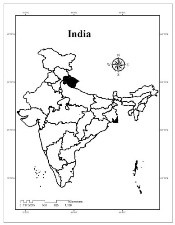
Extreme climatological events manifest in many forms, including droughts and floods, which compromise water quality and quantity. However, very few studies focus exclusively on urban and mountainous ecosystems. This study focusses on urban environments in the mountain ecosystem, featuring a case study of the Chamoli district of Uttarakhand State of India. The study is expected to yield actionable knowledge relevant for target knowledge users such as watershed, settlement and energy planners as well as community leaders and civil society project managers.
The UNFCCC secretariat, the UNFCCC/IGES Regional Collaboration Center for Asia and the Pacific (RCC Bangkok), NWP partners Global Water Partnership, South Asia and the World Meteorological Organisation are providing technical inputs to the student researchers.
METHODOLOGIES
The extreme events are identified by analysing rainfall amounts, frequency, and estimation of their return cycle (the likelihood of the event occurring to coincide with or exceed in a given year). High resolution meteorological data for temperature and rainfall are being obtained from NASA/POWER CERES/MERRA2 to track flood and drought occurrences. Trend analyses and seasonal differentiations are tracked to highlight the characteristics of floods and droughts. By that, minimum and maximum values of monthly, seasonal, and yearly temperature and precipitation are analysed to understand the climatic variability, allowing for the development of indicators to identify extreme, climate change induced events. Additionally, the socio-economic contexts are being evaluated to determine the inherent vulnerability of the population in the region, based on the assessment of key infrastructure, such as housing, water, health, utilities and insurance.
Key outputs
By May 2022, the project will yield:
- A set of climate sensitive indicators readily usable by planners and administrators
- A policy framework and action plan to combat adverse impact of droughts and floods on water resources in mountain ecosystems
- A set of recommendations to address data and knowledge gaps to assess urban floods and droughts in HKH region
Read more about the UN Climate Change Universities Partnership Programme
<< BACK TO NEWSLIST