The following video provides a brief overview of observer organizations in the UNFCCC:
Observers contribute substantively to the UNFCCC process through their technical expertise and experience as well as diverse perspectives critical for implementation. The secretariat's role is to facilitate channels through which these contributions can inform Party deliberations, while respecting the intergovernmental nature of decision-making under the Convention, the Kyoto Protocol and the Paris Agreement.
There are three categories of participants at meetings and conferences in the UNFCCC process: representatives of Parties to the Convention and Observer States, members of the press and media, and representatives of observer organizations.
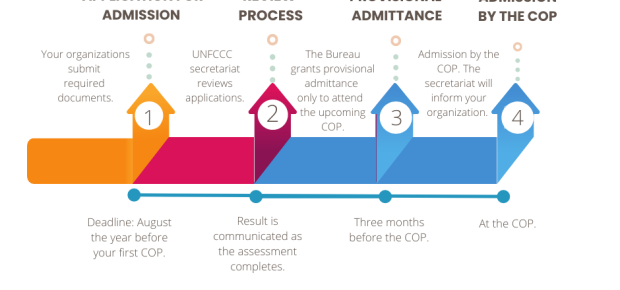
Observer organizations are further categorized into three types: the United Nations System and its Specialized Agencies, intergovernmental organizations (IGOs), and non-governmental organizations (NGOs). IGOs and NGOs can register delegates once they have received observer status. For additional details on the procedure to obtain observer status, please refer to How to obtain observer status.
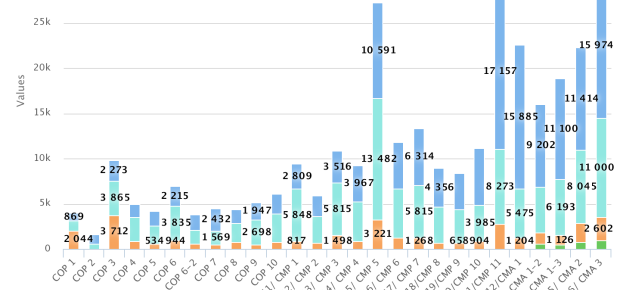
As of COP 30 in 2025, 4,081 (3,907 NGOs and 174 IGOs) are admitted as observers. The NGOs represent a broad spectrum of interests, and include representatives from business and industry, environmental groups, farming and agriculture, indigenous populations, local governments and municipal authorities, research and academic institutes, labor unions, women and gender and youth groups.