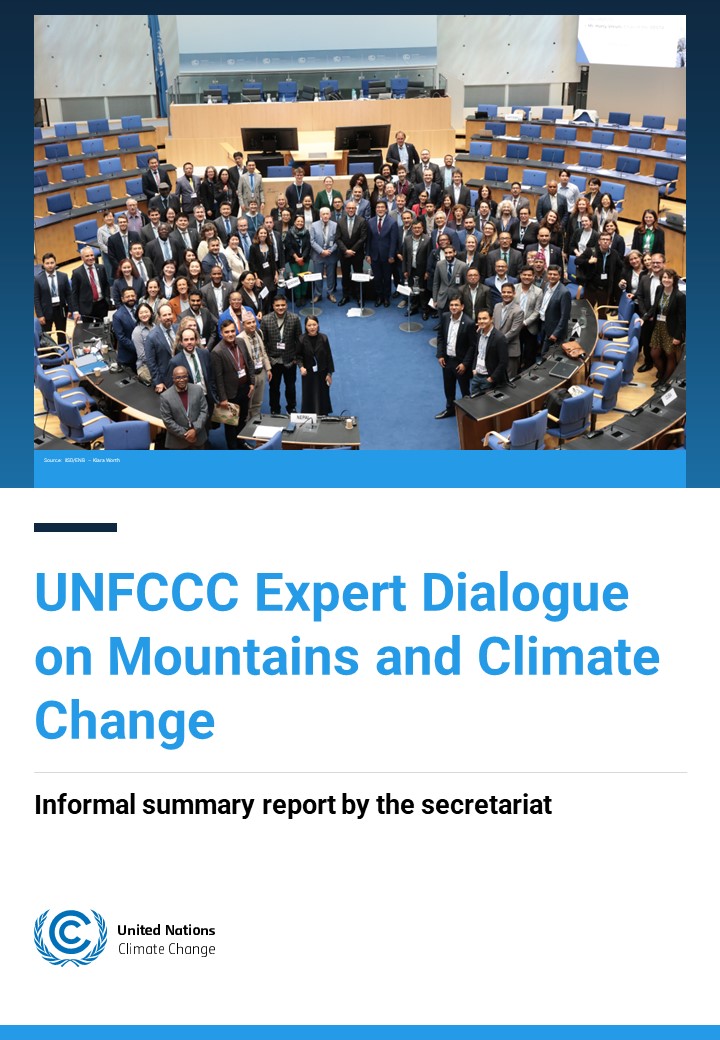
Mountains and mountain ecosystems play a crucial role in supporting diverse socioecological systems and bolstering global climate resilience. Scientists and policymakers increasingly recognize this crucial role as a thematic priority in climate adaptation. In line with this recognition, the UNFCCC Expert Dialogue on Mountains and Climate Change was convened by the Chair of the Subsidiary Body for Scientific and Technological Advice (SBSTA) during the sixtieth session earlier this year in June, to showcase solutions and discuss ways to accelerate climate action at all scale and at all levels in order to contribute to the resilience of mountain ecosystems. The dialogue brought together more than 100 experts and stakeholders.
The informal summary report provides key messages, detailing the outcomes that emerged from the discussions. Some key messages include:
- Mountains and mountain ecosystems are critical for both highland and lowland socioecological systems and for strengthening climate resilience on a global scale. However, their ability to cope with climate change is increasingly compromised, making it important to prioritize their protection and restoration in order to safeguard our collective future.
- The scientific evidence of climate change impacts on mountains is compelling. Scientific knowledge, alongside traditional and local knowledge, is crucial for making inclusive and informed decisions as well as building resilience of mountain and mountain ecosystems.
- As mountain ecosystems are complex, fragmented and globally distributed, the solutions to address climate risks must be context-specific and tailored, and allocated resources must match the scale of action required.
- As highlighted in the Sixth Assessment Report of the Intergovernmental Panel on Climate Change (IPCC), the current pace, depth and scope of climate adaptation are insufficient to address the escalating risks in mountain regions, especially as global temperatures continue to rise.
- Efforts must be intensified to build the resilience of mountain ecosystems in a coordinated and coherent manner.
- At the policy level, governments must prioritize the unique needs of mountain communities while recognizing the diverse challenges and opportunities for adaptation across regions. Unified and ambitious action plans for mountainous countries, including national adaptation plans (NAPs) and new nationally determined contributions (NDCs), are crucial for highlighting the inclusion of distinct plans related to mountain ecosystems, including risks, vulnerabilities, and loss and damage, while safeguarding the distinct environments and livelihoods that depend on mountain ecosystems.
The full report can be read here: https://unfccc.int/documents/642760.
Information on the expert dialogue on mountains and climate change is here: https://unfccc.int/event/expert-dialogue-on-mountains-and-climate-change.
<< BACK TO NEWSLIST