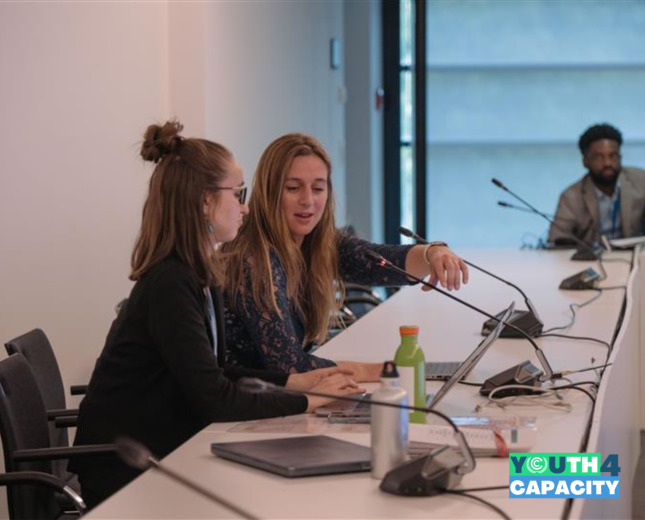
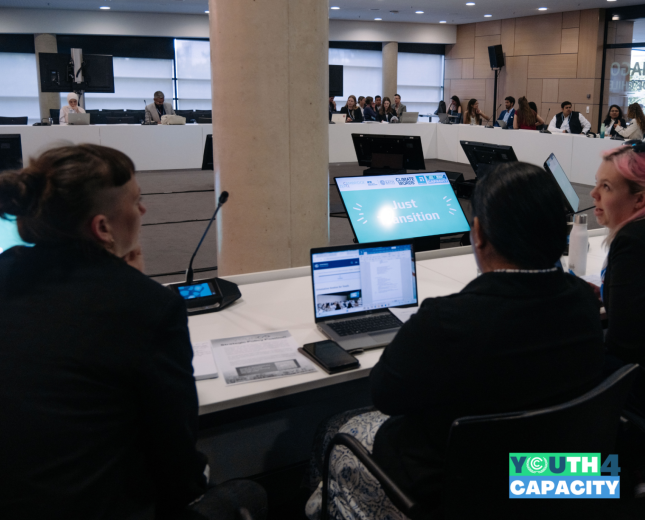
This session aimed to help youth demystify the technical language used with the UNFCCC to enable more meaningful youth engagement. The workshop featured interactive breakout discussions where participants dissected key terms including "loss and damage," "mitigation," "just transition," and "intergenerational climate justice." Youth leaders ended the session with expanded vocabularies and increased confidence in bridging language barriers, thus preparing them to participate more effectively and inclusively in climate processes.
Credit: Clima talk
Credit: Cambridge Zero
Credit: Climate Words sm
Credit: University of Bath
Background
Cambridge Zero and the University of Bath IPR have been working together to develop projects which empower and platform young people’s voices in international climate negotiations since collaborating in the production of ActNowFilm at COP26. The most recent iteration of ActNowFilm featured conversations between youth climate leaders and leading international climate experts and was shown at COP28. The production of these films has led to the development of a strand of work which focuses on developing young people’s climate policy skills globally.
The Institute for Policy Research is a leading public policy research at the University of Bath. The primary aim of the institute is to further the public good through research into issues of significant relevance to policy debate and decision-making, manage networks with the worlds of policy and practice, and increase public understanding of policy research through public events and publications. It delivers activities for policymakers, researchers and practitioners to enable dual learning and original contributions to both research and practice.
As understanding the various terminology associated with the UNFCCC process is a key foundational skill for effective youth engagement in climate policy, this session responded to the need for enhancing capacities in this area. Following the successful delivery of this session focused on decoding UNFCCC language by Cambridge Zero and the University of Bath IPR in collaboration with two youth-led organisations with Climate Words and ClimaTalk and, at SB60 and COP29, this interactive session at SB62 engaged a wide cross-section of youth delegates particularly those new to the process.
Objectives
Participants learned to
Illuminate how language matters to youth involved in the COP space. We all take different meanings and interpretations of words that have great importance within COP spaces.
Support youth to gain a greater understanding of UNFCCC language and why technical language and words influence the outcome and nature of negotiations and COP texts.
Structure
Time
Session
14:05 –14:10
Welcome and Introductions
14:10 – 14:20
Icebreaker – ClimateWords on Menti
14:20 – 14:30
Discussion breaking down specific words that relate to likely central themes in the negotiations
14:30 – 14:35
Scene setting presentation
14:35 – 14:50
Breaking down specific phrases that have been the subject of debate in past agreements
14:50 – 14:55
Participants to share what “intergenerational climate justice” or “loss and damage” is in their own language. How did they translate?
14:55 – 15:00
Closing remarks
Speakers
Amy Munro-Faure - Head of Education and Student Engagement, Cambridge Zero, University of Cambridge
Emma Heiling - CE, ClimaTalk
Pamela Elizarrarás Acitores - Co-founder, Climate Words