BambooBoost Initiative

Empowering climate ambition through bamboo innovation, ecosystem restoration, and sustainable development.

Background: A Strategic Partnership for Scaled Impact

BambooBoost, co-launched by the United Nations Framework Convention on Climate Change (UNFCCC) and the International Bamboo and Rattan Organisation (INBAR), leverages bamboo’s unique potential as a nature-based solution to accelerate climate action, enhance biodiversity conservation, and strengthen ecosystem and community resilience.

BambooBoost is inspired by the foresight work of Resilience Frontiers and the UNFCCC Global Innovation Hub (UGIH), reflecting the urgency to go beyond incremental solutions by fostering system-level transformation through nature-positive innovation. The initiative is anchored in the global effort to meet the 1.5°C temperature goal and achieve the Global Goal on Adaptation (GGA).

Bamboo’s fast growth, high carbon sequestration capacity, versatility, and capacity to support circular economies make it a critical, promising and scalable solution, especially in climate-vulnerable countries across the Global South.

This partnership seeks to equip countries with tools, knowledge, and networks to explore and scale sustainable bamboo-based approaches into national climate strategies, with a focus on Nationally Determined Contributions (NDCs) and National Adaptation Plans (NAPs).

Key facts and strategic insights

Question

Answer

Why does bamboo have high potential for climate action?

Bamboo is one of the fastest-growing woody plants, thrives on degraded land, sequesters carbon quickly—both in biomass and soil—and produces long-lived products that act as carbon stores.

Opportunities for restoring degraded land

If applied to an additional ~70–174 million hectares of degraded forestlands, bamboo cultivation could sequester roughly 2 Gt CO₂ annually—equivalent to 7.7–19.6 Gt by 2050—while delivering significant net economic benefits.

How many bamboo species are there worldwide?

There are over 1,400 recognized bamboo species, spanning three clades (tropical woody, temperate woody, and herbaceous).

Is bamboo fast-growing and resilient?

Ye- some species grow nearly 1 m per day. Bamboo tolerates marginal soils, regenerates after harvest, and certain temperate species survive −29 °C, regrowing from rhizomes.

How many countries can restore extensive land using native bamboo sustainably?

Bamboo is native across ≈100+ countries in Asia, Africa, and the Americas; many of these have degraded land suitable for restoration. (Exact country count based on UNCOVERED data.)

How can bamboo move the ambition needle for NDCs and NAPs?

Bamboo delivers scalable NbS for mitigation, adaptation, ecosystem restoration, and livelihoods. It is rapidly deployable and applicable across policy instruments like NDCs and NAPs.

Can it substitute plastics?

Yes -bamboo can replace resource-heavy materials (e.g. plastics, hardwood) in items like utensils, flooring, and packaging, though processing and supply chain governance are key.

Can it support biodiversity?

Bamboo fosters protective habitat cover, stabilises soil, and enriches soil nutrients—beneficial for ecosystem biodiversity, especially in restoration sites.

Can it sequester carbon?

Yes, bamboo captures carbon rapidly in biomass and soil; long-lived bamboo products further lock away carbon.

Can it provide shelter solutions?

Bamboo’s tensile strength matches strong timbers and can substitute for steel or hardwood in structures, flooring, scaffolding, and housing.

Can it create jobs and prosperity?

Yes—Industries based on bamboo (textiles, construction, agroforestry) create rural employment. For instance, bamboo farming companies have generated hundreds of jobs in rural areas.

Can it be a source of energy?

Yes—bamboo can be converted to clean-burning charcoal or biofuel (e.g. ethanol); in some cases, one bamboo pole may fuel a household for a month.

Can it prevent flooding and soil erosion?

Absolutely—the rhizomatic root system stabilizes soil, reduces runoff, and bamboo’s canopy protects against erosion, thereby mitigating flood risks.

Other strategic facts

Bamboo cultivation supports gender equity and livelihoods, regenerates degraded lands, and can facilitate carbon credits in carbon farming projects.

Reference: International Bamboo and Rattan Organization (INBAR)

Objectives: a vision for bamboo action

BambooBoost aims to scale the climate-smart use of bamboo through a multi-dimensional, inclusive, and innovation-driven approach. The initiative seeks to:

  •  Unlock bamboo’s full potential for climate mitigation and adaptation within national planning instruments and aligns with Paris Agreement Articles 7 (adaptation), 10 (technology), and 11 (capacity building) delivering co-benefits across SDGs 1, 7, 12, 13, and 15.
  •  Promote bamboo-based alternatives to high-emission materials like plastic, cement, and steel
  • Support ecosystem restoration and biodiversity through bamboo agroforestry and land rehabilitation
  • Foster innovation and inclusive business models, especially for the benefit of rural communities, youth, and women
  • Enable sustainable livelihoods, including in mountainous, dryland, and degraded ecosystems
  • Equip decision-makers with tools and foresight to integrate bamboo into national climate and development planning
  • Create bridges between supply and demand by building sustainable markets and unlocking climate finance

BambooBoost is founded on the belief that collaboration across governments, communities, financiers, and innovators is essential to unlock bamboo’s contribution to a net-zero, climate-resilient future.

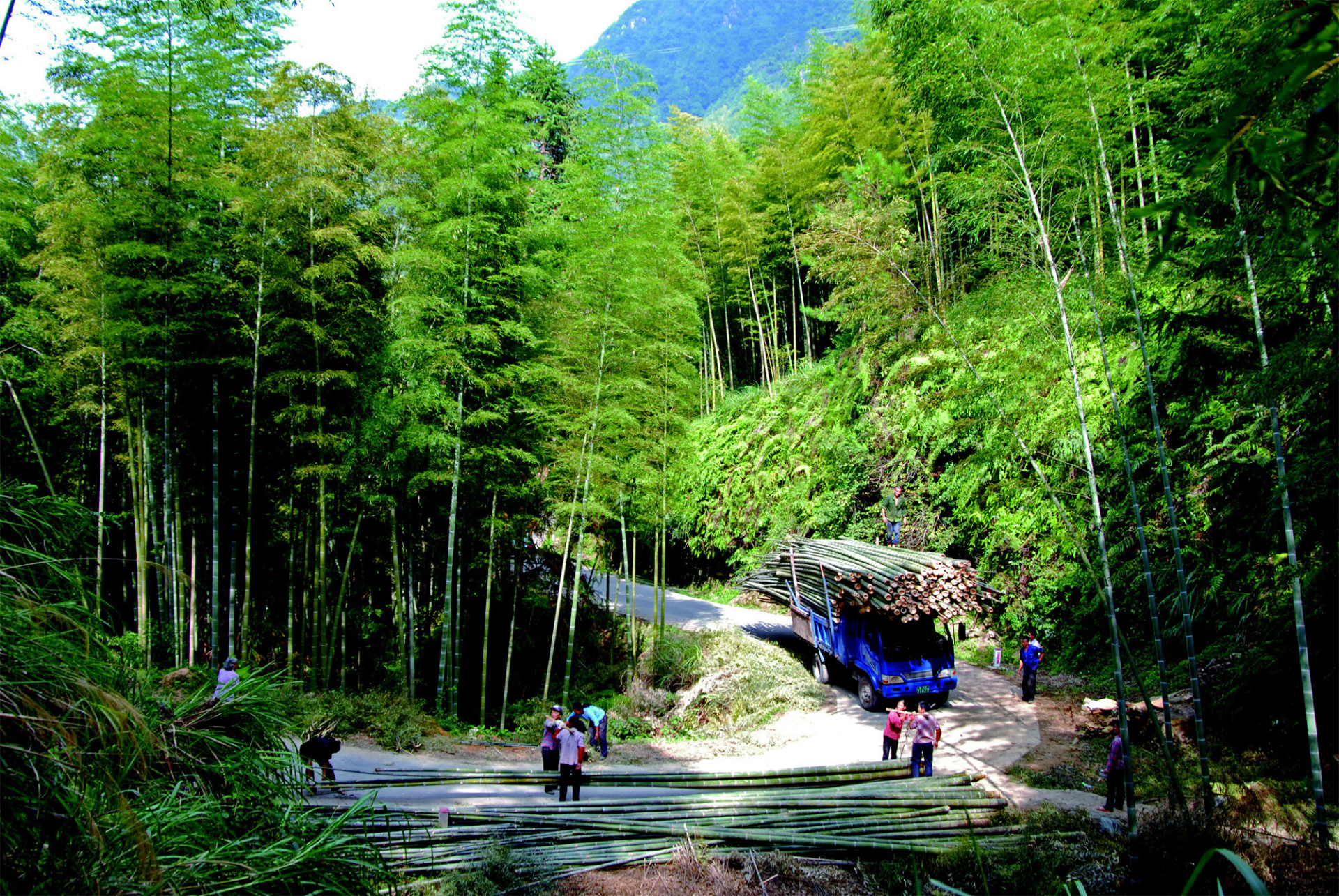
bamboo
Credit: INBAR

Milestones: Global recognition and mobilization

Official Launch at COP29 (November 2024): A ministerial dialogue showcasing high-level engagement from countries across Asia, Africa, and Latin America and the Caribbean in collaboration with such as the Inter-American Institute for Cooperation on Agriculture (IICA), the World Bank, FAO, IFAD, and others.
Contributing to a Side Event at SB62 in Bonn (June 2025): Focused on the role of bamboo in mountainous ecosystems, in collaboration with partners highlighting use cases in climate adaptation and biodiversity.
European Bamboo Expo – Dortmund, May 2025: BambooBoost showcased at the 3rd Edition of the European Bamboo Expo, connecting European innovation, industry, and climate policy to global bamboo solutions 
Knowledge Creation: A strategic study capturing case studies, good practices, lessons learned, and the role of bamboo in socio-economic development, gender empowerment, and ecosystem restoration.


Plans and opportunities for engagement: road to COP30 and beyond

BambooBoost is entering its implementation phase, building a global bamboo ecosystem that delivers high-impact solutions across adaptation, mitigation, and sustainable development.

Upcoming actions include:

Community of Good Practices

  • Compilation and promotion of country-led bamboo innovations across climate zones and sectors
  • Hosting regional dialogues and technical exchanges

Capacity Building and Training

  • Launching training modules and certified courses through platforms like Coursera, UN CC:Learn, and academic partners
  • Facilitating peer-to-peer learning among policymakers, Indigenous Peoples, local communities, and the private sector

Development of Technical Guidance and Tools

  • Producing methodologies, policy briefs, and foresight reports aligned with NAPs/NDCs
  • Collaborating with partners such as IPCC, FAO, IFAD, UNEP, GIZ, ISO, and ITU

Finance Mobilization and Innovation Platforms

  • Creating a marketplace to match bamboo product suppliers with buyers, investors, and public procurement systems
  • Engaging with GCF, GEF, development banks, venture capital, and philanthropic foundations to de-risk investment and scale bamboo enterprises
  • Exploring opportunities under Article 6.8 of the Paris Agreement to promote bamboo-based non-market approaches

Policy Advocacy and Ecosystem Engagement

  • Engaging with platforms including UN Decade on Ecosystem Restoration, WWF, IUFRO, NWP Network, Adaptation Committee, and other partners to mainstream bamboo in global and national planning
Bamboo
Credit: INBAR

Join the BambooBoost Movement

Whether you’re a country representative, climate investor, market actor, researcher, NGO, or policy innovator, BambooBoost invites you to co-create the future of bamboo-based climate action.

Contact us to explore partnerships, access resources, or contribute to our global bamboo ecosystem.

adaptation@unfccc.int

Project Manager UNFCCC: Carlos Ruiz Garvia (cruizgarvia@unfccc.int)

Project Manager INBAR: Borja de la Peña Escardó (bescardo@inbar.int)


Become a first mover in scaling nature-based solutions that deliver prosperity, resilience, and climate impact.

Together, we boost bamboo. Together, we build resilience.

Content