Date and time: SB 64, 15 June 2026, 15:00-18:00 CEST
Location: UN Campus, AHH Upper Conference Room
Format: Hybrid, open
Mandate: 7.CP/30, Belém GAP deliverable D.4.3
Background
Operating entities of the Financial Mechanism of the UNFCCC, as well as other multilateral and bilateral climate funds, have increasingly adopted gender policies, action plans, and safeguards to promote gender equality and women’s empowerment in climate action. Gender-responsiveness is embedded in commitments under the Convention, the Paris Agreement, and successive decisions of the Conference of the Parties, including through the Belém Gender Action Plan (GAP), adopted at COP 30 (Decision 7/CP.30).
The Belém Gender Action Plan further reinforces the importance of gender-responsive climate finance, including through activities related to sharing experience in and supporting capacity building for public finance instruments and methodologies (activity D.1), raising awareness of the financial and technical support available for mainstreaming gender in climate policies, plans, strategies and actions, as appropriate, including lessons learned for facilitating access to climate finance for grass-roots women’s organizations, Indigenous Peoples and local communities, including through direct access modalities, and for implementing the enhanced Lima work programme and its gender action plan (activity D.3), and advancing methods for improving the gender-responsiveness of climate finance (activity D.4).
These mandates reflect a growing recognition that climate finance must not only increase in volume, but also improve in its accessibility, equity, and effectiveness for women and marginalized groups. However, persistent gaps remain in implementation and measurability of quantity and impact. The Biennial Assessment and Overview of Climate Finance Flows and OECD-DAC markers provide partial insights, however, data often remains limited to planning and intent rather than ex post results. There is thus limited visibility on what proportion of climate finance is truly gender-responsive, and how gender considerations of the absence thereof influence project design, implementation, and ultimately sustained outcomes.
Evaluations across climate funds have suggested continued challenges. In parallel, challenges remain in mobilizing public as well as private and blended finance that integrates climate and gender considerations. In this context, this first annual dialogue on progress in the delivery of gender-responsive climate finance with the operating entities of the Financial Mechanism, multilateral climate funds and national gender and climate change focal points (NGCCFPs) (deliverable D.4.3), aims to focus on delivery, impact and learnings.
Objective
This first annual dialogue aims to provide a platform for an evidence-based exchange, bringing together funds, national focal points including NGCCFPs, and other stakeholders to assess progress, identify gaps, and inform future action.
Format and Participation
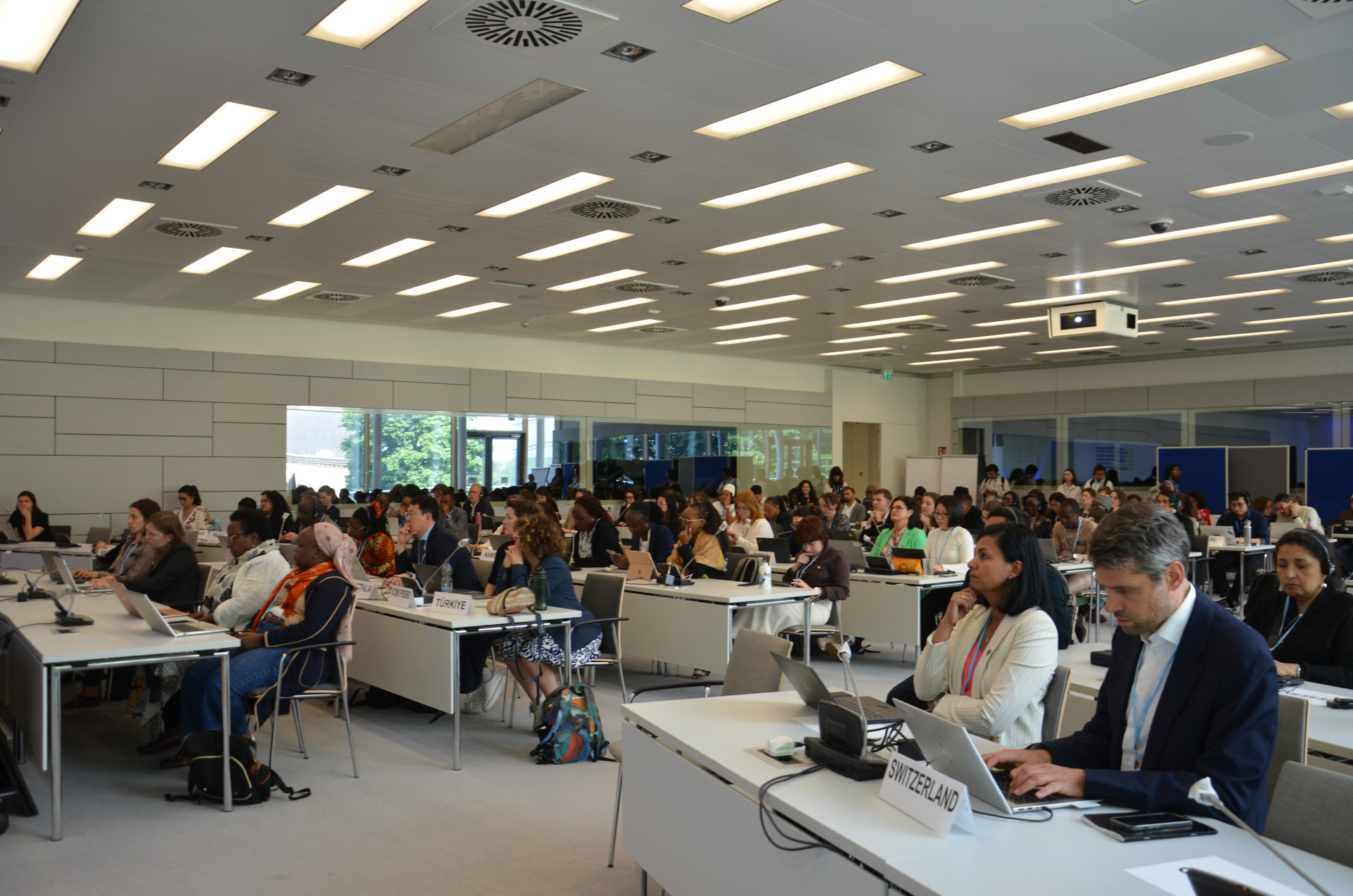
The dialogue will be held in a hybrid format on 15 June 2026 from 15:00 to 18:00. The working language of the dialogue will be English and remote interpretation will be provided in French and Spanish. The programme will consist of a mix of panel discussions and open, semi-structured dialogue.
The event is open to all participants and, beyond registration for SB64, does not require additional registration.
Draft Agenda
Moderator: Elena Cristina PEREIRA COLINDRES, Standing Committee on Finance Co-Chair
|
Opening Segment and setting the scene – 15:00-15:30
|
|
15:00-15:10
|
Welcome Remarks
Daniele Violetti, Senior Director of Programme Coordination, UNFCCC Secretariat
|
|
15:10-15:30
|
The state of gender-responsive climate finance
Chavi Meattle, Climate Finance Specialist, Climate Policy Initiative
Genta Konci, Evaluation Specialist, GCF Independent Evaluation Unit
|
|
Taking Stock of Progress and Gaps – 15:30-16:30
|
|
|
Panel conversation on impact and progress
Representatives of the funds and civil society reflect on the evidence, measurement, tracking and reporting of improved outcomes (progress).
Mitsuaki Hirai, Evaluation Officer, Global Environment Facility Independent Evaluation Office
Adaptation Fund
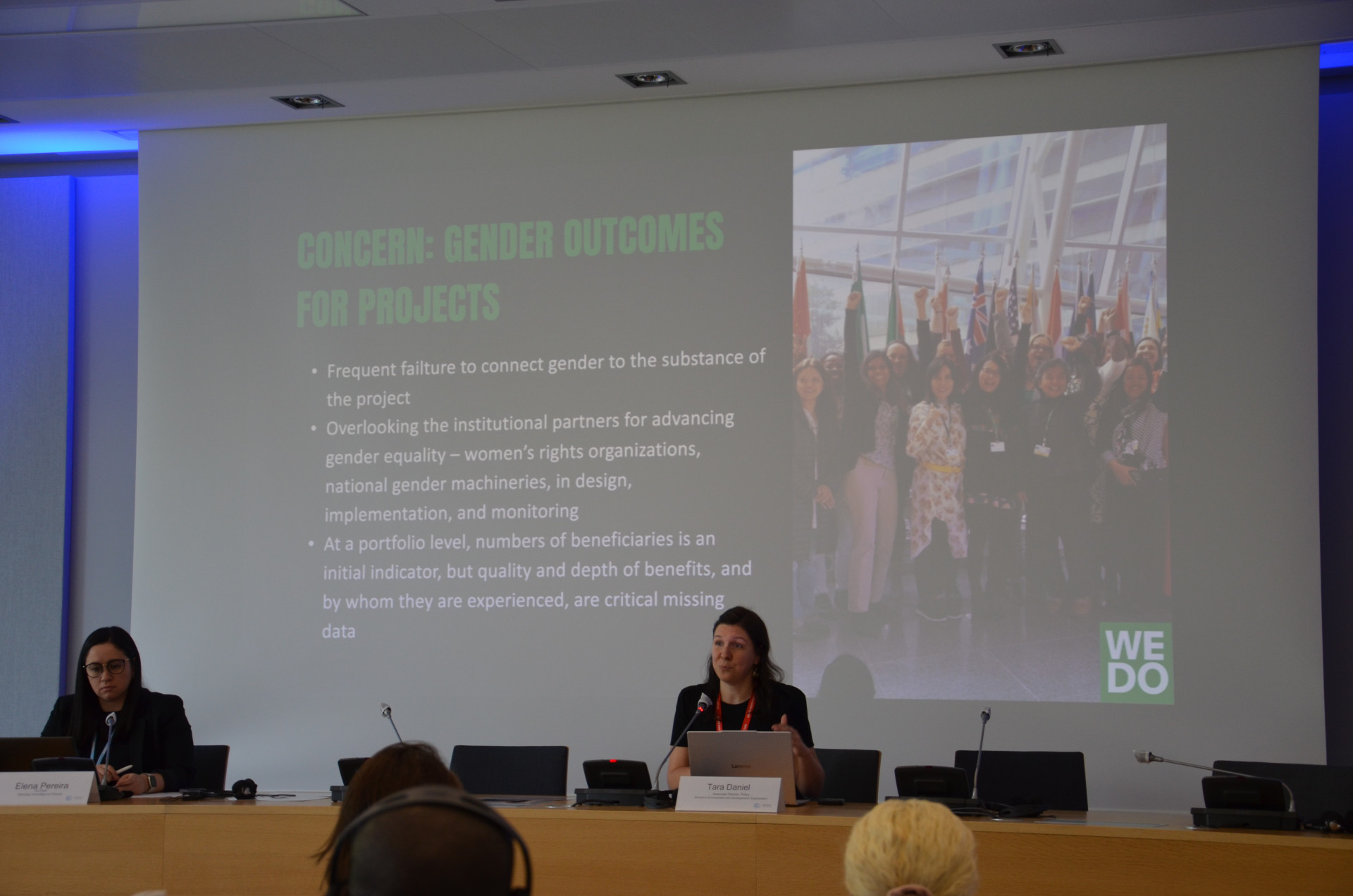
Tara Daniel, Associate Director Policy, Women's Environment & Development Organization
|
|
Accountability and Practice – 16:30-17:40
|
|
|
Moderated dialogue on the consideration of gender in climate finance
Representatives of the funds and workshop participants, including NGCCFPs, discuss progress in the Delivery of Gender-Responsive Climate Finance.
Achala Abeysinghe, Director of Investment Services, Green Climate Fund
Verona Collantes-Lebale, Senior Gender Specialist, Global Environment Facility (GEF)
Adaptation Fund
The Fund for Responding to Loss and Damage
|
|
Participatory Closing – 17:40-18:00
|
|
17:40-18:00
|
Shaping the annual dialogues and closing
COP 31 Presidency and COP 31 Presidency of Negotiations
|
Webcast
Outputs
Presentation
Mentimeter results
Gallery
资料来源: UNFCCC - Pamela Elizarraras Acitores
资料来源: UNFCCC - Pamela Elizarraras Acitores
资料来源: UNFCCC _ Peter Samuel Kronish