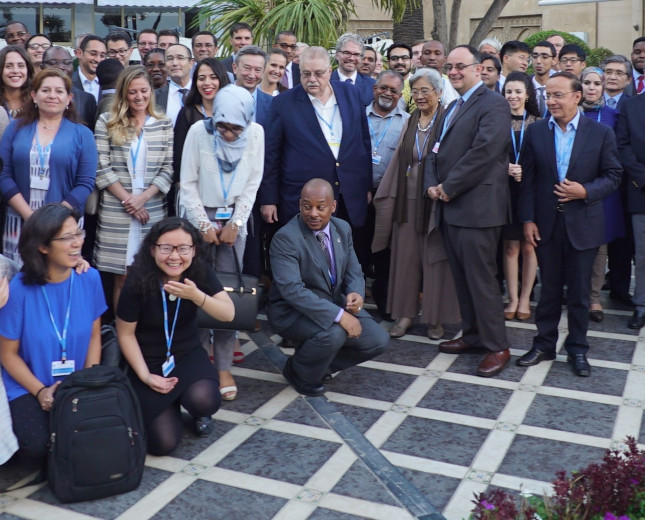
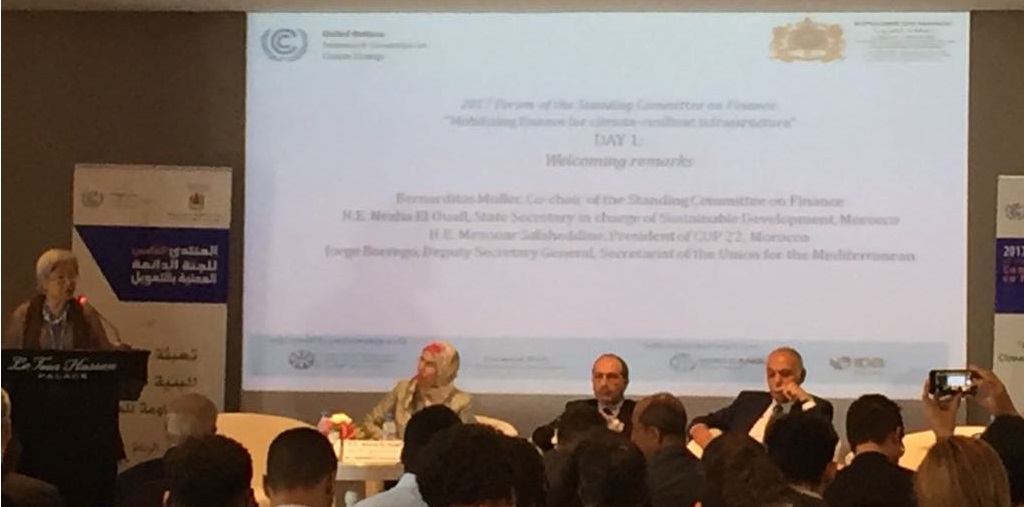
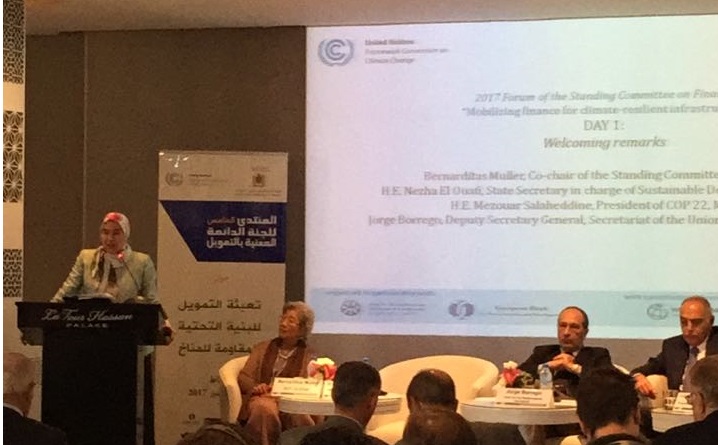
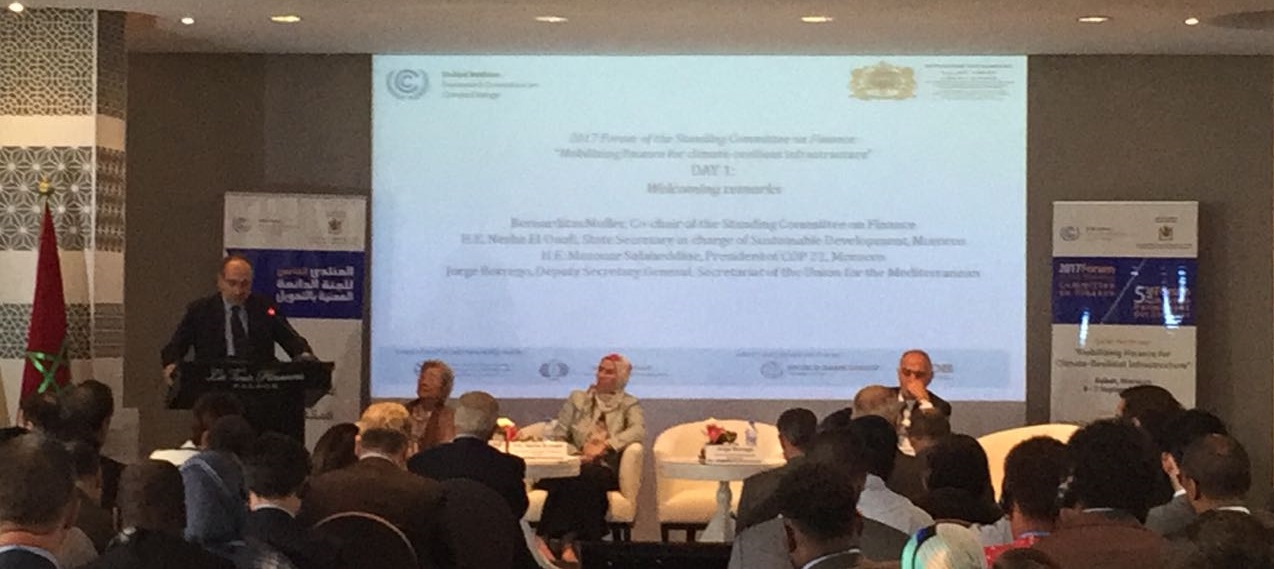
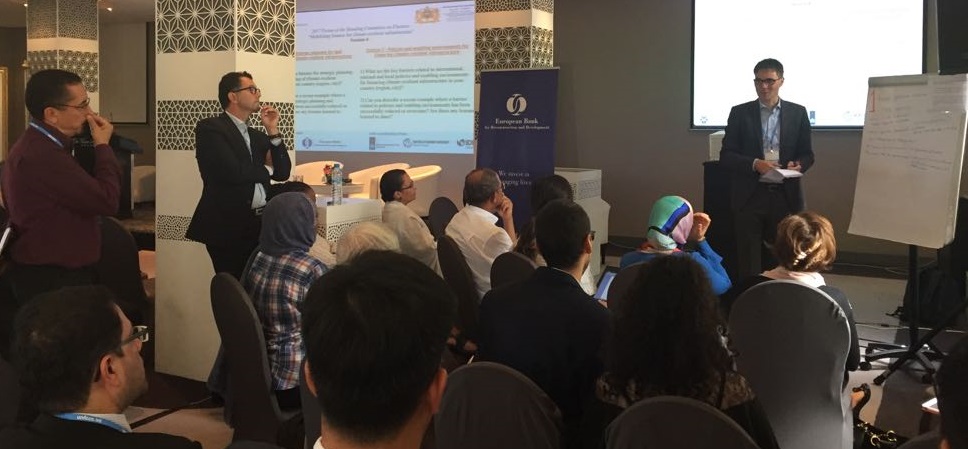
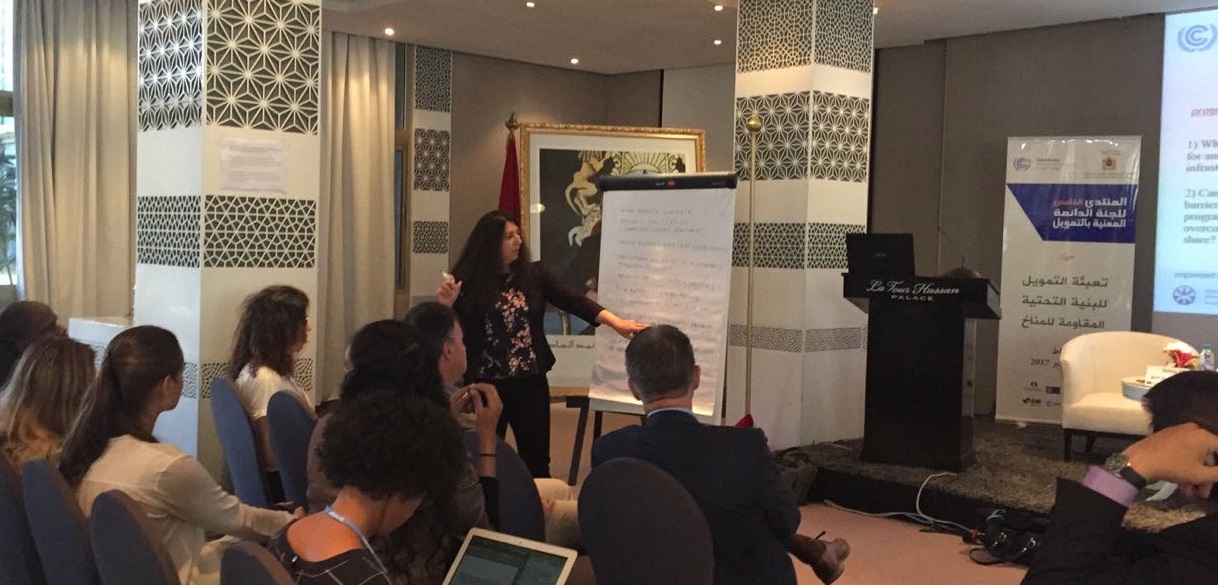
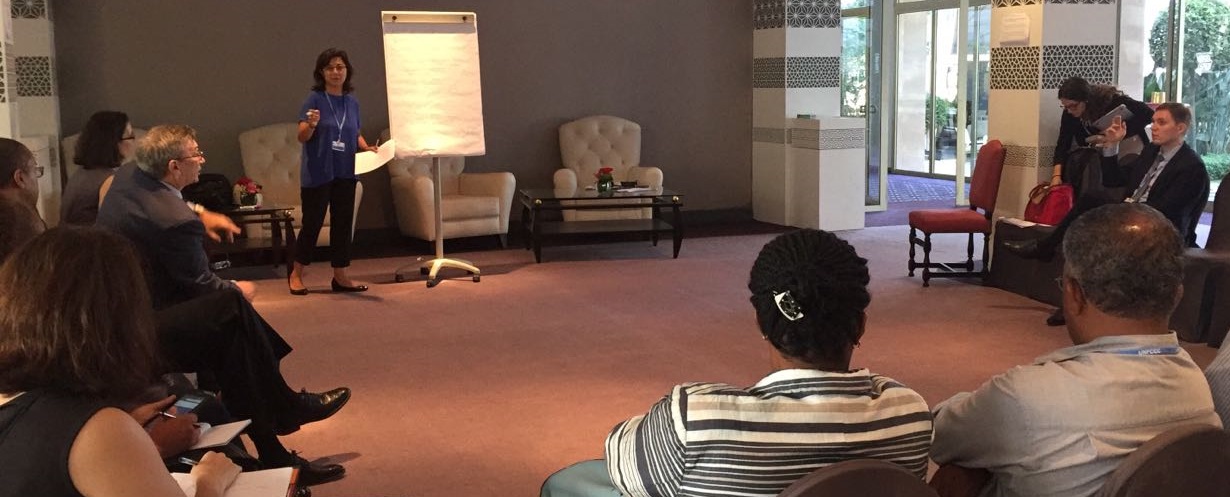
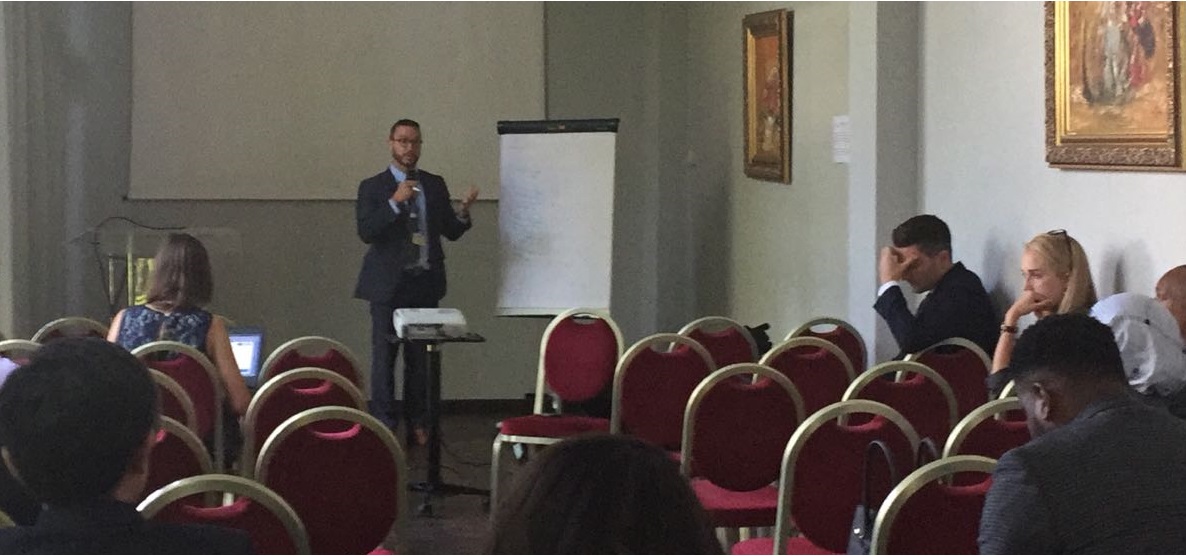
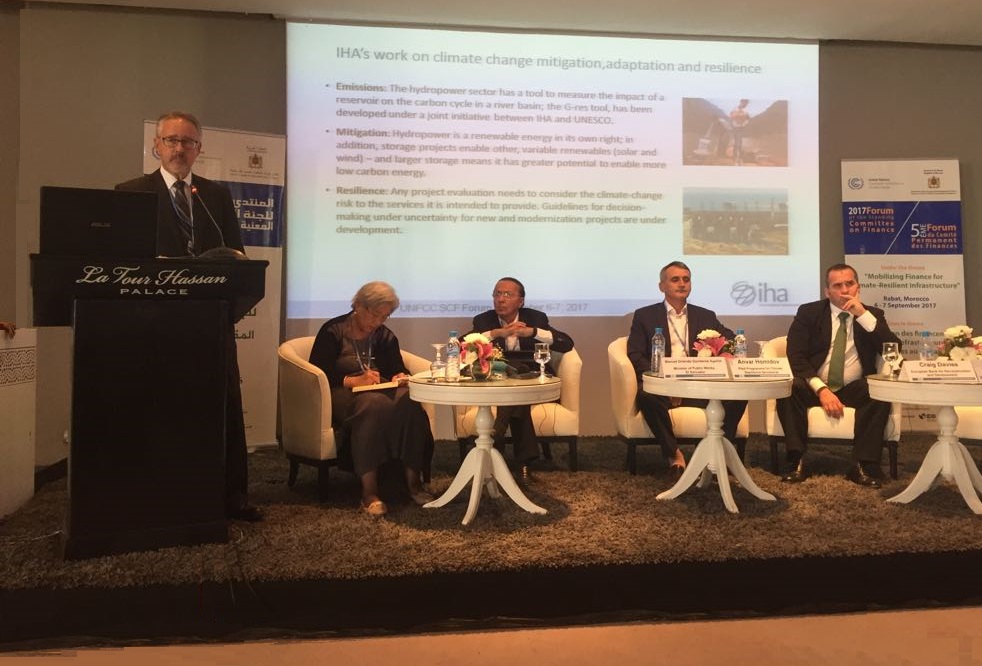
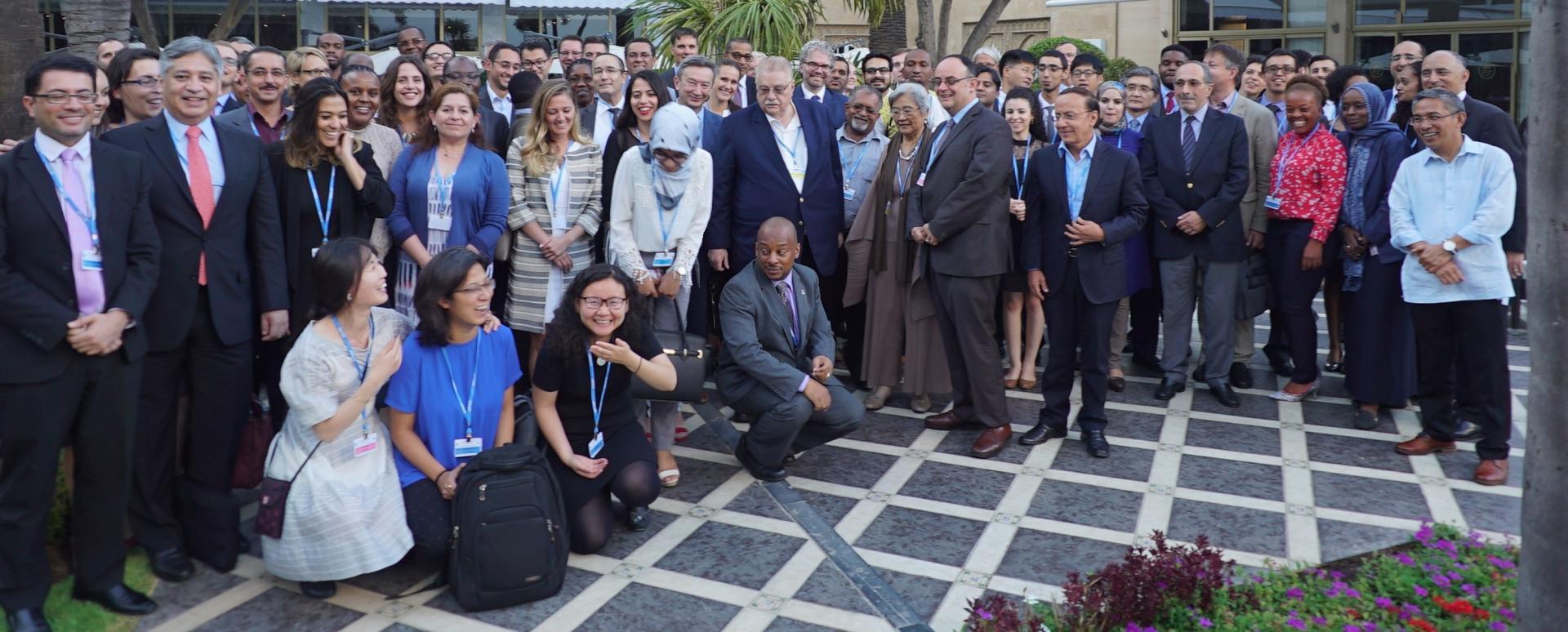
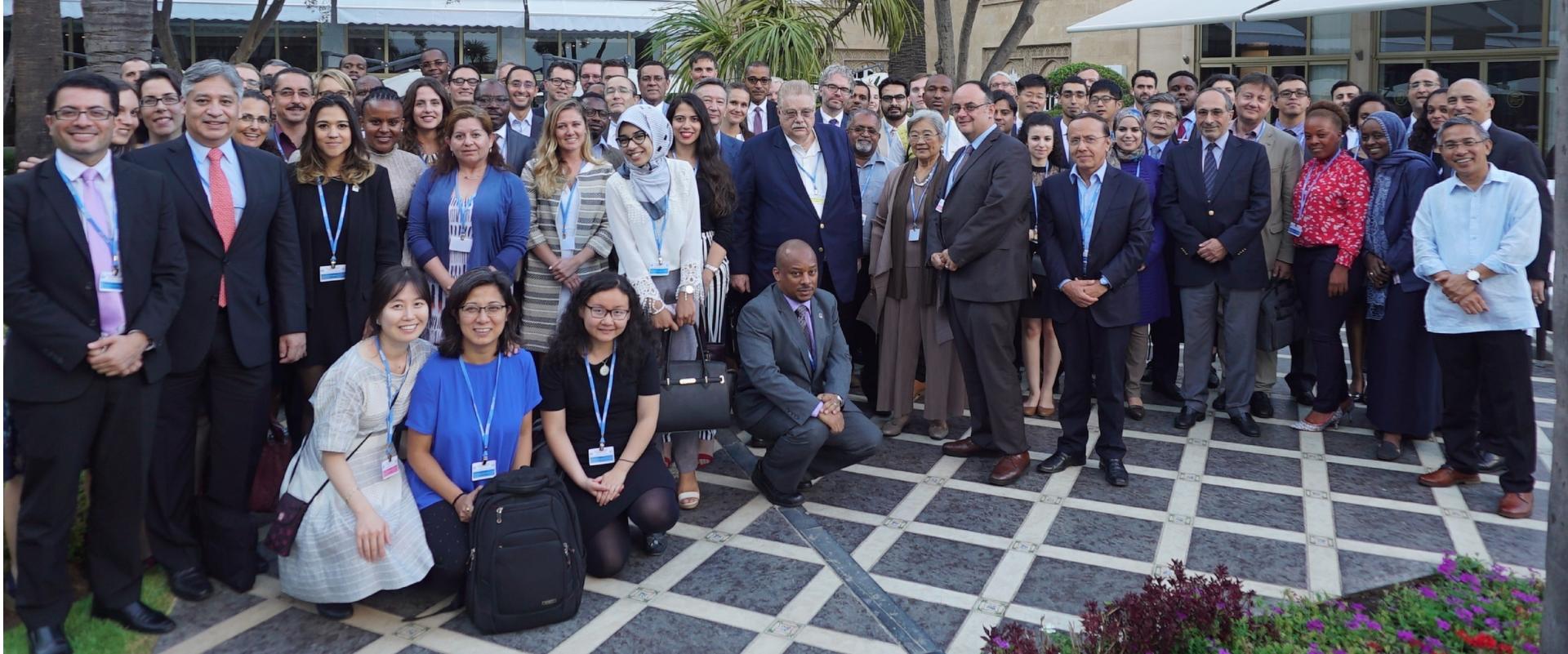
The 2017 forum of the Standing Committee on Finance was hosted by the Government of Morocco


The event was organized in partnership with:


with contributions from:
Background
The Standing Committee on Finance (SCF) annually organizes a forum to communicate and exchange information among bodies and entities and with other key stakeholders dealing with climate change finance in order to promote linkages and coherence.
The overall objective of the 2017 SCF forum was to identify gaps in mobilizing and accessing finance for climate-resilient infrastructure and to provide high-level policy inputs and recommendations on how to scale up investment in climate-resilient infrastructure. In particular, it assessed trends in climate-resilient infrastructure, gaps and barriers and explored measures to close the gaps in climate-resilient infrastructure financing, as shown in the programme below.
Click on icons for biographies of speakers
6 September 2017
(Day 1)
|
Setting the scene: Climate-resilient infrastructure financing trends, gaps and barriers
|
|
8:30 – 9:00
|
Registration
|
|
Opening
|
Opening plenary
Welcoming participants and opening the forum
|
|
9:00 – 9:30
|
Welcoming remarks and keynote statements by
-
Bernarditas Muller
Co-Chair, Standing Committee on Finance
-
H.E. Mezouar Salaheddine
President of COP 22, Morocco
-
H.E. Mohamed Boussaid
Minister of Economy and Finance, Morocco
-
H.E. Nezha El Ouafi
State Secretary in charge of Sustainable Development, Morocco
-
Jorge Borrego
Deputy Secretary General, Secretariat of the Union for the Mediterranean
|
|
Session 1
|
Setting the scene
Understanding “climate-resilient infrastructure” in the context of the broader global infrastructure landscape
|
|
9:30 – 10:30
|
Session aims: This session will set the scene for day 1 of the forum. It will look at dimensions of infrastructure and at definitions of climate-resilient infrastructure, including links to disaster risk reduction and the sustainable development agenda/goals. Financial characteristics of sustainable/resilient infrastructure and the management of climate risk in the infrastructure lifecycle (planning, procurement, construction, operation, maintenance) will also be discussed.
|
|
Presenter
Panelists
-
Marie-Alexandra Veilleux-Laborie
-
Drazen Kucan
Senior Urban Development and Energy Efficiency Specialist, GCF Secretariat
-
Fareeha Iqbal
Senior Climate Change Specialist, Global Environment Facility Secretariat
|
|
Session 2
|
Infrastructure investment trends and the investment gap
|
|
10:30 – 11:30
|
Session aims: This session will discuss current investment levels, including drivers of demand by type of economy and across different sectors, and supply of finance. It will also provide an overview of estimated future spatial and sectoral financing needs. Causes of the investment gap and alternative sources for resilient infrastructure investment will also be explored.
|
|
Presenters
Intervention by
|
11:30 – 11:45: COFFEE BREAK
|
Session 3
|
Special segment
infrastructure investment in the context of Article 2 of the Paris Agreement
|
|
11:45 – 13:00
|
Session aims: This special segment will briefly explore synergies between infrastructure systems and the opportunities to tackle climate change adaptation and mitigation simultaneously (LCR infrastructure) and review an example of an LCR infrastructure project that is taking an integrated approach to advancing the multiple aims expressed in Article 2 of the Paris Agreement. It will also discuss how fundamental price distortions can be tackled.
|
|
Presenters
-
Darius Nassiry
Senior Research Associate, Overseas Development Institute
– Low-carbon and climate-resilient (LCR) Infrastructure & Tackling fundamental price distortions
Mobilizing Finance for Climate-Resilient Infrastructure (1987 kB)
-
Dhekra Gharbi
Ministry of Local Affairs and Environment, Tunisia
– The Rehabilitation of the Lake Bizerte (a project labelled for the Union for the Mediterranean)
|
13:00 – 14:00: LUNCH
|
Session 4
|
Barriers to climate-resilient infrastructure financing
|
|
14:00 – 16:00
|
Session aims: A range of barriers exist for financing climate-resilient infrastructure. Those barriers include unfavourable banking/insurance/investment regulations and policies, including uncertainty around tax policies, policies that create market distortions, or financial sector regulations related to capital adequacy or investment limits. Further challenges are a lack of bankable/insurable/investable projects, inadequate risk-adjusted returns, and a lack of viable funding and business models, or high transaction costs.
Session 4 will explore barriers to financing climate-resilient infrastructure across the following areas:
-
Strategic planning and programming
-
Policies and enabling environments
-
Project preparation and technical design
-
Financial structuring
|
|
Presentation followed by breakout groups
Presenter
|
16:00 – 16:15: COFFEE BREAK
|
17:15– 18:00
|
Wrap-up of Day 1
|
7 September 2017
(Day 2)
|
Session 6
|
Best practices, lessons learned and opportunities related to mobilizing financing for climate-resilient infrastructure
|
|
9:30 – 10:15
|
Session aims: This session will set the scene for day 2 and focus on key areas for action that will be further discussed in the subsequent sessions, namely improving climate risk information and assessment to support decision-making across different sectors and government levels, strengthening policy and regulatory frameworks and institutional capacities to deliver the right policies and enabling conditions for financing and to build pipelines of bankable, insurable or investable projects, and transforming the financial system.
|
|
Presenters
|
10:15 – 10:30: COFFEE BREAK
|
Session 7
|
Best practices, lessons learned and opportunities: Part I
Improving Risk Information and assessment and screening public sector infrastructure finance
|
|
10:30 – 12:00
|
Session aims: Climate-related information is a prerequisite for taking decisions on infrastructure resilience. Public actors can facilitate investments in climate-resilient infrastructure by increasing the availability and accessibility of data on projected climate hazards, raising awareness, and strengthening the capacities of relevant stakeholders to use climate data and projections and to understand and manage interdependencies of infrastructure assets.
In this regard, Session 7 aims to provide best practices and lessons learned with regard to improving risk information and assessment to support decision-making across different sectors and communicating this information to stakeholders. Through case studies and plenary discussions, it will, inter alia, discuss tools to understand infrastructure exposure, and measures to improve the understanding of interdependencies of infrastructure assets. The session also focuses on screening of public sector infrastructure finance to ensure that climate risks are addressed in infrastructure projects.
|
|
Parallel Plenaries
|
|
Parallel plenary 1
|
Parallel plenary 2
|
12:00 – 13:00: LUNCH
|
Session 8
|
Best practices, lessons learned and opportunities: Part II
Strengthening policy and regulatory frameworks and institutional capacities
|
|
13:00 – 14:30
|
Session aims: Policy and regulatory frameworks as well as institutional capacities are key to delivering enabling conditions for financing climate-resilient infrastructure. Improving institutional functions, such as financial planning and policy, allocating resources, and implementing financing, is vital in this regard. Technical standards can also play an important role in facilitating financing in climate-resilient infrastructure.
Through case studies and plenary discussions, session 8 aims to showcase best practices and lessons learned with regard to putting in place clear national, sub-national and sectoral development strategies with accompanying infrastructure and financing plans, building capacities for project appraisal and preparation to ensure scarce resources are allocated efficiently and effectively, improving institutional and regulatory frameworks for PPPs, and securing the right finance at the right stage of infrastructure projects. In addition, the session will look at technical standards contributing to the technical definition of climate-resilient infrastructure.
|
|
Parallel Plenaries
|
|
Parallel plenary 1
-
Saffrey Brown
General Manager, JN Foundation
– Demonstrating the market for greater water efficiency and promoting the integration of water adaptation measures into new homes in Jamaica, to foster new business opportunities and to support entrepreneurship in private solutions for climate resilience
Financing Water Adaptation in Jamaica’s New Urban Housing Sector
-
Abdellatif Lhouaoui
Finance and Accounting Manager, Ports National Agency, Morocco
David Allan
Principal Banker (Transport), EBRD
– Port sector case study
Climate Resilient Ports
Adaptation des infrastructures portuaires aux changements climatiques
-
Jan Brooke
Mentor, EnviCom Working Group 178, World Association for Waterborne Transport Infrastructure (PIANC)
– PIANC’s technical guidance on climate change adaptation for maritime and inland port and navigation infrastructure
Technical good practice guidance on climate change adaptation for port and inland navigation infrastructure
-
James Close
Director, Climate Change, World Bank
– Climate Risks and Resilience in Infrastructure PPPs
Strengthening Policy and Regulatory Frameworks: Best Practices, Lessons Learned and Opportunities for Climate Resilient Infrastructures
|
Parallel plenary 2
|
14:30 – 14:45: COFFEE BREAK
|
Session 9
|
Best practices, lessons learned and opportunities: Part III
Transforming the financial system
|
|
14:45 – 16:15
|
Session aims: Given the huge financing gap, mobilizing private finance will be crucial for scaling-up lending, insurance, and investment for climate-resilient infrastructure. Through case studies and plenary discussions, Session 9 will discuss metrics and measurement approaches for assessing climate risks as well as standards and tools for integrating resilience criteria into infrastructure finance.
Finally, the session will explore new or innovative financial instruments and green banking, insurance and investment policies that help mobilize or reallocate finance to climate-resilient infrastructure.
|
|
Parallel Plenaries
|
|
Parallel plenary 1
|
Parallel plenary 2
|
|
Session 10
|
Reflections on key outcomes and conclusions of the entire forum
|
|
16:15 – 17:00
|
Session aims: This session provides space for participants to reflect on and sum up the key outcomes and conclusions of the two-days and to identify key areas for action.
|
|
Panel discussion followed by plenary discussion
Panelists:
-
Kulthoum Motsumi
Coordinator, Africa Adaptation Initiative
Enhancing action on adaptation and addressing loss and damage in Africa
-
Craig Davies
Head of Climate Resilience Investments, EBRD
-
Katharina Schneider-Roos
CEO, Global Infrastructure Basel (GIB) Foundation
-
Alfredo Redondo
Manager, Climate Change Risk Assessment Network - C40 Cities Climate Leadership Group
|
|
Closing
|
Closure of the forum
|
|
17:00 – 17:30
|
Closing remarks by:
-
Patricia Espinosa
UNFCCC Executive Secretary
-
H.E. Nezha El Ouafi
State Secretary in charge of Sustainable Development, Morocco
-
H.E. Amb. Fathallah Sijilmassi
Secretary General, Secretariat of the Union for the Mediterranean
-
Bernarditas Muller
Co-Chair, Standing Committee on Finance
|