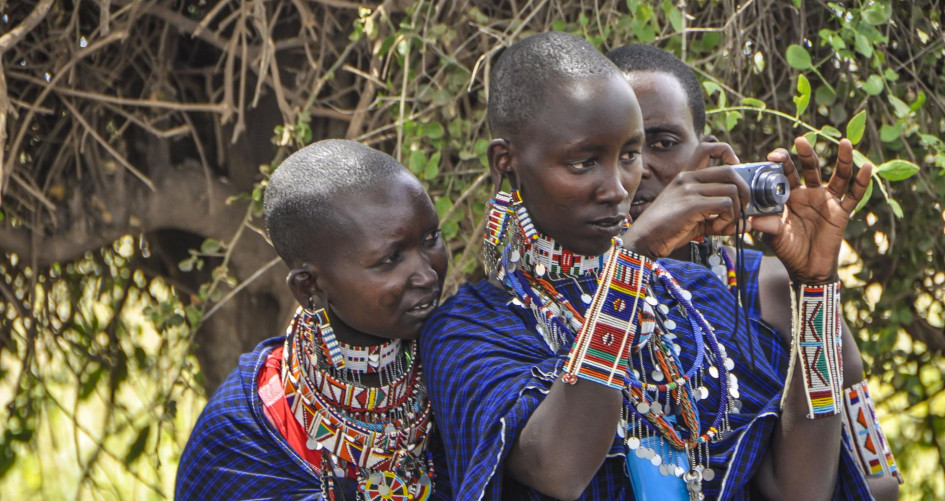
How can we communicate the climate crisis in the most effective way? How can we ensure that the stories of those who are most affected by the changing climate are heard? It is an unfortunate element of the climate crisis that those most effected by droughts, floods, storms and rising temperatures are those who have contributed the least towards rising emissions.
Lensational is a non-profit social enterprise which aims to elevate the voices of women from underrepresented groups and communities through visual storytelling. Earlier this year, The International Institute for Sustainable Development (IISD) formed a partnership with Lensational to, according to IISD’s Lead, Gender Equality and Social Inclusion Angie Daze, “pilot a new approach, where trainees focused their stories on the impacts of climate change on their lives and on their communities, as well as their visions of resilience.”

“These stories were used as a basis for dialogue with decision makers, towards a shared understanding of the effects of climate change on women’s lives and the priorities for their communities to adapt to these effects,” Daze says.
The project – with the support of the Ghanaian and Kenyan governments – saw seven photographers in each country given cameras to document their everyday lives at the forefront of the climate crisis.
According to Daze, visual storytelling such as Lensational’s provide “a connection point for people coming from different points of view, and the stories that are shared help to ground our understanding of climate change, its impacts, and how to build resilience in people’s lived experiences.”And while women tend to bear the brunt of the effects of climate change, Daze points out that they are also instrumental in finding solutions. “Women have knowledge, skills, and lived experience that are essential for building resilience of their families and communities and can be effective agents of change in adaptation processes,” she says. “The visual stories captured by our trainee photographers bring this to the forefront, demonstrating why adaptation efforts must be inclusive of people of all genders and social groups.”

The photos, taken in rural parts of Ghana and Kenya, reflect the on-the-ground realities of life at the forefront of the climate crisis. “In Ghana, water is an important theme across the photos, which show people securing water, flooding of community buildings and fields, and the effects of sea level rise along the country’s coastline,” Daze says.
“In Kenya, drought is a recurring theme within the images, showing the impacts on the land, livestock, and people. The challenges of protecting homes from extreme weather events also come through strongly,” Daze adds.

“The quality of the photos, given that they were taken by newly trained photographers, is very impressive, in terms of the composition of the photos, the variety of subjects depicted, and the emotion captured in some of the images,” Daze says. “This is a demonstration of the effectiveness of Lensational’s training process, as well as the skills of the photographers providing the training.”
A selection of the photos taken by the trainees will be displayed at Kenya’s National Climate Change Resource Centre in Nairobi, while Daze hopes to commission more photography that documents adaptation actions being implemented on the ground.

To see more of the photos, visit: www.lensational.org/their-stories. Alternatively, you can help support Lensational in a number of ways here: www.lensational.org/support-us