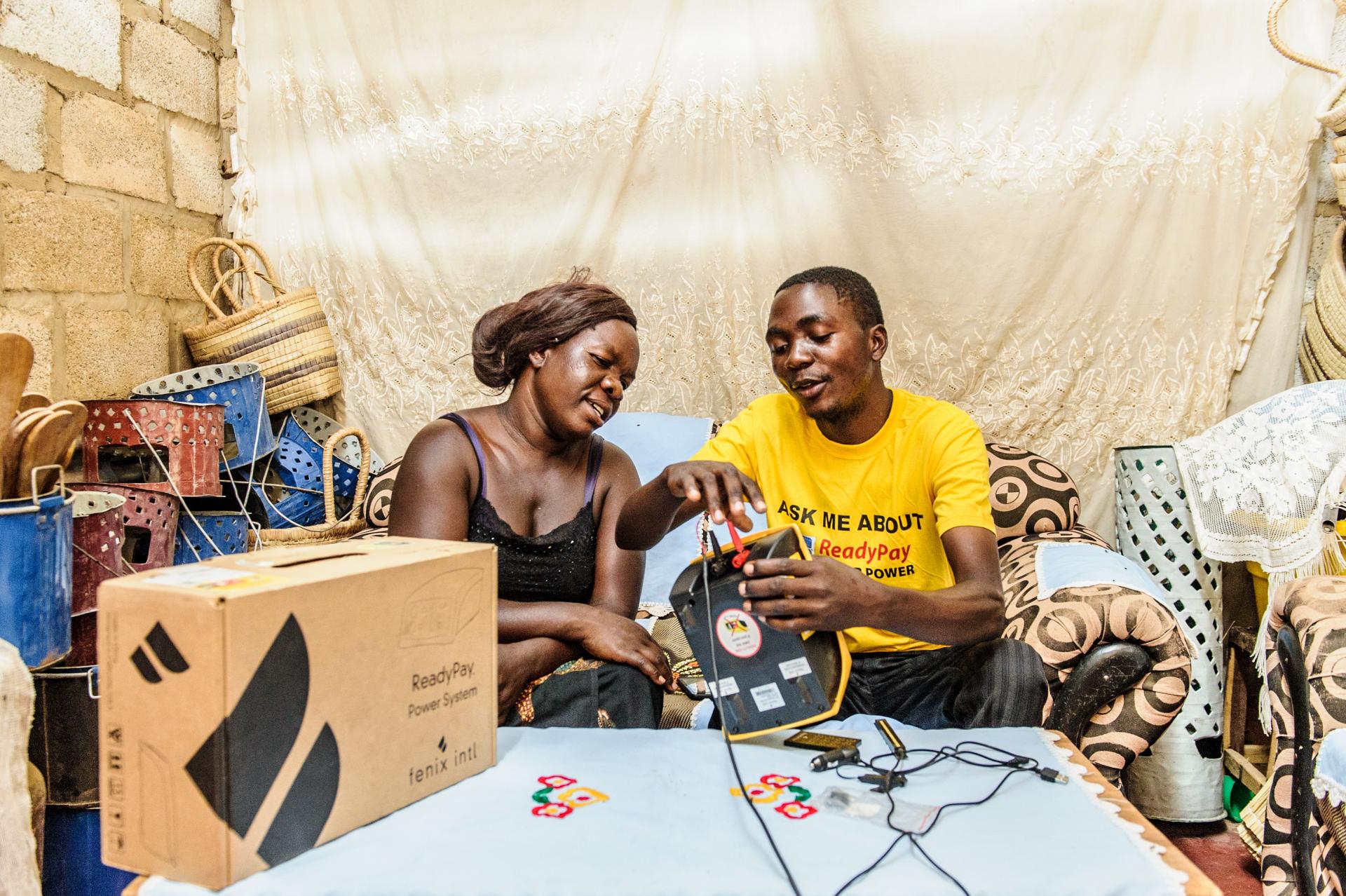
This week is Africa Climate Week and to celebrate, we are featuring five African climate action projects, all of which are former UN Global Climate Action Award winners.
CAMFED: Young Women's Grassroots Climate Action in Africa (Sub-Saharan Africa)
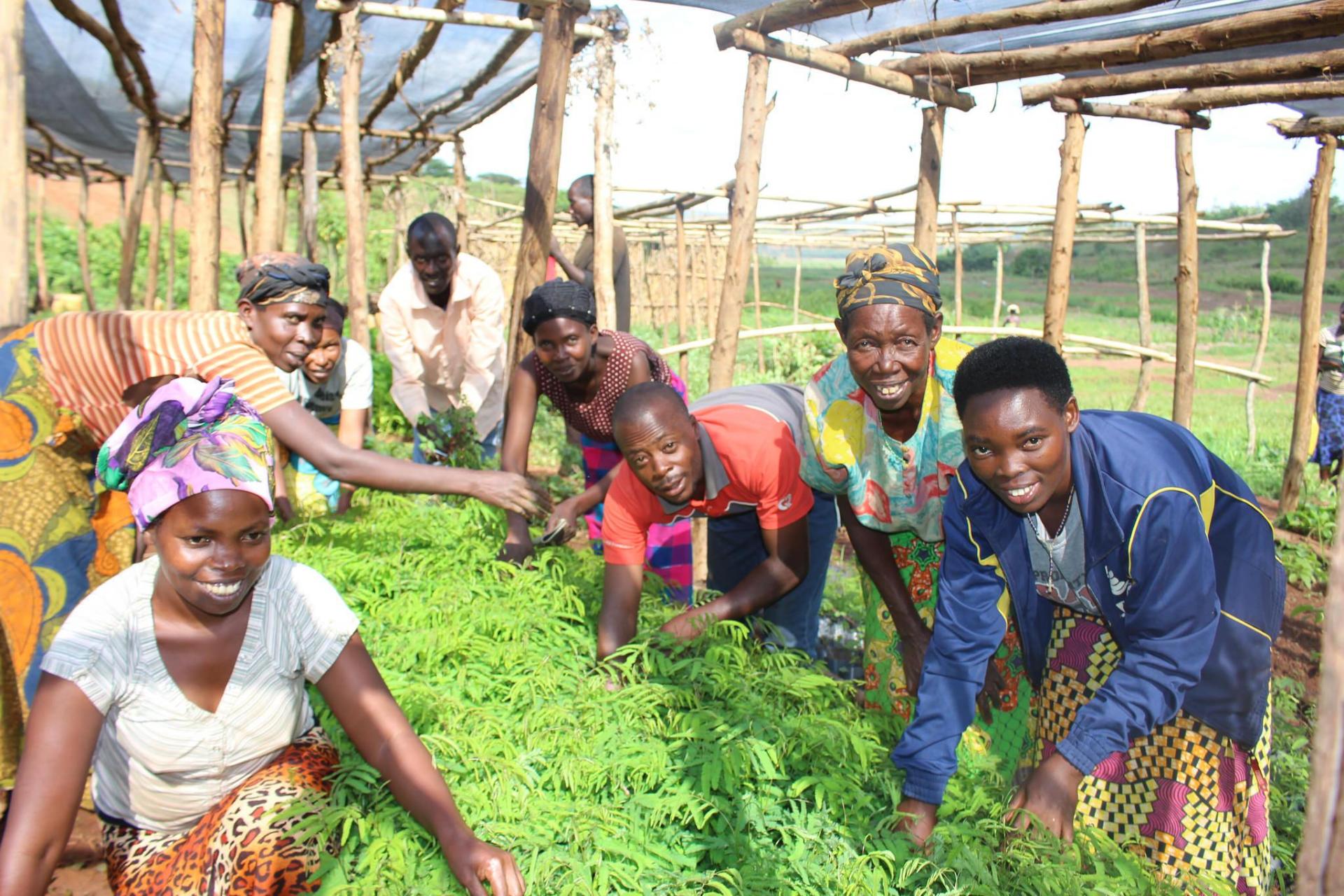
In 2013, the Campaign for Female Education (CAMFED) launched an initiative to train women from poor farming communities across sub-Saharan Africa to become agriculture guides and champions of sustainable agriculture. The women are trained in techniques ranging from drip-irrigation (using plastic bottles to save water and recycle) to agroforestry (combining trees and crops on agricultural land to enhance yields and increase biodiversity). These women have improved the productivity, sustainability and profitability of their own smallholdings as well as encouraged wide adoption of climate-smart techniques in their communities. CAMFED aims to equip 50,000 more women in rural Africa with climate-smart knowledge and skills by 2050, so that they can reach people in their communities in order to build their resilience to climate challenges.
What has this got to do with climate action? Agriculture guides train rural women to build energy-efficient stoves from local resources. These stoves use half as much firewood and reduce smoke pollution by up to two-thirds. This project helps reduce emissions and enhances carbon sequestration.
UN Global Climate Action Award Winner: 2019
Rwanda Green Fund (Rwanda)
The Rwanda Green Fund (FONERWA) is one of the first national environment and climate change investment funds in Africa, set up to support both public and private projects. The Fund invests in sustainable wealth creation and poverty reduction through grants, innovation investments, and credit lines, accelerating Rwanda’s commitment to building a strong, green, climate resilient economy.
What has this got to do with climate action? In total, the Green Fund – through more than $40 million in investments – has reduced the equivalent of more than 18,500 tons of CO2 emissions by 2018 through waste management and clean energy projects. It has also created more than 137,500 jobs and provided more than 57,500 households with improved access to off-grid clean energy. It has also raised $130 million for climate resilience investment in Rwanda.
UN Global Climate Action Award Winner: 2018
We Care Solar (Ethiopia, Sierra Leone, Liberia, Uganda, Tanzania, Kenya)
We Care Solar ensures safer childbirth by bringing solar power to remote, off-grid, under-resourced medical centres. We Care Solar provides immediately operational Solar Suitcases that enable power for medical lighting, essential electricity, and fetal monitoring for obstetric care. This helps local health workers who had previously been using kerosene lanterns, candles, and diesel fuel generators. We Care Solar has provided Solar Suitcases to more than 6,300 health centres around the world, and has trained more than 26,000 health workers, enabling a safe environment for more than four million births since 2010.
What has this got to do with climate action? We Care Solar Suitcases replace fossil fuel-sourced electricity for maternal health care, and provide a clean source of lighting, reducing CO2 emissions, as well as saving multiple lives. The amount of CO2 saved by 100 Solar Suitcases is equivalent to 310 tonnes of CO2 per year. Rural health centres represent a model of renewable energy options for communities, who now demand solar-powered larger facilities.
UN Global Climate Action Award Winner: 2017
ZOLA Electric (Tanzania)
Because the vast majority of Tanzanians lack access to electricity, ZOLA Electric provides solar systems to homes and businesses in rural communities through an innovative financial solution: the mobile phone industry’s business model allows the provision of light and electric power, whereby customers pre-pay for electrical services using mobile money.
What has this got to do with climate action?
Through this approach, ZOLA solar systems have so far replaced millions of litres of kerosene that would have been burnt to generate light. With between two and three kerosene lamps replaced by each ZOLA system, the saving from systems currently in use is more than 23,000 tonnes of CO2e per year.
UN Global Climate Action Award Winner: 2016

Beyond the Grid Fund for Zambia (Zambia)
Beyond the Grid Fund for Zambia (BGFZ) is a results-based financing project which brings together public and private sector partners to provide clean, affordable off-grid energy services to 306,000 households, businesses and institutions (more than 1.6 million people).
What has this got to do with climate action?
Energy access is a widely accepted precondition to economic growth. With around 11 million Zambians still lacking access to energy, embarking on a low-carbon electrification path for development is crucial: BGFZ has kick-started a thriving market for off-grid clean energy solutions. So far, the clean energy services sold by the companies contracted under BGFZ have replaced more than 374,558 candles and kerosene lamps, while the cookstoves sold by the companies have allowed people to move away from cooking on firewood – something that helps reduce deforestation.
UN Global Climate Action Award Winner: 2019