UN Climate Change Quarterly Update: Q1 2026
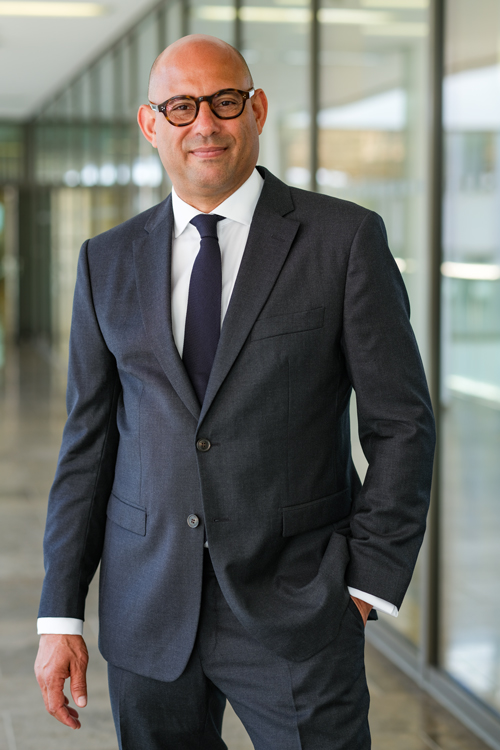
Simon Stiell portrait
Credit: UN Climate Change

Q2 of this year will be a busy period, culminating in the June Climate Conference from 8 to 18 June. As it’s known formally, the sixty-fourth sessions of the Subsidiary Bodies under the United Nations Framework Convention on Climate Change (SB 64), will be a key moment to advance technical work, while preparations for COP 31 are well underway. Our secretariat team is hard at work in preparation for SB64, and we look forward to warmly welcoming representatives of Parties and other stakeholders in Bonn, for an important and constructive session, and a crucial time for climate multilateralism.

I also warmly welcome the first letter to Parties and observers of COP 31 President Designate, Minister Murat Kurum of Türkiye, recently published. The letter sets out a common vision together with Minister Chris Bowen of Australia serving as President of Negotiations for COP 31, with an emphasis on “an implementation-focused approach that is inclusive and balanced, and that transforms commitments into measurable and practical results.”

Minister Kurum writes: “We regard it as our shared responsibility to preserve and further strengthen the achievements attained under the UNFCCC and the Paris Agreement. As such we intend to bring the expectations of the Parties together on common ground to build a safer world and a more secure global economy for humanity as climate impacts rapidly worsen.”

Strong progress across all negotiating tracks will be essential to ensure a balanced and effective outcome, and to demonstrate once again that climate multilateralism is delivering and supporting Paris Agreement implementation.

The Global Climate Action Agenda is equally a vital part of implementing the Paris Agreement, helping Parties deliver on NAPs and NDCs. The Action Agenda brings together governments, businesses, and communities to deliver faster, real-world which help ensure all Parties are able to share equitably in the vast human, economic and societal benefits of stronger climate actions. Brazil’s work at COP 30 aligning the Action Agenda with implementation of the first Global Stocktake has been vital, and it has been encouraging to see Türkiye’s COP 31 Presidency building on that work, supported by our secretariat colleagues.

The current fossil fuel energy crisis – marked by soaring costs for governments, businesses and billions of households – alongside intensifying climate impacts hitting every society and economy underscore the urgency of accelerating climate action.

In this new era of implementation, our collective efforts must have a very strong focus on delivering, and where possible exceeding, the commitments agreed in the first Global Stocktake. By the time of the second Global Stocktake, the world must be firmly on track to meet those commitments.

The UNFCCC secretariat is working closely with the COP 31 Presidency of Türkiye and Australia as President of Negotiations, and in support of all Parties and other Paris Agreement stakeholders, to deliver on all our growing mandates.

Simon Stiell
Executive Secretary, UN Climate Change
A blue sea star (Linckia laevigata) photographed on a largely dead reef on the Coral Coast on Fiji's largest island, Viti Levu.

By the end of Q1, the secretariat had received and processed several types of adaptation-related submissions, including 77 Adaptation Communications, 75 national adaptation plans (NAPs), and 170 nationally determined contributions (NDCs) and 119 biennial transparency reports (BTRs) containing adaptation components. This reflects sustained engagement by Parties in strengthening adaptation planning, reporting, and integration across the Paris Agreement framework.

At its 49th meeting in February, the Least Developed Countries Expert Group (LEG) developed its work programme for 2026–2027 and set out a clear vision for NAPs in least developed countries (LDCs) by 2030. This helps provide an important foundation for scaling up adaptation planning and implementation in some of the world’s most vulnerable countries.

Work on loss and damage under the Warsaw International Mechanism (WIM) Executive Committee also progressed in Q1, with a focus on non-economic losses and human mobility. Work included translating key findings from the 2024 technical paper on non-economic losses into a more accessible infographic format, alongside the launch of an online survey to capture country experiences, identify gaps, and inform the development of future tools.

The Nairobi work programme (NWP) continued to strengthen its role as the UNFCCC’s knowledge-to-action hub for adaptation and resilience. Its annual progress report, published in Q1, highlights ongoing work, including practical insights on adaptation finance, implementation of the Lima Adaptation Knowledge Initiative in the Amazon subregion, and engagement through the UN Climate Change Universities Partnership Programme. The report also identifies lessons learned and sets priorities for 2026–2027, with a focus on co-creation, curation, and delivery of knowledge to scale-up adaptation action across sectors and communities.

Looking ahead, Parties are expected to advance work under the Belém-Addis vision on adaptation, in particular through the policy alignment process, and undertaking technical work on metadata and methodologies for the Belém Adaptation Indicators, including through a dedicated technical task force. Work also continued on the Baku Adaptation Roadmap, with 14 submissions received from Parties and groups, prior to further mandated work to take place later in 2026 and beyond.

Windmill

Parties continued to submit their new and updated nationally determined contributions (NDCs) through the NDC Registry. Increasingly, NDCs are becoming fundamental pillars of nations’ economic growth and security strategies.

At the end of Q1, 136 Parties to the Paris Agreement had put forward new NDCs, while others submitted updated versions of their previous NDCs (this number does not include NDC submissions by the United States and Yemen, which are not Parties to the Paris Agreement).

Overall, the new NDCs show clear progress in quality and scope. More Parties are putting forward economy-wide emission reduction targets, covering all greenhouse gases, and addressing multiple elements of the Paris Agreement, including mitigation, adaptation, finance, and technology.

Despite the clear progress, the overall level of ambition and pace of implementation remain insufficient to meet the Paris Agreement’s long-term temperature goal. In response, the secretariat is following up on outstanding NDC submissions while strengthening its support to Parties in implementing their commitments.

In addition, the secretariat is a key partner in the roll-out of Climate Promise, a UNDP-led initiative to coordinate support across the UN system for NDC delivery. Within this framework, the secretariat is working to ensure the alignment of support efforts the outcomes of UNFCCC negotiation sessions, and to support inter-agency coordination and engagement with countries on delivery support, including through our Regional Collaboration Centres.

Climate Week 3

UN Climate Weeks serve as a delivery bridge between the UNFCCC process and real-world implementation. Building on the new format introduced last year at our Climate Weeks 1 (in Panama) and 2 (in Addis Ababa), this year’s Climate Weeks 3 and 4 have been designed to continue improving impacts and efficiency, and reducing costs for Parties and participants by clustering mandated events.

By holding mandated events alongside implementation focused policy dialogues, Climate Weeks help ensure that discussions feeding into COP are grounded in practical experiences and reflect the diverse needs of those delivering action and implementation on the ground.

UN Climate Week 3 (CW3) took place from 21 to 25 April, very effectively hosted by the Republic of Korea, in close coordination and alignment with its GX Week focused on connecting climate action with industrial and energy-system transformation.  Both events took place in Yeosu, with a strong focus on showcasing practical climate solutions, so they can be replicated and scaled up where appropriate. Climate Week 4 (CW4) is scheduled to take place in Baku, Azerbaijan, from 7 to 11 September.

A central feature of Climate Weeks is the Global Climate Action Agenda, with dedicated spaces created for stakeholders, including the private sector, subnational, and civil society engagement, particularly through the Implementation Forum. These sessions convene policymakers, cities and regions, businesses, investors, development finance institutions, Indigenous Peoples, local communities, and other practitioners to identify investable solutions, remove implementation bottlenecks, and accelerate action, aligned with the six axes of the Global Climate Action Agenda.

More information is available on the Climate Week conference page.

RCC annual report

UN Climate Change's Regional Collaboration Centres (RCCs) strengthened country-driven climate action in 2025, supporting governments across regions to translate national climate plans into practical actions, according to the newly released RCCs Annual Report 2025

RCCs directly supported 83 countries across six regions in 2025, delivering technical assistance, convening partners, and strengthening institutional capacity. Throughout the year, they contributed to global events, including Climate Weeks and NDC Clinics, regional technical dialogues, and national workshops, helping connect global negotiations with country-level implementation.

The report also highlights RCCs’ growing role in supporting access to finance, strengthening coordination across the UN system, and facilitating collaboration with development banks, regional organizations, and private sector partners to accelerate delivery of climate action.

Looking ahead, RCCs will continue to prioritize implementation support in 2026, with a strong focus on helping countries turn NDCs and NAPs into investable projects, improving access to climate finance, and strengthening capacity for countries to participate fully in UNFCCC processes.

A young woman inspects solar panels.

Implementation of the UAE Just Transition Work Programme (UAE JTWP) continued to gain momentum in early 2026, with strong engagement from both Parties and non-Party stakeholders.

The secretariat received a total of 48 submissions from Parties, observers and other stakeholders on priorities for the programme’s work and potential topics for the 2026 dialogues. In parallel, 57 submissions were provided on the process for operationalizing a just transition mechanism, reflecting significant interest in advancing this key outcome agreed at COP 30.

Building on these inputs, the Chairs of the Subsidiary Bodies identified the topic for the fifth dialogue under the UAE JTWP: just transition pathways for holistic approaches to food security, including with a focus on agriculture and oceans, in the context of element c) paragraph 2 of decision 3/CMA.5. The dialogue took place in the Republic of Korea during Climate Week 3 at the start of Q2 and helped further deepen technical exchange and practical understanding in this area.

Together, these developments build on the progress achieved in 2025 and signal continued momentum toward operationalizing the just transition mechanism. They also reinforce a shared direction of travel toward advancing holistic, nationally determined, inclusive, and actionable just transition pathways through the implementation of the UAE JTWP.

RCC events on 'Transparency & Measurement, reporting, and verification (MRV)'

Global climate transparency entered a new phase in Q1 with the launch of the Climate Data Hub, a centralized platform that, for the first time, brings together climate data from more than 190 countries in one place.

The Hub provides insights into progress, gaps, investment flows, and support needs, making official data more accessible and usable for a wide range of stakeholders. Developed by UN Climate Change in partnership with Microsoft, EY, and NEDAMCO Africa, it will continue to expand the data pool, including by incorporating data on NDC implementation and greenhouse gas emissions.

A virtual pilot kick-off introduced the Net-zero Recognition Framework (NZRF), with the opt-in period ending on 15 May. Presented as a voluntary programme to recognize leadership in implementing net-zero commitments by non-Party stakeholders, the session brought together major net-zero initiatives representing a broad range of actors, including businesses, financial institutions, and subnational governments.

The secretariat also strengthened transparency systems and processes. The Submission Module was launched in March as the official channel for Parties to submit national reports, including BTRs. Integrated with the Enhanced Transparency Framework (ETF) reporting tools, it streamlines workflows and ensures efficient data transfer to the Climate Data Hub.

In parallel, the Consultative Group of Experts (CGE) held its 8th Informal Forum and 14th meeting in early March. The Forum enabled countries to exchange experiences on participation in technical expert reviews and the Facilitative, Multilateral Consideration of Progress process, while the CGE meeting resulted in the adoption of its work programme for 2026-2029 and its annual workplan for 2026.

Delivery of core transparency activities continued at pace. BTR reviews for 15 Parties were conducted during Q1, alongside five regional and sub-regional workshops and training programmes on the ETF and BTRs, reaching 327 national transparency experts. By the end of the quarter, a total of 1,317 experts had completed the required training and certification to serve as BTR reviewers under the Paris Agreement.

In Q1, implementation support and technical work on REDD+ and agriculture continued to advance. The 13th technical assessment of REDD+ reference levels was held in March, with experts reviewing submissions from Cameroon, Ethiopia, Guinea, Liberia, Malawi, Nepal, and Nigeria. This process plays an important role in strengthening national reporting capacities, enabling countries to enhance their methodologies and improve forest-related reporting.

Under the Sharm el-Sheikh joint work on implementation of climate action on agriculture and food security, the second annual synthesis report was published. The report looks at the work by constituted bodies, financial entities, and other organizations, providing an overview of financial flows and needs, as well as key challenges in accessing support for finance, technology, and capacity-building. It also highlights practical measures to help address these barriers.

Looking ahead to Q2, the first REDD+ Global Summit will take place in Kenya in May, focusing on advancing implementation through stronger South–South exchange, enhanced transparency, and clearer linkages with Article 6, in support of efforts to halt and reverse deforestation by 2030.

Further technical work will continue with REDD+ results analyses for Cuba and Belize in May – an important step for countries seeking to obtain results-based payments. In parallel, the secretariat will convene a hybrid workshop at SB 64 under the joint work on agriculture and food security to address progress, challenges, and access to means of implementation, including through the exchange of best practices.

Finance_Hero_image

In the first quarter of 2026, work on climate finance advanced across both intergovernmental processes and targeted country support.

Following their appointment, the co-chairs of the Work Programme on Climate Finance under Article 9 of the Paris Agreement, Apollonia Miola (European Commission) and Yolando Velasco (Philippines), invited submissions from Parties and stakeholders by 27 April, to be followed by a virtual consultation and the development of a workplan.

The Brazilian COP Presidency appointed Debra-Lee Swanepoel (South Africa) and Ralien Bekkers (the Netherlands) as co-chairs of the new Veredas Dialogue on the implementation of Article 2.1(c) and its complementarity with Article 9. In addition to written submissions, the co-chairs are consulting Parties and aim to publish a workplan in early May, ahead of the June SB sessions.

The Standing Committee on Finance (SCF) held its 39th meeting in Bonn in February, appointing new Co-Chairs Elena Pereira (Honduras) and Vicky Noens (Belgium), and advancing key mandates from COP 30 and CMA 7. Progress was made on flagship publications, including the seventh Biennial Assessment and Overview of Climate Finance Flows and the third report on progress towards mobilizing USD 100 billion annually. The SCF also agreed on its approach to draft guidance to the operating entities of the Financial Mechanism.

In addition, the SCF agreed that its 2026 Forum will focus on financing climate action in water systems and the ocean, and reflected on its strategic direction, including stakeholder engagement and visibility. Its next meeting is scheduled for 19–20 June 2026.

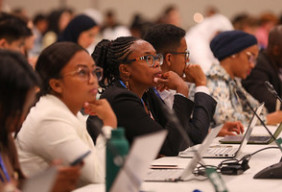
Women delegates gather at a meeting

Following the adoption of the Belém Gender Action Plan (2026–2034) at COP 30, efforts in Q1 focused on moving from agreement to coordinated implementation. On the margins of the 70th session of the Commission on the Status of Women (CSW 70), the secretariat hosted a hybrid workshop in New York titled “Delivering the Belém Gender Action Plan: coordinating for impact.”

The session brought together UN entities, civil society, financial institutions, and academia to explore practical pathways for implementation. Discussions focused on near-term Gender Action Plan deliverables for 2026–2027, as well as areas requiring more complex, multi-stakeholder coordination, with participants identifying both individual and collective commitments to implement the plan.

Momentum was further strengthened through the secretariat’s social media channels on International Women’s Day 2026, which mobilized a wide range of actors under the #ActOnTheGAP campaign. The initiative generated more than 80 contributions from national gender and climate change focal points, climate funds, multilateral development banks, the COP 30 Presidency, constituted bodies, and civil society. The secretariat launched a dedicated webpage to serve as a living repository to capture and showcase global implementation efforts.

Looking ahead to Q2, the secretariat is developing its gender, diversity, and inclusion strategy, while also preparing for upcoming mandated events. These include sessions at the Climate Weeks – focusing on financing the implementation of the Belém Gender Action Plan at the national level – and at SB 64, where an information session is open for registration.

A row of solar panels

In the first quarter of 2026, work on climate technology under the Convention and the Paris Agreement progressed across multiple workstreams.

A key milestone was the global call for proposals to host the Climate Technology Centre, which closed on 16 March, marking an important step towards securing a strong institutional foundation for delivery. An early voluntary contribution from Austria enabled the secretariat to respond quickly to new mandates under the Belém Technology Implementation Programme, supporting more effective implementation.

The Technology Executive Committee (TEC) also advanced its work, including through a webinar on energy storage. Regional collaboration was further strengthened through joint support by the UNFCCC and the TEC to the African forum of national technology focal points.

Several key milestones also took place at the start of Q2. These include TEC 32 and CTCN Advisory Board 27 in Incheon (14–22 April), and a global event on artificial intelligence for climate action in Yeosu in partnership with KOICA (23 April), during Climate Week 3.

A worker stands up high inside a wind turbine overlooking a beautiful view.

In March, the co-chairs of the Sharm el-Sheikh Mitigation Ambition and Implementation Work Programme, taking into account submissions from Parties, observers, and other non-Party stakeholders, announced the topics for the next two global dialogues.

The seventh global dialogue, together with its associated investment-focused event, took place in Yeosu, Republic of Korea, during Climate Week 3 in April. It focused on enabling mitigation ambition and implementation in the industrial sector, drawing on national and regional experience. The eighth global dialogue will build on this focus, while also addressing cross-cutting issues.

Forests

At its 20th meeting in February, the Article 6.4 Supervisory Body under the Paris Agreement Crediting Mechanism (PACM) appointed a new Chair, Mkhuthazi Steleki (South Africa), and Vice-Chair, Jacqui Ruesga (New Zealand), and agreed to accelerate the development of key methodologies and core infrastructure to enable activity registration and issuance in 2026. At the national level, progress also continued, with 123 Parties having designated a Designated National Authority by the end of Q1, and 49 having submitted Host Party Participation Requirements forms – reflecting growing readiness to engage in the mechanism.

In February, the Supervisory Body approved the first credits to be issued under the PACM, from a clean-cooking project in Myanmar distributing efficient cookstoves that reduce harmful household air pollution and lessen pressure on local forests. Reflecting the careful application of Paris Agreement rules, the credited reductions were approximately 40 percent lower than what older systems would have issued, owing to updated values and more conservative calculations.

Further, support was provided through targeted knowledge products on the PACM and the transition from the Clean Development Mechanism (CDM). The Article 6 Academy was also launched, including an inaugural jointly certified course on high-integrity carbon markets under Article 6, delivered with the University of Oxford and attended by over 1,000 government officials from more than 120 countries.

At the country level, the UNFCCC Regional Collaboration Centres (RCCs) provided direct technical support to 16 countries on procedural and methodological aspects of participating in the PACM, including support for the transition of CDM activities.

Following the second centralized Article 6 technical expert review conducted in December 2025, covering 12 initial or updated initial reports from 11 Parties, the corresponding review reports are being finalized and are expected to be published in Q2 2026.

Under Article 6.8, capacity-building efforts continued through four introductory webinars and a dedicated session within Kazakhstan’s national workshop, helping to deepen understanding of non-market approaches and highlight opportunities for engagement.

RCC AP hosts a webinar on the Meaningful Youth Engagement in Asia

In Q1, COP 31 President-Designate Murat Kurum appointed Samed Ağırbaş as Climate High-Level Champion for COP 31. Working alongside the COP 31 Presidency and the COP 30 Climate High-Level Champion, he will help advance the Global Climate Action Agenda (GCAA), which connects voluntary climate efforts with the intergovernmental process.

Together with the Champions and the COP Presidencies, the secretariat delivered two well attended webinars on the GCAA. The first, organized with the COP 30 Presidency, provided a debrief on COP 30 outcomes and their implications for non-Party stakeholders. The second focused on maintaining continuity of the GCAA and advancing implementation of the Marrakech Partnership’s five-year vision.

The secretariat continued to support the incoming COP 31 Presidency on observer engagement, including through dedicated briefing sessions covering both intersessional and in-session modalities. The COP 30 Presidency shared best practices and lessons learned to support continuity and strengthen approaches to observer engagement across Presidencies.

In preparation for SB 64, the secretariat reviewed more than 570 side event applications for 130 available slots, undertaking a selection and thematic clustering process to streamline the programme and align it with Parties’ priorities.

The secretariat also prepared an overview of observer engagement over the past year, ahead of negotiations under the SBI agenda item on arrangements for intergovernmental meetings. In addition, it contains the mandated biennial report for 2024–2025 on progress in implementing previous SBI conclusions on enhancing observer engagement in the intergovernmental process.

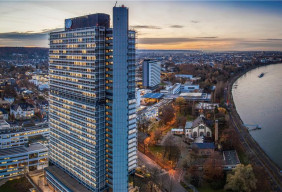
UN building in Bonn beside the Rhein, captured from above.

Preparations for the June Climate Change Conference (SB 64), taking place from 8 to 18 June in Bonn, are on track. Procurement and administrative processes are progressing.

Office capacity at the World Conference Centre Bonn has reached its limit, and alternative workspace options, including the UN Campus, are being explored to accommodate operational needs.

Online registration, which opened on 9 February, is progressing steadily. Demand from IGOs and NGOs continues to significantly exceed available quotas, with over 12,000 nominations received for 2,000 available slots. Allocations and confirmations began on 30 March, with 463 participants from 74 Parties confirmed to date.

Given ongoing financial constraints, efficiency measures applied at previous sessions will remain in place, including the core opening hours.

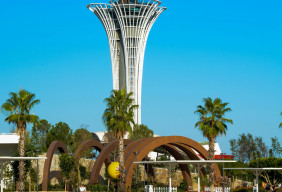
Antalya, Türkiye

Preparations for COP 31 are progressing steadily across key operational areas. Following the technical mission to Antalya in January, close coordination with Türkiye continues, guided by detailed assessments of the venue, accommodation, transport, and security arrangements.

The venue layout has now been finalized, providing a clear foundation for operational planning. Priority workstreams launched in March include legal arrangements (Exchange of Letters), as well as security, safety and health, and accommodation, with additional workstreams set to begin in the coming weeks.

An official accommodation platform is now open, offering a range of options for participants.

We continue to face funding challenges in the Trust Fund for Participation (TFP) and have intensified targeted bilateral engagement with donors. The TFP remains central to ensuring meaningful participation of all Parties in the UNFCCC process.

Letter

In April, COP 31 President-Designate Minister Murat Kurum published Türkiye’s first official letter to Parties and observers.

As Minister Kurum writes in the letter, COP 31 will be an opportunity to build on the achievements of recent COPs, including "the unanimous agreement by all countries at COP 30 that the Paris Agreement is working, and together we will resolve to go further and faster.”

Minister Kurum notes a common vision, together with Minister Chris Bowen of Australia serving as President of Negotiations for COP 31, with an emphasis on “an implementation-focused approach that is inclusive and balanced, and that transforms commitments into measurable and practical results.”

Pre-COP, to be held in Fiji from 5 to 8 October and including a leaders’ event in Tuvalu, will contribute to reflecting diverse perspectives on climate challenges and solutions.

Minister Kurum's letter also notes the World Leaders Summit will take place in Antalya from 11 to 12 November.

The final gavel at COP30 in Brazil.

The COP 30 Presidency of Brazil released the Executive Report of the United Nations Climate Change Conference held in Belém, last November, outlining the key political, normative, and implementation outcomes and the commitments that will guide the COP30 Presidency’s work in the months ahead to sustain and drive momentum for global climate action.

Ambassador André Corrêa do Lago, COP30 President, and Ana Toni, COP30 CEO note: “As we prepare for the next rounds of dialogue and for close collaboration on the road to Antalya, we invite you to read this report not only as a record of what has been achieved, but also as a call to sustain momentum, honour our shared responsibilities, and carry forward the spirit of mutirão that Belém inspired. The decisions adopted at the conference should serve as catalysts for economic transformation, for building more resilient societies, and for restoring ecosystems. The journey continues – and it will require the commitment of us all.”

Learn more and download the report here.

2025 First Workshop under the Sharm el-Sheikh Dialogue, 17-19 June 2024, WCCB, Bonn, Germany

In a fundraising letter to Parties, Executive Secretary Simon Stiell provided an update on the secretariat’s resourcing outlook and sought continued support to ensure that the intergovernmental process delivers concrete progress at COP 31 and through to the second Global Stocktake at COP 33.

In preparing the secretariat’s funding requirements for this biennium, particular care has been taken to align resources closely with mandates, operational priorities and expected results. We have listened carefully to Parties’ priorities, feedback and recommendations and have strengthened our internal planning to improve efficiency, responsiveness, transparency, and the impacts of our service-delivery.

At the same time, predictable, sustainable and flexible multi-year funding remains essential to enable effective planning and to support Parties in accelerating the implementation of climate action.

Timely contributions are vital to safeguard the effectiveness and inclusiveness of the intergovernmental process and to respond to Parties’ evolving needs. Without adequate, timely and flexible financial support, the secretariat’s ability to fully deliver on its mandates will be significantly constrained.

Climate Tower

With the growing mandates from Parties front of mind, the secretariat has developed a Mission Framework setting out our core mandated functions, and critical enablers for delivering on all mandates from Parties in the years ahead. The Framework demonstrates to all secretariat staff how their roles are equally valuable and interconnected in supporting our shared mission of enabling multilateral decision-making and action to achieve the goals of the Convention, the Kyoto Protocol, and the Paris Agreement, while advancing global cooperation towards a net-zero, climate-resilient future.

The Framework also responds directly to audit recommendations issued by OIOS and the United Nations Board of Auditors, in providing a common basis for organizational planning and reporting. It further supports strengthened efficiency and effectiveness by setting out a clear framework of core mandated functions and critical enablers against which progress can be monitored and reported over time for maximum transparency and accountability. The Framework can be viewed here, noting it has been designed primarily with internal stakeholders and optimized managerial and executive decision-making in mind, reflecting the audit recommendations.

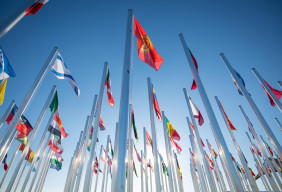
Flags from below

The UN80 initiative is the United Nations' system-wide reform effort, launched by Secretary-General António Guterres in March 2025 as the UN marked its 80th anniversary. It focuses on improving effectiveness, efficiency and real-world impacts, reducing bureaucratic burdens and duplication, and ensuring the UN system is better aligned to meet rising global needs with unity, agility, and purpose.

The UNFCCC secretariat’s participation in the UN80 process builds on the ongoing work to increase efficiencies the secretariat has delivered in recent years.

The UN80 work on all climate issues is proceeding on the full understanding that the UNFCCC process and the secretariat falls under the sole authority of the governing bodies of the climate change treaties, and there are no institutional changes in contemplation.

At the same time, as part of UN80, we look forward to the relocation over the coming years of UNDP’s Planet Hub to Bonn, which will create new opportunities for synergies and efficiencies, to deliver stronger climate impacts and increasingly integrated supports to Parties, across the UN system.

A person uses a smartphone

The updates above are just a sample of all the work taking place in the intergovernmental process on climate change in Q1. We will continue to update Parties on the vital work and progress in many other areas in future Quarterly Updates.

LinkedIn

UN Climate Change

Executive Secretary Simon Stiell

X

UN Climate Change: English, Russian, Spanish

Executive Secretary Simon Stiell

Instagram

UN Climate Change: English, Russian, Spanish

UN Climate Change Website

EnglishRussian, Spanish

Other channels

UN Climate Change TikTok

UN Climate Change YouTube

Content