Credit: UN Climate Change
Consultative Group of Experts
8th Informal Forum
Tuesday, 3 March 2026, 9:30-13:00 CET
The Consultative Group of Experts (CGE), at its thirteenth meeting agreed, as a part of its work plan, to organize its annual informal forum after COP 30.
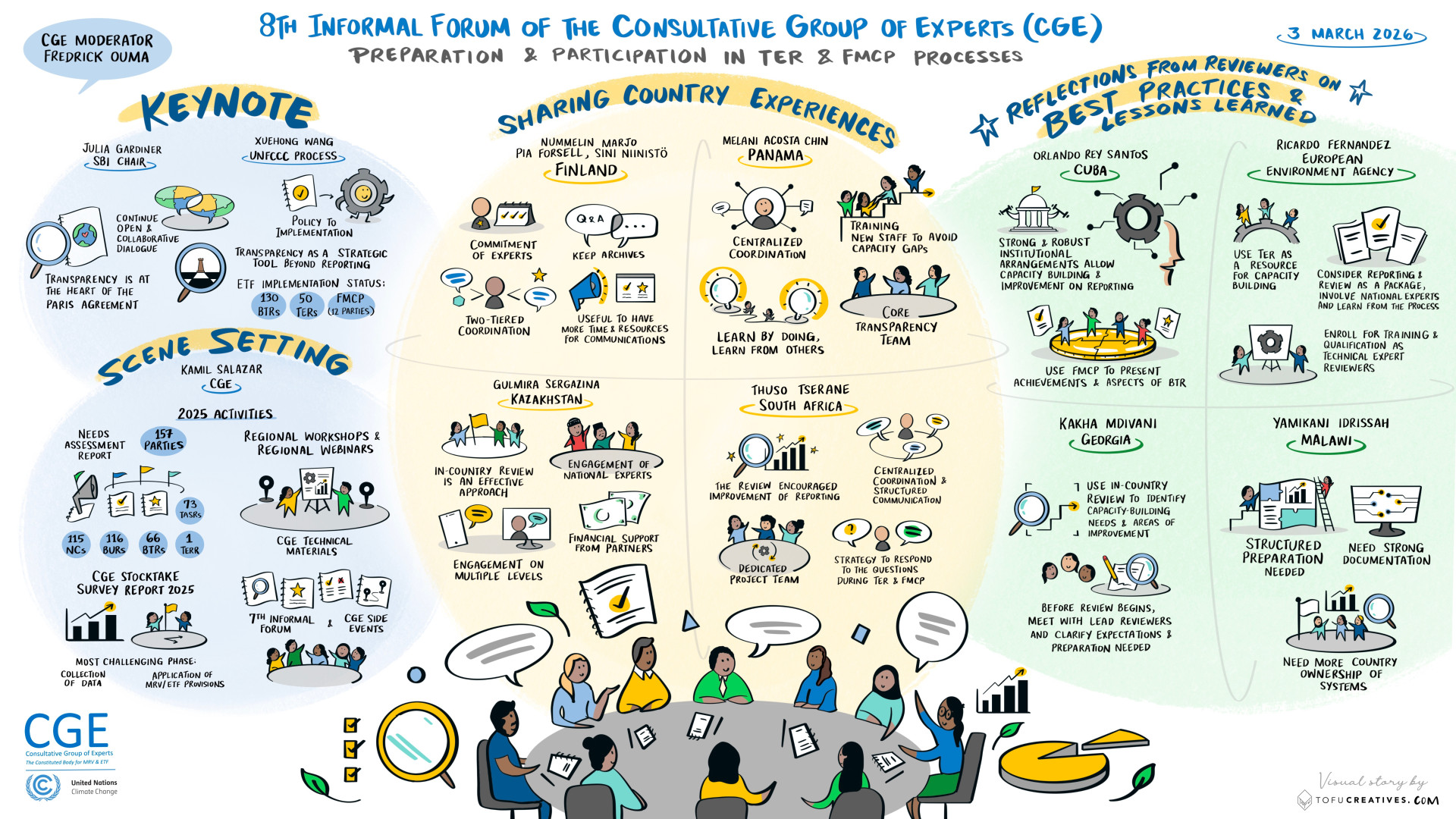
At its 8th Informal Forum, the CGE aims to showcase its key activities and seek feedback from the stakeholders on how its work be further reinforced to address the main challenges, constraints and needs of developing country Parties in implementing the enhanced transparency framework. The event will also serve as a platform to hear directly from the audience on any new and emerging areas that require technical assistance and support. The informal forum aims to exchange experiences and best practices on participation in technical expert review and facilitative multilateral consideration of progress processes under the enhanced transparency framework.
The Informal Forum will be convened as a hybrid event, back-to-back with the fourteenth meeting of the CGE.
Presentations
Summary Report
Agenda
| Time |
Item |
| Moderated by the CGE |
| 09:30-09:35 |
Opening, agenda introduction and housekeeping rules by the moderator |
| 09:35-09:50 |
Keynote remarks
SBI Chair (tbc), CGE, UNFCCC secretariat |
| 09:50-10:00 |
Scene setting presentation by the CGE
The CGE will briefly present its key activities in 2025 in providing technical advice and assistance to developing country Parties that aimed to facilitate implementation of ETF. |
| 10:00-11:15 |
Moderated discussion on experience of Parties with preparation for and participation in TER and FMCP processes
This session will serve as a space for experts and representatives from Parties to share their experience and best practices on preparation for and participation in the TER and FMCP processes.
Interventions by selected Party representatives, reflecting on the guiding questions:
- What are the key lessons learned from the TER process of BTR1, and how these will be considered in preparation of the second BTR?
- What were the main technical or procedural challenges encountered during the BTR review process and how did you address them?
- Which practices or institutional arrangements proved most effective in facilitating participation to TER and FMCP process?
- How did you prepare for the FMCP session, and what strategies were most helpful for ensuring constructive engagement with other Parties?
Question and answer session
Exercise: An interactive exercise to collect information on new and emerging areas that require technical advice and support for transparency from CGE and other support providers. |
| 11:15-11:30 |
Health break |
| 11:30-12:45 |
Moderated discussion on reflections from reviewers on best practices and lessons learned from the TER and FMCP processes
This session will provide an avenue for a discussion with some expert reviewers reflecting on the guiding questions listed below:
- From your experience, what are the most common challenges or capacity gaps faced by Parties based on your experience during the BTR review process?
- Can you share examples of good practices and suggestions to Parties, to facilitate their preparations for the TER and FMCP processes?
- What types of support or innovations do you believe will be most important for developing country Parties in participating to the TER and FMCP?
Question and answer session |
| 12:45-13:00 |
Summary of key takeaways and closing remarks by the moderator |