Background and mandate
The Belém Gender Action Plan (GAP) for 2026-2034, adopted at COP 30 (Decision 7/CP.30), marks a transformative phase for equality, ambition and inclusion in climate policy and action. Building on its predecessors, the Belém GAP establishes a robust pathway to deepen the understanding of the differentiated impacts of climate change and climate policy across sectors, thematic areas and governance levels. To this end, it sets out staged and concrete deliverables designed to enhance the collection, analysis, dissemination, management, and use of gender- and age-disaggregated data and gender analysis, taking into consideration multidimensional factors.
Together, the 10-year enhanced Lima Work Programme on Gender (LWPG) (Decision 7/CP.29) and the Belém GAP promote institutional coherence by advancing evidence-based, gender-responsive climate policy across the UNFCCC architecture and beyond. This includes fostering synergies with the Global Stocktake, the Rio Conventions, as well as the work of the Intergovernmental Panel on Climate Change (IPCC). Crucially, these frameworks support Parties in integrating gender data into their policies, regular reports and communications, contributing both to national implementation and global review and accountability. These mandates constitute a coherent, multi-year architecture essential for strengthening the robust evidence base required for gender-responsive climate policy and action and ensuring that climate policy is grounded on the best available data.
For the 64th session of the Subsidiary Bodies (June 2026), the Belém GAP requests the secretariat to organize an expert dialogue on relevant issues in gender- and age-disaggregated data and gender analysis (Deliverable D.5.2), with contributions from Parties and relevant organizations, including a specific invitation to the IPCC. Building on the COP 28 Gender and Environment Data Conference, the dialogue is organized in collaboration with the Gender and Environment Data Alliance (GEDA).
Objectives and expected outputs
The expert dialogue aims to:
- Map the current landscape of gender- and age-disaggregated data relevant to climate change, identifying existing datasets, methodological frameworks, and good practices at the global and national level;
- Examine how multidimensional factors can be integrated into data collection, analysis and use;
- Identify opportunities for enhancing coherence, including by leveraging existing datasets to inform decision making for gender-responsive climate policy and action;
- Surface persistent methodological, financial, institutional and political gaps and barriers;
- Explore standards and modalities for non-extractive, rights-based and data-sovereign approaches.
As an early and foundational delivery of the Belém GAP supporting the delivery of the coherent, multi-year architecture described above, the dialogue will generate recommendations to inform:
- Upcoming submissions aimed at expanding the evidence base on gender and climate change, in particular under A.3.5 and A.3.9 (due 2027);
- The identification of experts on gender and climate change (D.5);
- The strengthening of knowledge platforms on gender and climate change at the international, regional and national levels (D.5.3);
- Preparations for the first Global Dialogue on Gender and Environment Data (D.7.2), taking place at COP 32 (2027).
Format and participation
The expert dialogue will be held in a hybrid format on 10 June 2026, organized across two sessions: 09:00–13:00 and 15:00–18:00. To foster high-level technical exchange, the event is specifically designed for experts specializing in gender- and age-disaggregated data and gender analysis in the context of climate change, taking into account multidimensional factors, as well as the practitioners who utilize this data for climate policy and action. The working language of the dialogue will be English. Whisper interpretation into French and Spanish for in-person participants is being explored.
Participation is reserved for registered attendees only. Those interested in participating should express their interest through the registration form shared below. This process is designed to ensure a genuine balance of disciplinary expertise and geographic representation across Parties and observers. The participant profile reflects this balance and is described below. Further details regarding the registration timeline and technical requirements will be available on this webpage.
The participant profile for the dialogue is designed to ensure a high level of technical expertise and broad representation across the climate and data landscapes. The event targets national gender and climate change experts, including national gender and climate change focal points, specialists from National Statistical Offices, alongside technical leads from UN entities and intergovernmental organizations working at the intersection of gender and environment data. The dialogue also prioritizes the participation of researchers and data methodologists specializing in feminist methodologies and data sovereignty, as well as representatives from across the UNFCCC observer constituencies, including Indigenous Peoples' organizations, local community networks, youth, and civil society groups focused on gender-responsive climate action - ensuring broad sectoral, geographic and institutional coverage.
Webcast
Draft agenda
|
8:00-8:50
|
Arrival
|
|
9:00 – 9:10
|
Opening remarks
Simon Stiell, Executive Secretary, UN Climate Change
|
|
9:10 – 10:00
|
Data as a cornerstone of the Belém GAP
Moderated by Jahanara Saeed, Manager of Programs at the Women’s Environment and Development Organization (WEDO) and representative of the Gender and Environment Data Alliance (GEDA)
|
|
10:00 – 11:30
|
The Global State of Play: Gender- and age-disaggregated data and gender analysis in the context of climate change
Moderated by Jahanara Saeed, Manager of Programs at the Women’s Environment and Development Organization (WEDO)
|
|
11:30-11:45
|
Health break
|
|
11:45-12:45
|
Bridging data gaps: advancing rights-based and non-extractive methodologies to deepen the climate evidence base
Moderated by Diego de León Segovia, Advocacy Chair at Out for Sustainability and Founder of Queers X Climate and representative of GEDA
|
|
12:50 – 13:00
|
Conclusion of morning discussions
|
|
13:00 – 15:00
|
Lunch break
|
|
15:00 – 15:25
|
Welcome remarks
UNFCCC Secretariat
|
|
15:20 – 15:55
|
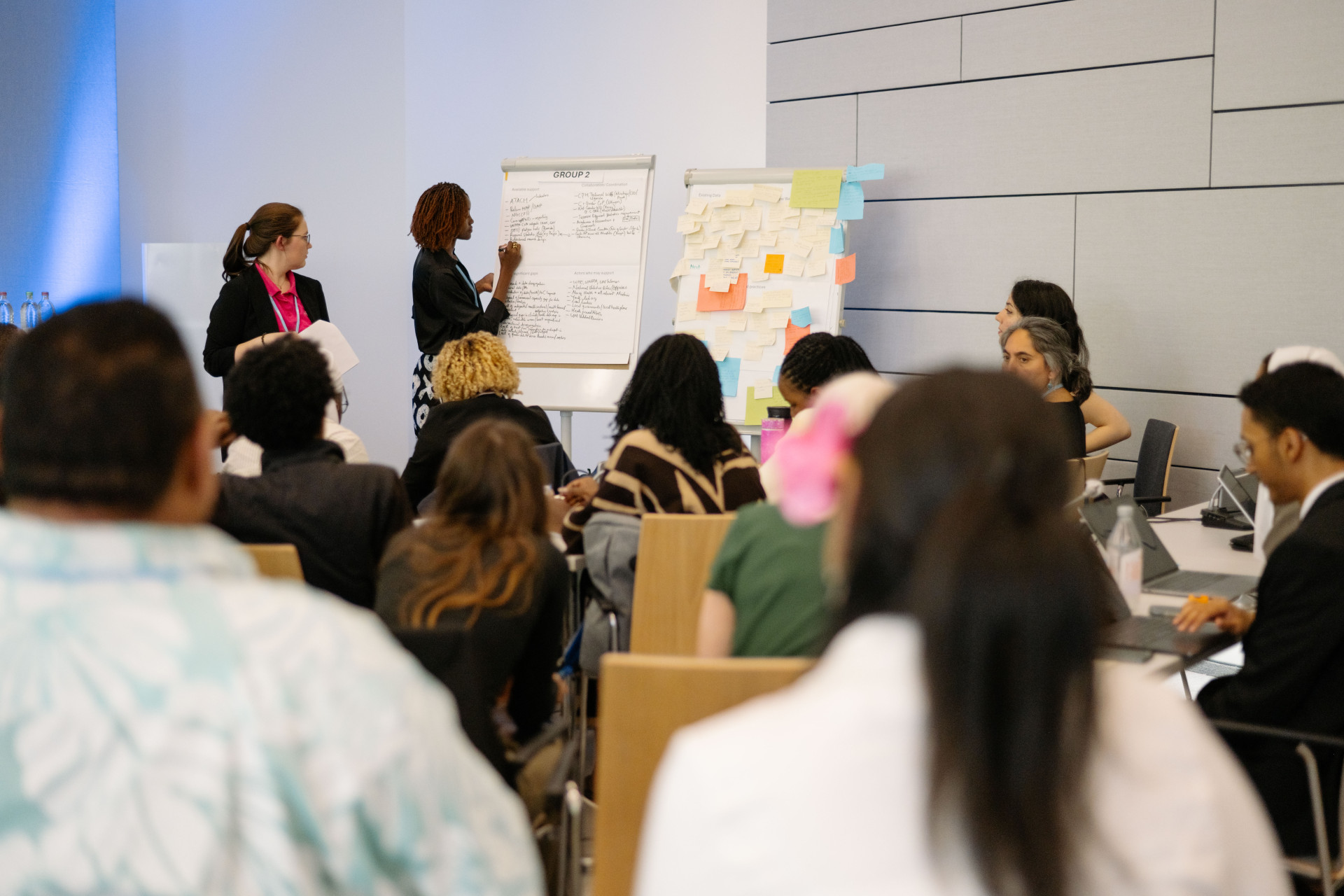
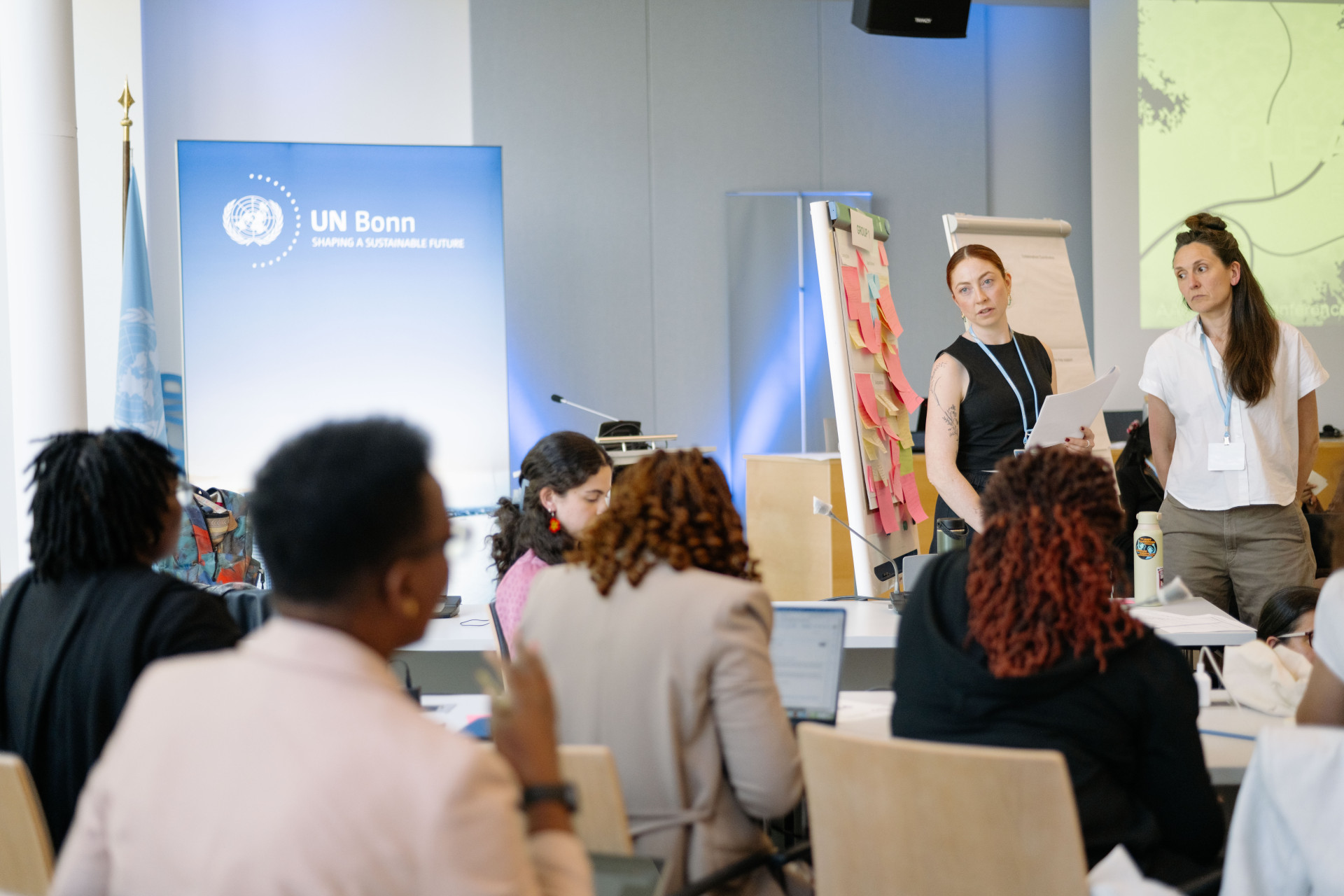
Group work round I – Mapping available data, good practices and gaps
|
|
Group 1: Care work and climate change
|
|
Guiding questions
key gaps that need to be addressed?
|
|
Group 2: Health and gender in the climate context
|
|
Guiding questions
-
What gender- and age-disaggregated health data exists in relation to climate impacts - including on reproductive health, maternal mortality, and disease burden, among others?
|
|
|
Group 3: Violence against women and girls in the context of climate change
|
|
Guiding questions
Following best practices, all VAWG data collection must follow survivor-centered and do-no-harm principles, prioritizing safety, confidentiality, informed consent from the survivor, and minimizing the risk of re-traumatization or further harm.
-
What data exists on the relationship between climate impacts, including displacement, food insecurity, and extreme weather events, and increased rates of violence against women and girls?
|
|
Group 4: Examples of engaging men and boys and of gender-responsive climate action
|
|
Guiding questions
-
What data and evidence exists on the roles, behaviors, and impacts of men and boys in the context of climate change - including as agents of change, beneficiaries of climate action, and contributors to or perpetuators of emissions-intensive practices?
|
|
15:55 – 16:50
|
Group work round II – Recommendations
|
|
Guiding questions for all groups
-
What institutional or coordination challenges must be overcome for existing data to be shared, analyzed, and used effectively in climate decision-making? Which examples of successful collaboration, coordination, or partnerships that could be scaled up?
-
Where are the most significant data, evidence, or capacity gaps, and which actors are best positioned to help address them?
|
|
16:50-17:00
|
Health break
|
|
17:00 – 17:50
|
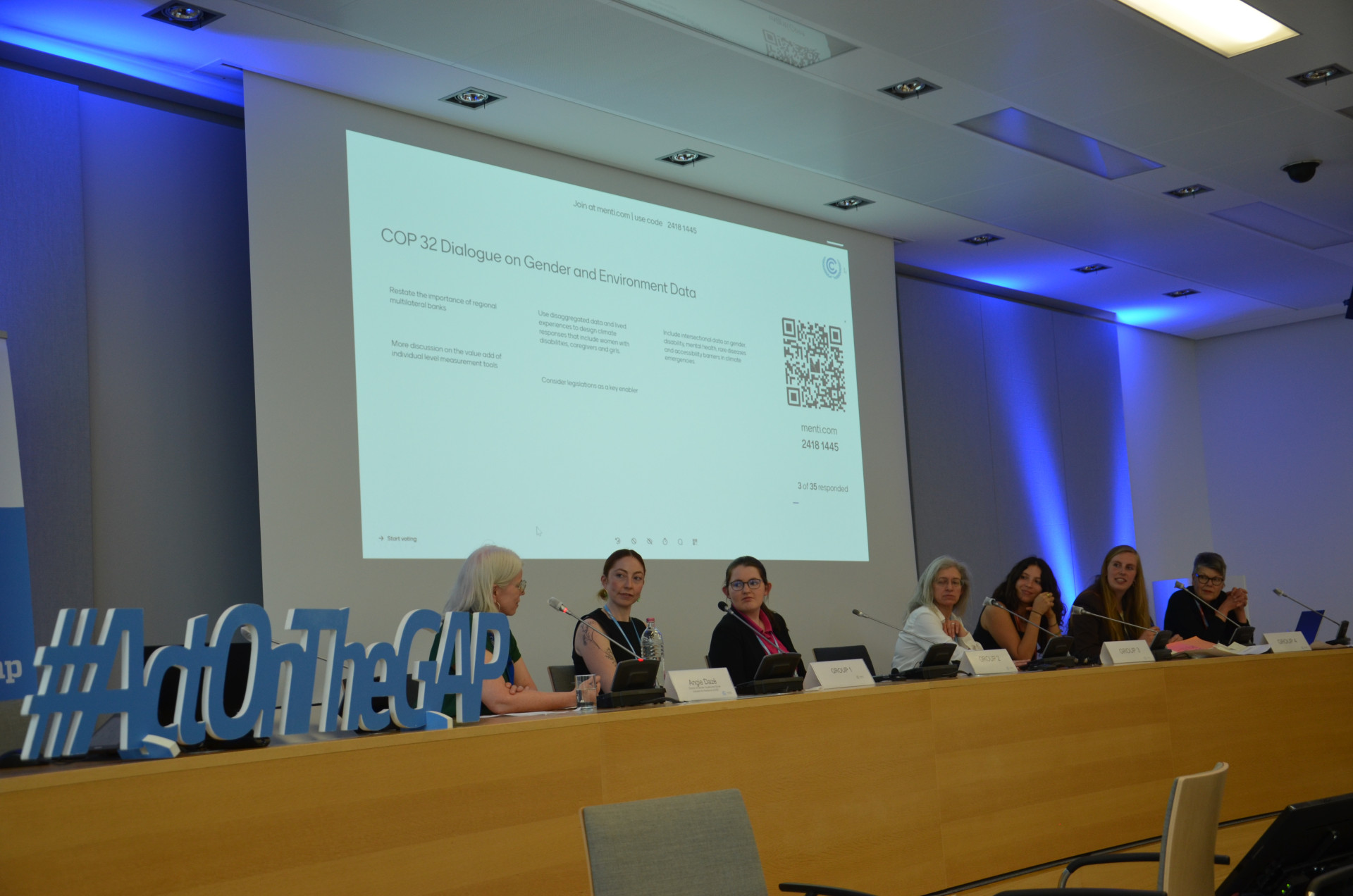
Report back from group work, focused on Round II and any relevant input for the COP 32 Global Dialogue on Gender and Environment Data
Moderated by Angie Dazé, Director of Gender Equality and Social Inclusion for Resilience at the International Institute for Sustainable Development (IISD) and representative of GEDA
|
|
17:50 – 18:00
|
Concluding remarks
Julia Gardiner, SBI Chair
|
Registration
The registration deadline has already passed.
Please note that the event reached full capacity (in-person). However, you can still participate actively in the Expert Dialogue through the available online modalities.
Outputs
Gallery

Credit: UNFCCC - Pamela Elizarraras Acitores
Credit: UNFCCC - Pamela Elizarraras Acitores
Credit: UNFCCC - Pamela Elizarraras Acitores