UN Climate Change News, 9 June 2026 -- Today at the UN June Climate Meetings in Bonn, Germany, the incoming COP31 Presidency of Türkiye announced new targets, as part of its Global Climate Action Agenda launch.
- Electrification target to raise share of final energy demand met by electricity from just over 20% today to 35% by 2035
- Halving growth in global waste by 2035
- Resilient Cities target of reducing energy consumption intensity in the building sector by at least 25% by 2035
Further details are in this press release today from the COP31 Presidency.
Below is a transcript of the opening remarks delivered at a press conference today in Bonn by:
- Minister Murat Kurum, of Türkiye, COP 31 President-Designate (+ English translation)
- Minister Chris Bowen, of Australia, President of COP31 Negotiations
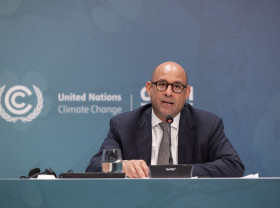
- Simon Stiell, UN Climate Change Executive Secretary
Minister Murat Kurum
Minister of Environment and Urban Planning, Government of Türkiye
COP 31 President-Designate
Transcript of opening remarks at press conference during the UN June Climate Meetings
(English translation)
(Sixty-fourth session of the Subsidiary Bodies, or SB64)
Bonn, Germany
Distinguished Executive Secretary, Dear Friends, Mr Minister Chris, Members of the Press,
We meet today in Bonn, a city whose history carries deep meaning. Bonn came to embody Europe’s determination to rise again after the devastation of war. Today, it also stands among the important centres of our shared global effort to confront the climate crisis.
Here, in this meaningful setting, and in the presence of valued friends such as yourselves, I wish to make one point clear from the outset: our common home, the Earth, is passing through one of the most critical periods it has ever faced.
At such a defining moment for the world, we are pleased to share with you the priorities of the COP31 Action Agenda and the strong commitment to implementation that underpins our work.
Today, I would like to repeat the call we are making to all humanity.
In climate action, the time for simply setting out goals is behind us. The task before us now is to accelerate implementation.
It is with this understanding, and with this resolve, that we have shaped the COP31 Action Agenda.
Our priorities span a wide field: electrification, zero waste, food security, resilient cities, green industrialization, youth participation, health and education. We do not approach these areas as a list of agenda items. We see them as a framework for implementation, designed to produce concrete results.
Guided by this approach, we have set out clear and measurable targets for 2035. We aim to accelerate the clean energy transition by raising the global electrification rate to 35 percent.
We aim to bring zero waste and methane reduction to the centre of climate action.
In the buildings sector, we aim to reduce energy intensity by 25 percent, making our cities more resilient, more efficient and better prepared for the future.
In production and manufacturing, we aim to advance green industrialization and support the circular economy by increasing the global circular material use rate to at least 15 percent.
We will work to ensure that every young person, in every part of the world, has access to education that builds awareness of the climate crisis. At the same time, by providing all young farmers with training on climate-resilient agricultural practices, we will contribute to strengthening global food security.
Through the Climate Implementation Bridge, we aim to support countries in turning their Nationally Determined Contributions into investable project portfolios. In this way, we seek to help climate finance reach the ground faster and with greater impact.
Because what the world needs today is not another round of promises. It needs to see existing commitments delivered.
This is why COP31 is not about creating new headings for the sake of creating them. Its central purpose is to ensure that the decisions already taken are translated fully into action. More than that, it is about advancing a global process of action: moving beyond statements of intent and achieving real results.
It is also about making climate action visible far beyond negotiation rooms — in our cities, in our fields, in industry, in energy systems and in people’s everyday lives.
Of course, we know that no country can carry out this transformation on its own.
For that reason, we are building COP31 on dialogue, consensus and action.
Our aim is to deepen cooperation, scale up successful practices, help finance reach the ground more quickly, and turn targets into investments opportunities.
In a few moments, together with our colleagues, we will be pleased to take your questions.
We see this meeting as an important opportunity to reflect the spirit of COP31.
Climate change is a global challenge that does not stop at borders.
The answer to such a challenge must be built on shared responsibility, strong cooperation and determined implementation.
Here in Bonn, we are strengthening dialogue. In Antalya, we will build broader consensus and stronger action. And together, we will carry climate action from words to implementation, and from implementation to results.
Thank you for your participation and interest.
Bakan Murat Kurum
Türkiye Cumhuriyeti Çevre, Şehircilik ve İklim Değişikliği Bakanı
COP 31 Başkanı
BM Haziran İklim Toplantıları sırasında düzenlenen basın toplantısındaki açılış konuşmasının transkripti
(Yardımcı Organların Altmış Dördüncü Oturumu - SB64)
Bonn, Almanya
Değerli Basın Mensupları,
Bugün, tarihi hafızası çok güçlü bir şehirde, Bonn'dayız. Bonn, savaşın yıkımından sonra Avrupa'nın yeniden ayağa kalkma iradesini temsil eden bir şehirdir. Bugün de küresel iklim krizine karşı mücadelemizin önemli merkezlerinden biri olmuştur.
Bu anlamlı atmosferde, sizler gibi kıymetli dostlarımızın huzurunda hemen altını çizmek isterim ki; ortak evimiz dünya yaradılışından bugüne geçirdiği, en kritik dönemi yaşamaktadır.
Dünya, böylesine hassas bir dönemden geçerken, COP31 Eylem Gündemimizin önceliklerini ve uygulama irademizi sizlerle paylaşmaktan dolayı ayrıca mutlu olduk.
Bugün tüm insanlığa yaptığımız çağrıyı tekrar etmek isterim.
İklim eyleminde artık yalnızca hedefleri konuşma değil, uygulamayı hızlandırma zamanıdır.
Biz de COP31 Eylem Gündemi'ni bu anlayışla, bu duruşla şekillendirdik.
Elektrifikasyondan sıfır atığa, Gıda güvenliğinden dirençli şehirlere, Yeşil sanayileşmeden gençlik katılımına;
Sağlıktan eğitime kadar uzanan önceliklerimizi; yalnızca bir gündem listesi olarak değil; somut sonuçlara ulaşacak bir uygulama çerçevesi olarak ele alıyoruz.
Bu anlayışla, 2035 perspektifinde somut ve ölçülebilir hedefler ortaya koyduk. Küresel elektrifikasyon oranını yüzde 35'e çıkararak temiz enerji dönüşümünü hızlandırmayı hedefliyoruz.
Elektrifikasyon konusunu tüm paydaşlarımızla detaylı bir biçimde ele aldık.
Bundan sonraki süreçte de almaya devam edeceğiz. Birleşmiş Milletler Genel Sekreteri Sayın Antonio Guterres’in katılımıyla Londra İklim Haftası kapsamında stratejik ortağımız olan Uluslararası Enerji Ajansı ile birlikte gerçekleştireceğimiz İkinci Yüksek Düzeyli Toplantıda hiçbir ülkeyi geride bırakmadan elektrifikasyon dönüşümünü nasıl hızlandırabileceğimize odaklanacağız.
Atık üretimindeki artışı, yarı yarıya azaltarak sıfır atık ve metan azaltımı yaklaşımını, iklim eyleminin merkezine taşımayı amaçlıyoruz.
Bina sektöründe enerji yoğunluğunu yüzde 25 azaltarak şehirlerimizi daha dirençli ve verimli hale getirmeyi hedefliyoruz.
Bildiğiniz gibi dünya artık sanayide yeni bir döneme giriyor. Lineer ekonomiden döngüsel ekonomi dediğimiz yeşil üretim dediğimiz yeşil sanayileşme dediğimiz bir sürece doğru evriliyoruz ve istiyoruz ki…
Üretim ve imalat sektöründe küresel döngüsel malzeme kullanım oranını en az yüzde 15’e çıkararak yeşil sanayileşmeyi ve döngüsel ekonomiyi desteklemeyi amaçlıyoruz.
Dünyadaki tüm gençlerin iklim krizi farkındalık eğitimlerine erişimini sağlayacağız ve özellikle de Genç çiftçilerin tamamının iklim dirençli tarım uygulamaları konusunda eğiterek, küresel gıda güvenliğini güçlendireceğiz.
İklim Uygulama Köprüsü ile de ülkelerin Ulusal Katkı Beyanlarını yatırım yapılabilir proje portföylerine dönüştürmelerini destekleyerek, finansmanın sahaya daha hızlı ve etkili ulaşmasına katkı sağlamayı hedefliyoruz.
Çünkü bugün dünya yeni taahhütlerden çok, mevcut taahhütlerin hayata geçirildiğini görmek istiyor.
İşte bu nedenle, COP31'in temel yaklaşımı; yeni başlıklar üretmek değil; tam aksine, bugüne kadar alınan kararların topyekün uygulamaya dönmesini sağlamaktır. Dahası, küresel çapta bir aksiyon sürecini yaşamaktır, niyet beyan etmek değil, sonuç almaktır.
Ve iklim eylemini yalnızca müzakere salonlarında değil; şehirlerde, tarlalarda, sanayide, enerji sistemlerinde ve insanların günlük yaşamlarında görünür hale getirmektir.
Tabi biz şunu da biliyoruz ki; hiçbir ülke bu dönüşümü tek başına gerçekleştiremez.
Bu nedenle COP31'i; diyalog, uzlaşı ve aksiyon temelinde şekillendiriyoruz.
İş birliğini güçlendirmeyi, iyi uygulamaları yaygınlaştırmayı, finansmanı sahaya daha hızlı ulaştırmayı ve hedefleri uygulanabilir yatırımlara dönüştürmeyi amaçlıyoruz.
Birazdan, arkadaşlarımızla birlikte sizlerin sorularını yanıtlayacağız.
Bu buluşmayı, COP31'in ruhunu yansıtan önemli bir fırsat olarak görüyoruz.
Çünkü iklim değişikliği sınır tanımayan küresel bir meydan okumadır.
Bu meydan okumaya verilecek cevap da ancak ortak sorumluluk, güçlü iş birliği ve kararlı uygulama ile mümkün olacaktır.
Bonn'da diyaloğu güçlendiriyoruz. Antalya'da uzlaşıyı ve aksiyonu büyüteceğiz. Ve birlikte, iklim eylemini sözden uygulamaya, uygulamadan sonuca taşıyacağız.
Katılımınız ve ilginiz için teşekkür ediyor, şimdi sorularınızı almaktan memnuniyet duyacağımızı ifade etmek istiyorum.
Minister Chris Bowen MP
Minister for Climate Change and Energy, Government of Australia
COP 31 President of Negotiations
Transcript of opening remarks at press conference during the UN June Climate Meetings
Bonn, Germany
Thank you very much, I’m delighted to be here to support a very important day in the history of COP31, the release of the Action Agenda, led by my friend Murat Kurum. And also I want to acknowledge Fatma Varank and her leadership as well in developing the Action Agenda.
I think that this Action Agenda rises to the moment. There’s a lot of concern around the world about the geopolitical environment. We’re in the middle of the worst energy crisis in our history, and this increases the task for all of us.
The good news is that the answer to improved energy reliability and energy sovereignty is also the answer for emissions reduction – that is more electrification, more renewable energy, sovereign form of energy, reliable, which is also cheap and is also the best for the climate.
And the Action Agenda really lays out a very comprehensive plan to increase electrification but also the other important task that Murat and Türkiye have laid out before the world in terms of a clean economy, a circular economy, resilient cities.
One of the impressive things I think about the Action Agenda is that it draws on Türkiye's experience and Murat’s leadership domestically in Türkiye with matters of urbanisation, of resilient cities, of in dealing with the resilience (against) natural disasters, and rising again after the setback of natural disasters in Türkiye.
But it doesn't do so in a way which emphasises Türkiye’s challenges but takes Türkiye's learnings and shares them with the world, and I think that’s very impressive.
So, I’m delighted to support most strongly the Action Agenda outlined by Türkiye.
Now can I perhaps do what I sometimes like to do in press conferences in Australia and pre-empt some questions from journalists and answer them before you ask them. I find this an efficient way of managing these things.
The relationship between the Action Agenda and the Negotiations I'm sure will be on your minds – what does this mean for the negotiations?
Can I just say: they’re separate things. They’re related things, but they’re different things. There’s a different process, there's a different threshold.
The Action Agenda is set by the Presidency, the negotiations are steered but are a party-driven process and require consensus.
But what we will do is take inspiration from the Action Agenda and try and give momentum for the Action Agenda through the negotiations around some of these key items, and we’ve worked hard at that.
And we want to ensure that while Türkiye has authority of the Action Agenda and Australia has authority over the Negotiations, we’re bringing them together. And that’s exactly what we’ve been doing and will continue to do.
I think, for example, it’s wonderful that Murat and Türkiye have outlined priority areas for young people and educating young farmers, and the Youth Champion appointed by Australia with Türkiye’s strong support is a young farmer from regional Queensland in Australia.
So, this shows the synergies that we’re bringing, the complementarity, the harmony that we’re bringing to the process, so as to talk to parties about what is possible in the negotiations and to drive to a good solid, strong outcome for electrifying those things that can be electrified, for reducing emissions and using that as a mechanism to transition away from fossil fuels, and that’s very important.
So, today’s a good day. It is a document which challenges the world, as it should be.
Because we need this COP to be a COP of implementation and acceleration, and I think the Action Agenda is a very impressive blueprint to help us do that.
Simon Stiell
Executive Secretary, UN Climate Change
Transcript of opening remarks at press conference during the UN June Climate Meetings (Sixty-fourth session of the Subsidiary Bodies, or SB64)
Bonn, Germany
Electrification is a global game-changer, supercharging economies, jobs and living standards, while fighting back against the global climate crisis.
All around the world, clean energy is surging.
Renewables and batteries offer energy security, economic stability, and lower bills for households and businesses.
To deploy and absorb them at even greater scale - we must hit fast-forward on electrification: Rewiring the global economy can kick the world’s dependency on to coal, oil and gas, bringing energy costs down, and increasing energy security.
Dramatic and rapid change is achievable with existing technology. Last year renewables overtook coal as the world's top electricity source. Something unimaginable when the Paris Agreement was struck over a decade ago.
The global economy is shifting faster than most people think, through climate cooperation and hard, cold economic reality: renewables are cheaper. Meanwhile, fossil fuel pollution is baking our planet, while driving a cost crisis around the world. Electrification will drive innovation as more countries build and scale their efforts, seeding new industries, while saving billions on imported fuels and creating countless new jobs.
Clean energy and electrification can also help expand energy access, making sure no-one is left behind.
The Global Climate Action Agenda can play a vital role. Complementing negotiations, bringing together governments, companies and investors, cities and regions, civil society, and many more. Amping up the Action Agenda can help turn words on paper into projects on the ground.
Drive faster and fairer progress - in developed and developing countries.
And provide a prospectus for increased investment and clarity about climate finance needs - a trillion dollars was committed to grids and storage by 2030 at COP30 in Belem.
I welcome this initiative from the Turkish COP31 presidency - working closely with Australia. As well as the other targets announced today: building more resilient, energy-efficient cities and cutting waste.
And I commend them for building on the six thematic axes of the Action Agenda that Brazil launched at COP30 last year - introducing alignment with the first global stocktake outcomes.
Reducing waste, increasing efficiency, and building resilient cities can cut carbon, methane and other dangerous greenhouse gases, while protecting people from disasters that are coming thicker and faster.
So these are just some examples of how the Action Agenda can help. Governments face major challenges, the Action Agenda delivers solutions, acceleration and faster implementation.
So I think that frames where we are this afternoon with Türkiye’s presentation of the expansion under the Action Agenda under the six axes for the Action Agenda moving forward.
Thank you.