|
Selected institution partners will collaborate with the UNFCCC secretariat to:
-
Create proof of concept AI-based analysis tools to support climate negotiations, such as text analytics, semantic search, and summarization, by making use of information collected from various meetings organized by the secretariat.
-
Strengthen data governance and transparency frameworks, ensuring that AI systems used in multilateral climate change negotiations meet the highest standards of accuracy, fairness, and explainability.
-
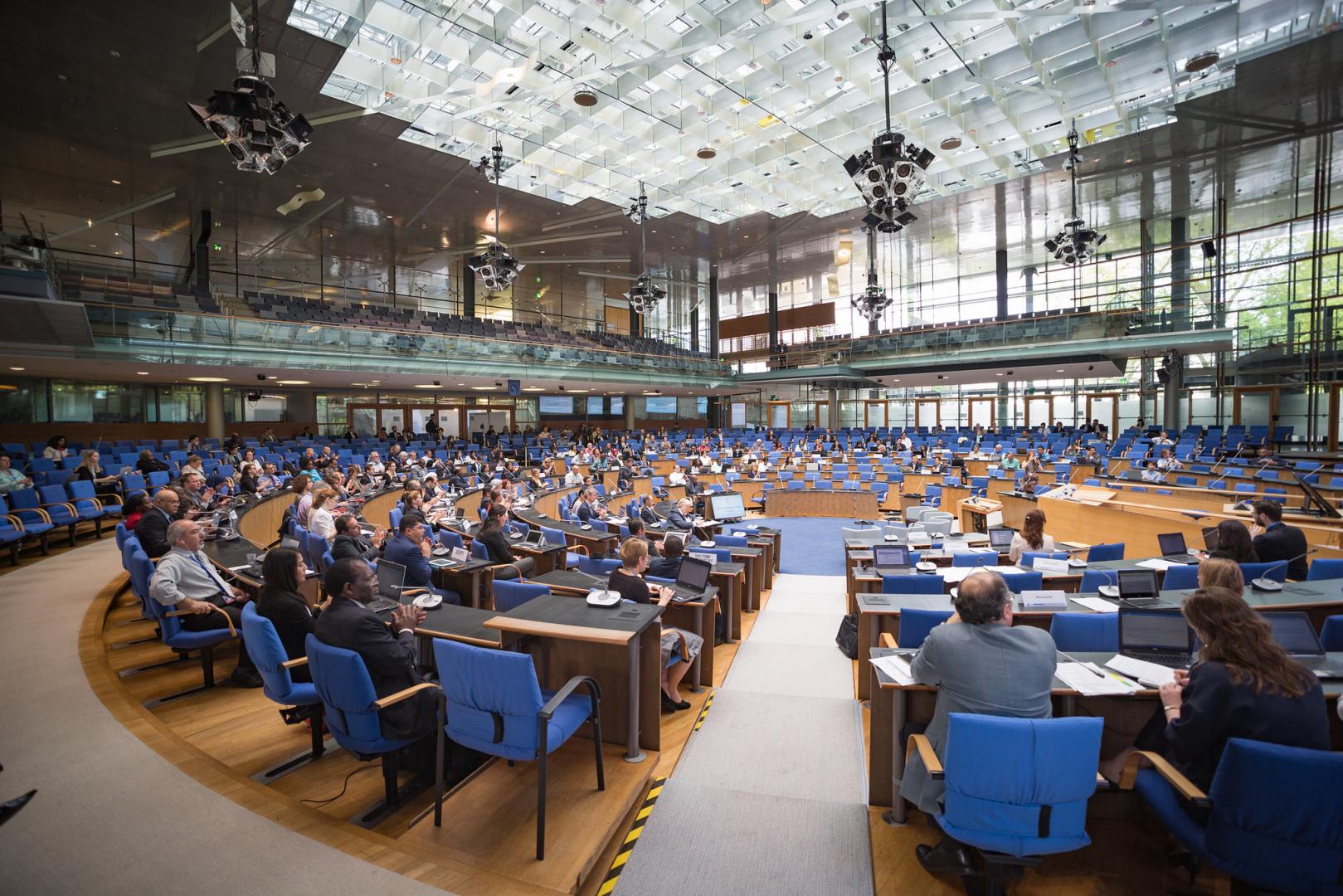
Pilot and evaluate AI tools in real-world negotiation environments, including SB sessions, COPs, and related expert meetings.
Eligibility
Universities, research institutes, and academic consortia with demonstrated expertise in one or more of the following domains are invited to apply:
Partnership Modalities
Partners may engage in:
The Selection Process
The UN Climate Change secretariat engages with partners in voluntary agreements to achieve a common goal or undertake a specific task, in support of achieving the aims of the Paris Agreement. Partner contributions may include any combination of financial, in-kind, and knowledge resources.
Once entities interested in partnering with the UN Climate Change secretariat have submitted a partnership proposal, the secretariat begins an internal review process. This process begins with a due diligence assessment, which is outlined in the annex to the UNFCCC Partnership Guidelines, and includes the application of eligibility and the exclusionary criteria. Prospective partners must disclose to the secretariat all relevant information that will allow the secretariat to conduct due diligence.
Once a potential partnership has passed the secretariat’s internal review process, the secretariat will inform the entity accordingly, then formalize the partnership through a written agreement in accordance with the UNFCCC Partnership Guidelines. Partnership agreements require that parties carry out their responsibilities and obligations in accordance with their respective regulations, rules, policies, and procedures, as well as the decisions of their governing bodies.
The purpose of the secretariat’s partnerships is not to establish commercial relationships, or for commercial or private gain. Partnerships are non-exclusive and are open to multiple partners at any time. As stated in the UNFCCC Partnership Guidelines, cooperation with the secretariat explicitly excludes any role of the partner to influence the secretariat’s governance, decision-making processes, or policies. Partnerships should maintain the integrity, independence, and impartiality of the secretariat and its partners.
|
|
Entities interested in partnering with the secretariat under this call for proposals should submit their formal proposal by e-mail:
The proposal should:
Clearly reference the relevant call for proposal;
Indicate the scope, objectives and duration of the proposed partnership and, if applicable, the financial value of the entity’s contribution;
Address, to the extent possible and with supporting documentation, the entity’s capacity to enter into and implement the partnership (including proof of juridical personality, proof of sound financial management and proof of technical capacities to carry out the partnership);
Address, to the extent possible and with supporting documentation, whether and how the entity meets each of the eligibility criteria set out in Partnerships with UNFCCC: At a Glance, indicating any relevant present and/or past activity or advocacy regarding these criteria;
Confirm by a formal statement that the entity does not meet any of the exclusionary criteria set out in Partnerships with UNFCCC: At a Glance, indicating any relevant present and/or past activity or advocacy with regard to these criteria;
Include a statement of the entity’s intention to fully comply with the terms of a partnership agreement to be agreed with the secretariat, as outlined in Partnerships with UNFCCC: At a Glance;
Please note, all new and existing partners always need to seek permission to publish the UNFCCC name and logo for any communications material that highlights the partnership with the UNFCCC. All requests need to always be in accordance with the 'Partnership formalization' section in Partnerships with UNFCCC: At a Glance.
|