Environmental Responsibilities of the Secretariat

The UNFCCC secretariat's sustainability efforts are part of a wider United Nations campaign to manage its sustainability performance by measuring, reducing and offsetting its impacts, particularly its carbon footprint. The UN as a whole and the UNFCCC itself have mandates to strive to increase sustainability efforts and cut carbon footprint.

As the organization supporting Parties in advancing global climate action, the UNFCCC secretariat strives to ensure its operations embody the same ambition it promotes internationally.

Through the Environmental Sustainability Policy and work towards a dedicated Environmental Management System (EMS), the secretariat systematically measures, manages, and improves its environmental performance across all areas of operation.

Anchored in our mission framework as convenor, custodian and catalyst, we bring people together around shared sustainability goals, safeguard resources responsibly, and inspire action through innovation and transparency.

Our Detailed Environmental Data
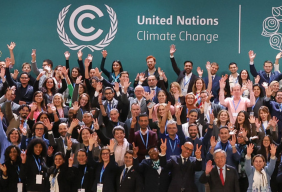
UN Climate Change staff photo COP 29

The UNFCCC secretariat's Environmental Sustainability Policy establishes our framework for protecting the environment and promoting sustainability across all our operations. Guided by four core principles, we integrate environmental considerations into every decision we make.

  • Environmental Stewardship: Taking responsibility for our environmental impacts and protecting natural systems
  • Efficient Resource Use: Minimizing consumption and maximizing the value of every resource
  • Continuous Improvement: Regularly reviewing and enhancing our environmental performance
  • Stakeholder Engagement: Collaborating with staff, partners, and communities on sustainability
ISO/EMAS Logo

The secretariat is working toward certification of our environmental management system against internationally recognized standards such as ISO 14001 or EMAS, demonstrating our commitment to systematic, verified environmental excellence.

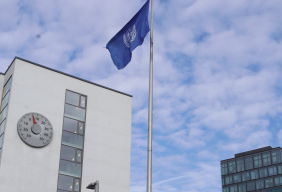
AH Building

Our environmental work focuses on six priority areas. Each reflects our commitment to continual improvement and responsible management.

1. Reducing greenhouse gas emissions

We prioritize energy efficiency across our facilities and travel operations, from optimizing heating, cooling and lighting to encouraging low-carbon travel options and hybrid meeting formats. We monitor and report our emissions annually through the Greening the Blue initiative to ensure transparency and accountability.

2. Improving resource efficiency

Efficient use of energy, water and materials is essential to reducing our environmental footprint. The secretariat continues to implement measures to reduce consumption, including motion-sensitive lighting, efficient IT equipment and paper-free work practices wherever feasible.

3. Practicing sustainable procurement

UNFCCC procurement practices reflect our obligation to minimize our environmental footprint. UNFCCC actively promotes sourcing of goods and services that meet high environmental standards and expects its suppliers and contractors to adopt sustainable materials, packaging, and transport methods.

4. Minimizing waste

We aim to prevent waste generation at the source, and where unavoidable, ensure that materials are reused, recycled or responsibly disposed of. Separate waste collection points, reduction of single-use items, and re-use of conference materials are now standard practice across our offices and events.

5. Raising staff awareness and engagement

Environmental sustainability starts with people. Regular campaigns, internal events, and green-office initiatives foster a shared sense of responsibility among staff and encourage practical action in daily work.

6. Reporting transparently on performance

We believe transparency drives improvement. The secretariat reports annually through the UN-wide Greening the Blue platform, sharing data on energy use, emissions, waste, and water consumption.

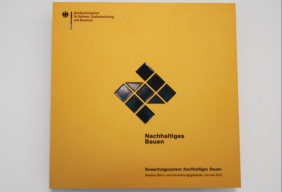
German Sustainable Building Rating System (BNB)

2024 – Climate Tower awarded Gold Standard under the German Sustainable Building Rating System (BNB)
Recognized for energy efficiency, high indoor environmental quality, and sustainable design.

2023 – Environmental Sustainability Policy
The adoption of an Environmental Sustainability Policy, kicked off the development of a comprehensive EMS aligned with the UN Sustainability Strategy, providing systematic processes for continuous environmental improvement.

2022 – Climate Tower Completion
Opening of the innovative Climate Tower building on the UN Campus, consolidating UNFCCC staff in a purpose-built sustainable facility with cutting-edge environmental features.

2019 - Strategy for Sustainability Management in the United Nations System, 2020–2030 endorsed
The UN-wide strategy was developed jointly by over 50 UN system agencies, with contributions from UNFCCC.

2015 – First participation in Greening the Blue report
The secretariat began publicly reporting its environmental performance alongside other UN entities. The measuring and reporting standards were developed with key input from UNFCCC.

2013 – Altes Abgeordneten Hochhaus Completion
A historical building was refurbished to serve as the new headquarter building for the UNFCCC secretariat. Rehabilitation followed highest environmental standards of the time, including features such as recycling/reuse of demolition residuals, locally produced, natural, environmentally sustainable materials, photovoltaic panels, hydro-geothermal technology, passive house standards.

2012 – UNFCCC secretariat achieves climate neutrality and supports others
Achieved full climate neutrality for the first time, through emission avoidance, reduction, and offsetting measures. Over the years, the secretariat supported over 25 UN system agencies in offsetting their remaining emissions.

Climate Tower

For comprehensive data on our environmental performance, including year-over-year comparisons, detailed metrics, and progress reports, visit our profile on Greening the Blue on the UN system's sustainability transparency platform.

Leading Sustainable Event Management

The yearly COPs serve as a unique opportunity to showcase, innovate and advance sustainable conference management practices on the global stage.

Each year, the COP host country, in collaboration with the secretariat, helps develop and deliver a comprehensive sustainability and climate neutrality plan to address the environmental, social and financial impacts of hosting the largest UN meeting worldwide.

Sustainability and environmental performance of the COP is evaluated by a third party.

Recent host nations have produced detailed sustainability reports showcasing innovations in renewable energy use, sustainable transport, waste reduction, local sourcing, and inclusive accessibility. A number of events, most recently COP28 and COP29, have been awarded prestigious certifications such as the ISO 20211 international standard for Event Sustainability Management Systems.

The sustainability reports set benchmarks for future hosts and demonstrate the global climate community's commitment to walking the talk on sustainability.


Taking Action Together

Environmental sustainability is a shared responsibility that extends beyond our own operations. The secretariat works closely with partners and stakeholders to advance sustainable practices and reduce environmental impact worldwide.
 

Host city partnership: 
Collaborating with the City of Bonn and the Government of Germany to promote sustainable operations and local community engagement.

Supplier partnerships: 
Working with vendors and contractors to meet high environmental standards in goods and services.

UN collaboration: 
Sharing knowledge and best practices with other UN entities on the Bonn Campus and across the UN system.

Stakeholder engagement:
Considering the perspectives of Parties, observer organizations, and the wider public in shaping our sustainability efforts.

Staff engagement: 
Empowering personnel to contribute through daily actions and participation in awareness and training initiatives.

Content