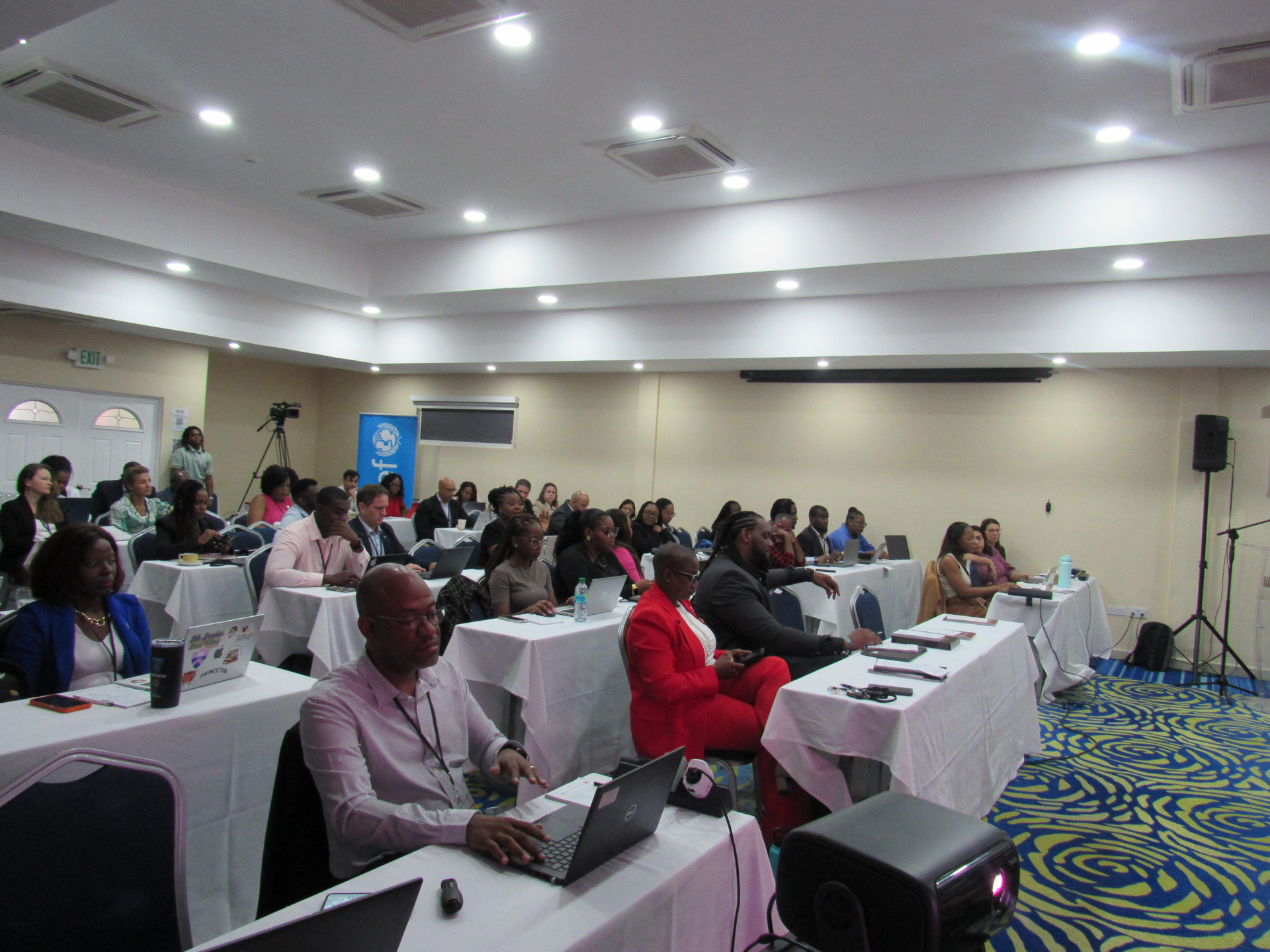
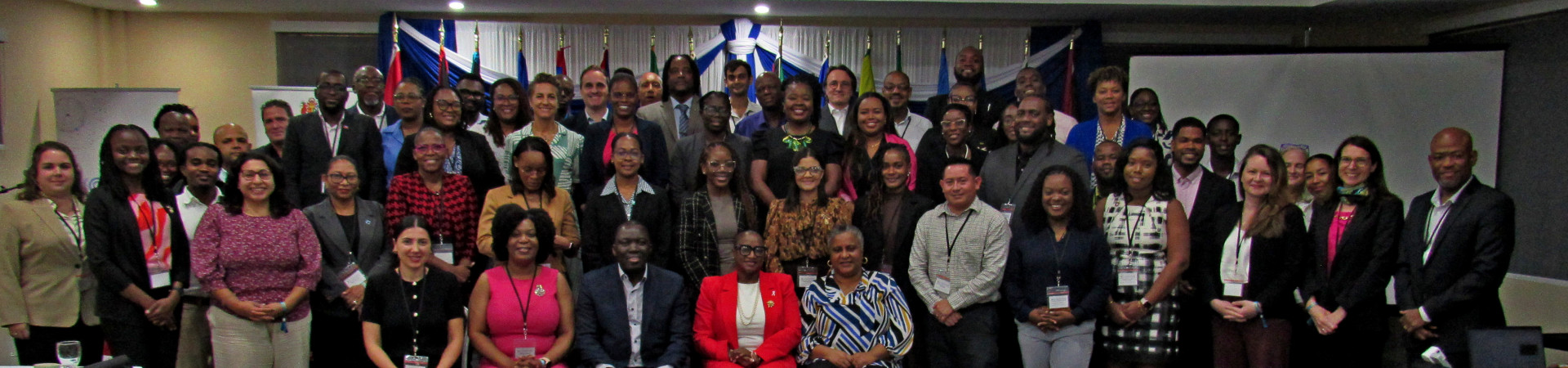
The UN Climate Change Regional Collaboration Centre for the Caribbean (RCC Caribbean), in collaboration with regional and international partners, organized a four-day regional workshop to support Caribbean Small Island Developing States (SIDS) in accelerating the implementation of their Nationally Determined Contributions (NDCs) and National Adaptation Plans (NAPs).
The workshop brought together government representatives, regional institutions, development partners and financial institutions to explore how national climate priorities can be translated into implementable and investable actions. It also provided a space for countries to exchange experiences, identify common challenges and engage with potential sources of climate finance.
The event comprised a Peer Exchange Workshop (PEW) on NDC Implementation, a NAP 3.0 Acceleration Workshop and a dedicated Climate Finance Day.
Background
Caribbean SIDS are among the countries most vulnerable to the impacts of climate change, despite contributing only a small share of global greenhouse gas emissions. Limited fiscal space, institutional capacity, access to finance and technology continue to affect their ability to implement climate action at the necessary scale and speed.
Accelerating the implementation of NDCs and NAPs requires strong institutional arrangements, clearly prioritized and costed actions, effective monitoring and reporting systems, and closer alignment between national climate plans and available financing opportunities.
Building on discussions initiated during the NDC Clinic held at Climate Week in Panama City in 2025, the workshop will support countries in moving from planning to implementation. It will facilitate peer learning and engagement with regional and international partners to address the barriers affecting NDC and NAP implementation and financing across the Caribbean.
Credit: UN Climate Change
Objectives
The workshop, co-organized by the Government of Grenada, the UN Climate Change Regional Collaboration Centre for the Caribbean (RCC Caribbean), NDC Partnership, the Center for Access to Climate Finance, United Nations Development Programme (UNDP), Caribbean Community Climate Change Centre (CCCCC), the IKI-funded Gesellschaft für Internationale Zusammenarbeit (GIZ)-implemented NDC-TEC project, United Nations Children's Fund (UNICEF), the NAP Global Secretariat and the Commonwealth Secretariat aimed to:
- Provide participants with key information on NDC and NAP processes and the support available to Caribbean countries for advancing NDC 3.0 and NAP 3.0 implementation.
- Explore the institutional arrangements, policy frameworks, capacity-building measures and resource-mobilization approaches required for effective NDC implementation.
- Strengthen participants’ understanding of climate finance opportunities and the development of bankable projects.
- Facilitate peer exchange on successful experiences, good practices and innovative approaches to NDC and NAP implementation and investment.
- Strengthen the capacity of policymakers and practitioners to develop, cost, finance and implement adaptation priorities.
- Promote collaboration among governments, development partners, financial institutions and other regional stakeholders.
Target audience
The workshop was intended primarily for government officials involved in the development and implementation of NDCs and NAPs and in preparing proposals to access climate finance. Participants included representatives of ministries and national institutions responsible for climate change, environment, energy, finance, planning and sustainable development.
Two participants from each invited country were expected to attend: one representative from the ministry or institution serving as the national NDC focal point and one representative from the ministry responsible for finance and/or planning.
Programme overview
The four-day programme covered:
- Days 1 and 2 – Peer Exchange Workshop (PEW) on NDC Implementation: Institutional arrangements, investment planning, the sequencing of financial sources, implementation experiences and approaches to structuring NDC actions to attract finance.
- Day 3 – NAP 3.0 Acceleration Workshop: Adaptation portfolios, costing methodologies, links between adaptation priorities and economic assessments, sectoral adaptation planning and regional collaboration.
- Day 4 – Climate Finance Day: Climate finance tracking and transparency, de-risking climate investments, mobilizing private-sector finance, innovative financing mechanisms and direct exchanges with financing institutions.
Credit: UN Climate Change
Key Messages and Outcomes
- Strengthening institutional coordination and Climate Finance Units (CFUs). Effective coordination between Ministries of Environment, Climate Change and Sustainable Development and Ministries of Finance and Planning is essential to align climate priorities with national development and budgeting processes. CFUs can help coordinate climate finance access, strengthen programming and develop coherent pipelines of investment-ready projects.
- Prioritizing implementation plans and bankable projects. Countries need practical support to translate NDC commitments into costed implementation plans, develop concept notes and prepare bankable projects. Strengthening project preparation capabilities and aligning projects with suitable financing sources are critical to moving from planning to implementation.
- Expanding access to innovative climate finance. Debt-for-climate swaps, blended finance, thematic bonds, revolving funds and other innovative instruments offer opportunities to diversify financing options for Caribbean SIDS. CDB was highlighted as a key regional partner through its Caribbean Regional Platform and its potential to support project preparation, implementation and the development of innovative financing approaches.
- Strengthening technical capacity, data systems and transparency. Limited human and technical capacity, gaps in data management, and weaknesses in MRV systems remain significant barriers to implementation and climate finance mobilization. Targeted technical assistance, capacity-building and improved tracking systems are needed to strengthen project delivery, demonstrate results and support access to finance.
- Deepening peer exchange and learning from country experiences. Countries expressed interest in continued opportunities to learn from one another, particularly through practical case studies, pilot projects and examples of successful implementation. Future exchanges could place greater emphasis on the lessons learned, institutional arrangements, financing models and challenges encountered in implementing projects, enabling countries to adapt successful approaches to their own contexts.
- Enhancing regional collaboration and broadening partnerships. Participants highlighted the need for stronger coordination among regional organizations and development partners, more opportunities to engage with non-traditional partners, and improved private sector participation in climate investment. Expanding the pool of accredited entities and strengthening collaboration between countries, regional institutions, development banks and private financiers could help address capacity and financing gaps and mobilize support for NDC and NAP implementation.
- Improving Climate Data and Information Systems: Limited baseline data, inadequate infrastructure inventories, and fragmented information systems were identified as major challenges. Key outcomes included improving data collection and sharing, establishing standardized monitoring systems, and strengthening climate risk and vulnerability assessments to support evidence-based decision-making.
- Enhancing Technical and Institutional Capacity: Countries identified gaps in technical expertise, limited training opportunities, and dependence on external consultants. Participants emphasized capacity-building initiatives, knowledge sharing, and improved technical skills in adaptation costing, climate modelling, project development, and monitoring and evaluation.
- Integrating Climate Adaptation into National Planning and Budgeting: Adaptation priorities are not consistently reflected in national budgets, sectoral plans, and financial management systems. Proposed actions included updating budget guidelines, incorporating NAP and NDC priorities into national planning processes, and strengthening climate budget tracking and reporting.
- Strengthening Climate Finance and Adaptation Investment Planning: Limited access to financing, inadequate project preparation, and difficulties estimating adaptation costs were highlighted as key barriers. Participants emphasized developing costed, investment-ready adaptation projects, improving access to climate finance, and considering long-term maintenance costs, economic uncertainties, and climate risks. There was a critical recommendation to partners in the delivery of technical assistance to remove the development of concept notes without a plan to advance.
- Moving from Planning to Practical Implementation: A central message was the need to translate adaptation priorities into concrete and sustainable actions. Proposed outcomes included stronger stakeholder engagement, improved institutional accountability, standardized monitoring and evaluation frameworks, and greater use of technical tools to support implementation and measure adaptation results.
A significant milestone during the week was Grenada’s official submission of its NDC 3.0 to the UNFCCC, which was uploaded to the NDC Registry on 7 October 2026.