At COP30, Parties adopted the nine-year Belém Gender Action Plan (GAP) (Decision 7/CP.30). The plan is designed to drive sustained, long-term gender-responsive climate policy and action, implementing the vision of the enhanced Lima work programme on gender. Through its 27 activities and 98 deliverables, the plan will drive concrete action at every level. It calls on governments, UN entities, civil society, and other relevant organizations to work collectively to drive implementation – from the global to the local level.
One of the main challenges to implementing the previous GAP was the lack of adequate technical and financial resources (see FCCC/SBI/2024/11). A critical step in moving from planning to implementation of the Belém GAP is to strengthen access to gender-responsive climate finance for National Gender and Climate Change Focal Points (NGCCFPs), government officials, and other relevant stakeholders.
For this reason, the Belém GAP maintains an emphasis on the importance of gender-responsive climate finance to translate commitments into concrete actions at national and sub-national levels. It takes note of the gender policies of relevant public and private entities that provide finance for climate action and invites those entities to consider the Belém gender action plan and support its implementation (Decision 7/CP.30, para. 11) and further includes activities focused on:
Advancing methods for improving the gender-responsiveness of climate finance (D.4);
Sharing experience in and supporting capacity-building for public finance instruments and methodologies to advance gender-responsive climate policies, plans, strategies and actions (D.1);
Raising awareness of the financial and technical support available for mainstreaming gender in climate policies, plans, strategies and actions, as appropriate, including lessons learned for facilitating access to climate finance for grass-roots women’s organizations, Indigenous Peoples and local communities, including through direct access modalities, and for implementing the enhanced Lima work programme and its gender action plan (D.3).
Previous UNFCCC capacity-building initiatives on climate finance and gender — including trainings facilitated jointly with the Adaptation Fund (AF), the Global Environment Facility (GEF), the Green Climate Fund (GCF), the Climate Investment Funds (CIF) and NGCCFPs — have proven valuable in building understanding of funding mechanisms and gender integration approaches. However, there remains a clear need for targeted training that brings together diverse finance and gender negotiators, alongside other national stakeholders, to ensure that financial strategies and proposals are aligned with the Belém GAP and effectively support gender-responsive climate investment, including access to finance for women-led small and medium-sized enterprises (SMEs) and innovative private-sector climate solutions.
Financing implementation of the Belém Gender Action Plan at the national level
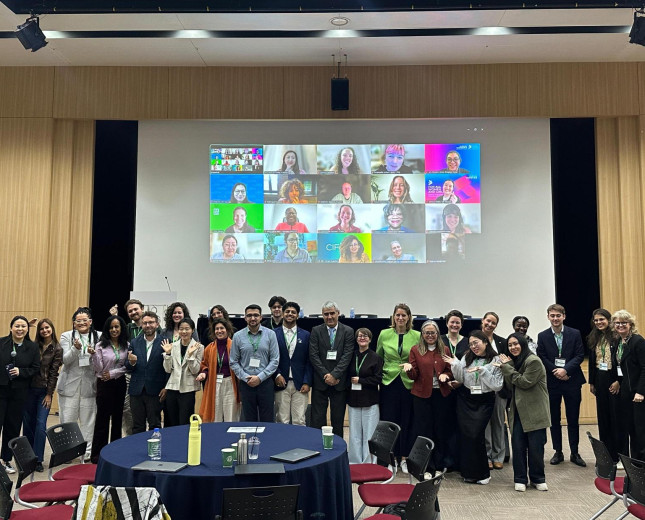
This event will strengthen national capacities for accessing gender-responsive climate finance to support the implementation of the Belém GAP at the national level, by raising awareness on funding windows, readiness support, and tailored opportunities for gender-responsive climate finance by the climate funds and multilateral development banks, on private sector finance for gender-responsive climate action and on innovative finance solutions. The interactive hybrid event encompasses presentations and group work, facilitating an exchange of views on opportunities and challenges.
Agenda
9:00-9:15
Opening remarks and setting the scene: Introducing the Belém GAP and relevant mandates - Fleur Newman and Wiebke Bender, UNFCCC
9:15-10:35
Landscape of climate finance access for gender-responsive climate action – climate funds: Introduction to funding windows and opportunities for gender-responsive climate action, In-country engagement and processes
Landscape of climate finance access for gender-responsive climate action – MDBs: Introduction to funding windows and opportunities for gender-responsive climate action
Wendy Teleki, World Bank
Menka Goundan, Asian-Pacific Resource & Research Centre for Women (ARROW)
Presentations and Q&A
11:30-13:00
A deeper dive: National experiences of accessing gender-responsive climate finance
Dr. Nancy Omolo, Commonwealth Secretariat
Spotlight and group work
13:00-14:00
Lunch break
14:00-14:20
Alternative funding models for gender-transformative climate action
Tara Daniel, Women Environment Development Organization (WEDO)
14:20-15:20
Hands-on examples of innovative gender-responsive finance, including at the sub-national and community level and a private finance perspective: Introduction to existing learning platforms and capacity building programmes, Examples of innovative finance solutions
Cristina Gregorio, United Nations Development Programme (UNDP)
Athena Denise Galao, United Nations Entity for Gender Equality and the Empowerment of Women (UN Women)
Sohna Ngum, Global Green Growth Institute (GGGI)
Ayako Sakamoto, United Nations Environment Programme (UNEP)
Jay Tyler Malette, United Nations Development Programme (UNDP)
Panel discussion
15:20-16:30
Group work
16:30-16:40
Coffee break
16:40-17:00
Report back
17:00-17:45
Group work on barriers and solutions for the region as well as a conversation with the funds