This report synthesizes information from the 127 new NDCs submitted by 154 Parties to the Paris Agreement and recorded in the NDC registry between 1 January 2024 and 31 August 2026, covering about 71 per cent of total global emissions in 2019.
While the report shows that implementation of the Paris Agreement is delivering significant progress towards its goals, particularly in terms of mainstreaming climate in policymaking, it also shows that collective progress in lowering projected emissions remains substantially off track from the reductions required by the science to keep the goal of limiting temperature rise to 1.5 °C this century within reach and to keep temporary overshoot as short and shallow as possible.
In accordance with the Paris Agreement, each Party is to prepare, communicate and maintain, every five years, successive NDCs that it intends to achieve and each successive NDC will represent progression reflecting the Party’s highest possible ambition and be informed by the outcomes of the GST. The communicated NDCs are to be recorded in the NDC registry, maintained by the secretariat.
Further, under the Paris Agreement, in communicating their NDCs, Parties are to provide the information necessary for clarity, transparency and understanding in accordance with decision 1/CP.21 and any relevant decisions of the CMA.
COP 21 decided that Parties shall submit their NDCs to the secretariat at least 9–12 months in advance of the relevant CMA session with a view to facilitating the clarity, transparency and understanding of the NDCs, including through a synthesis report prepared by the secretariat.
CMA 1 adopted further guidance on the information necessary for clarity, transparency and understanding of NDC. It emphasized that the guidance is without prejudice to the inclusion of components other than information on mitigation in an NDC and decided that, in communicating their second and subsequent NDCs, Parties shall provide the information necessary for clarity, transparency and understanding as applicable to their NDCs.
CMA 3 requested the secretariat to annually update the NDC synthesis report and to make it available to the CMA at each of its sessions.
CMA 5, reaffirming the nationally determined nature of NDCs and Article 4, paragraph 4, of the Paris Agreement, encouraged Parties to come forward in their next NDCs with ambitious, economy-wide emission reduction targets, covering all GHGs, sectors and categories and aligned with limiting global warming to 1.5 °C, as informed by the latest science, in the light of different national circumstances. It also encouraged Parties to communicate in 2025 their NDCs with an end date of 2035, pursuant to paragraph 2 of decision 6/CMA.3.
This report synthesizes information from the 127 new NDCs, representing 154 Parties to the Paris Agreement, recorded in the NDC registry between 1 January 2024 and 31 August 2026. Three NDCs received shortly after the cut-off date for the reporting period are included in this version of the NDC synthesis report to reflect as many recently submitted NDCs as possible.[LK2.1]
The guidance on the information necessary for clarity, transparency and understanding of NDCs was used as a general framework for synthesizing the relevant information contained in the communicated NDCs, which was supplemented by the synthesis of other information included in the NDCs but not covered by the guidance.
This report covers information communicated by Parties in their new NDCs and the synthesized information is presented for all those Parties taken together. It also provides, where possible, a comparison between those Parties’ previous and new NDCs.
The approach to and methods for estimating projected emission levels resulting from NDC implementation are described in a separate technical document.
A total of 92 per cent of Parties provided the information necessary for clarity, transparency and understanding of their NDCs in accordance with Article 4, paragraph 8, of the Paris Agreement and paragraph 27 of decision 1/CP.21.
Furthermore, all Parties provided other information, such as on policy frameworks, gender, children and youth, Indigenous Peoples and local communities, ACE, non-Party stakeholder engagement, international cooperation, the outcomes of the GST, just transition, Article 6 of the Paris Agreement, forests, the ocean, mitigation co-benefits, adaptation, domestic mitigation measures, and means of implementation necessary for NDC implementation.
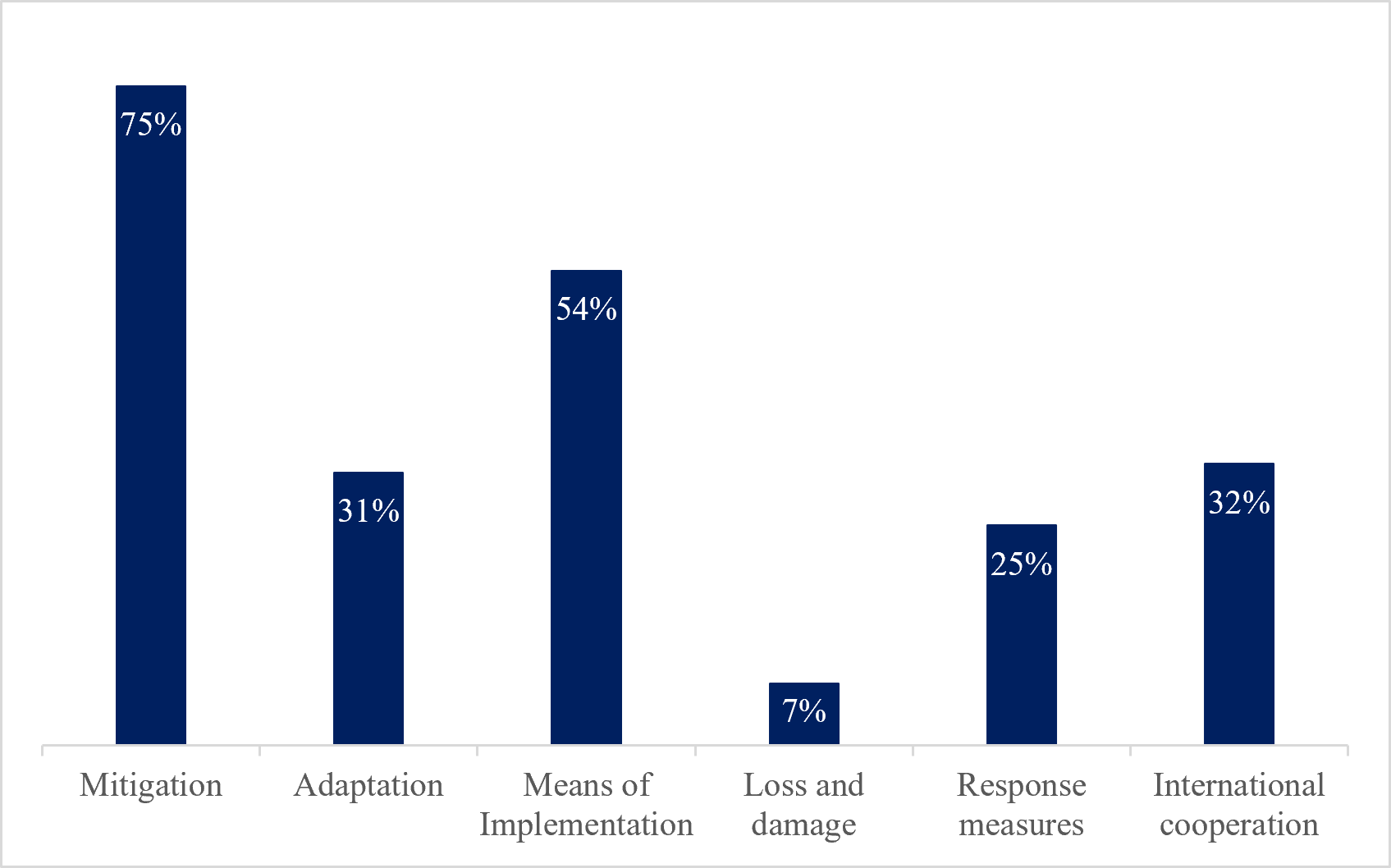
Parties widely recognized and positively responded to the outcomes of the first GST in the new NDCs: 90 per cent of Parties indicated that their new NDCs were informed by the findings of and calls arising from the first GST, with 82 per cent providing information supporting that claim. In terms of considering the GST outcomes in their NDCs, Parties referenced enhanced elements of mitigation (75 per cent), adaptation (31 per cent), means of implementation (54 per cent), loss and damage (7 per cent), response measures (25 per cent) and international cooperation (32 per cent), as well as cross-cutting elements such as just transition, stakeholder engagement and gender-responsiveness. Some Parties indicated how implementation of the targets, commitments and actions in their NDCs will contribute to global efforts in relation to tripling renewable energy capacity globally and doubling the global average annual rate of energy efficiency improvement by 2030; transitioning away from fossil fuels in energy systems; conserving, protecting and restoring nature and ecosystems; promoting sustainable lifestyles and sustainable patterns of consumption and production; and enhancing efforts towards achieving the global goal on adaptation.
Shares of Parties that referred to elements of the outcomes of the first global stocktake in their nationally determined contributions
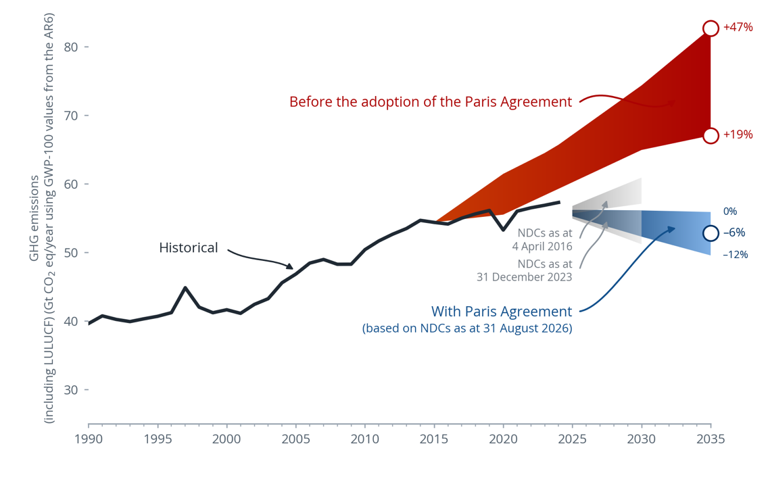
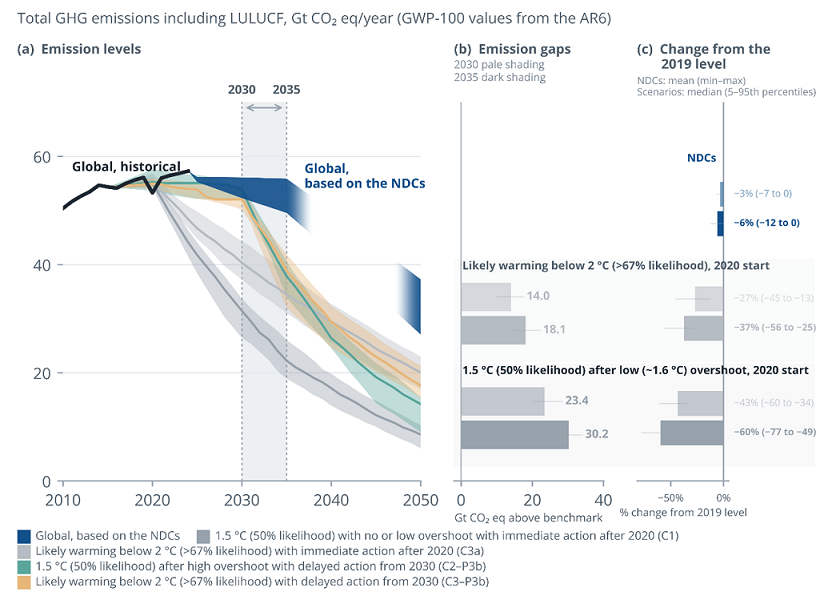
With regard to GHG emission reductions, the total global GHG emission level, including LULUCF, resulting from the implementation of Parties’ new NDCs is projected to peak and decline by 2035, reaching on average 6 (ranging from 0 to 12) per cent below the 2019 level. Full implementation of all conditional elements of new NDCs would mean lower emissions by 3.5 (ranging from 3.3 to 3.6) Gt CO2 eq in 2035 compared with the implementation of only unconditional elements of the NDCs, resulting in peaking of global GHG emissions before 2030 and an average emission reduction of around 9 (ranging from 6 to 12) per cent below the 2019 level by 2035. Most of the new NDCs are linked to the Parties’ long-term decarbonization targets and development pathways, including the net zero targets communicated in NDCs or LT-LEDS, which involve reaching net zero emissions by between 2040 and 2070, with the majority for 2050. Implementation of NDCs and these long-term targets implies best-estimate warming of 1.7–2.3 °C by the end of the century, well below the worst-case warming scenarios considered before the adoption of the Paris Agreement. However, returning warming to 1.5 °C would require substantial additional GHG emission reductions in the coming years.
Projected range of greenhouse gas emission levels based on the new nationally determined contributions compared with 'business as usual' scenarios before the adoption of the Paris Agreement
Credit: UN Climate Change
Projected range of global emission levels in 2035 in comparison with scenarios of limiting warming to 1.5°C and 2°C
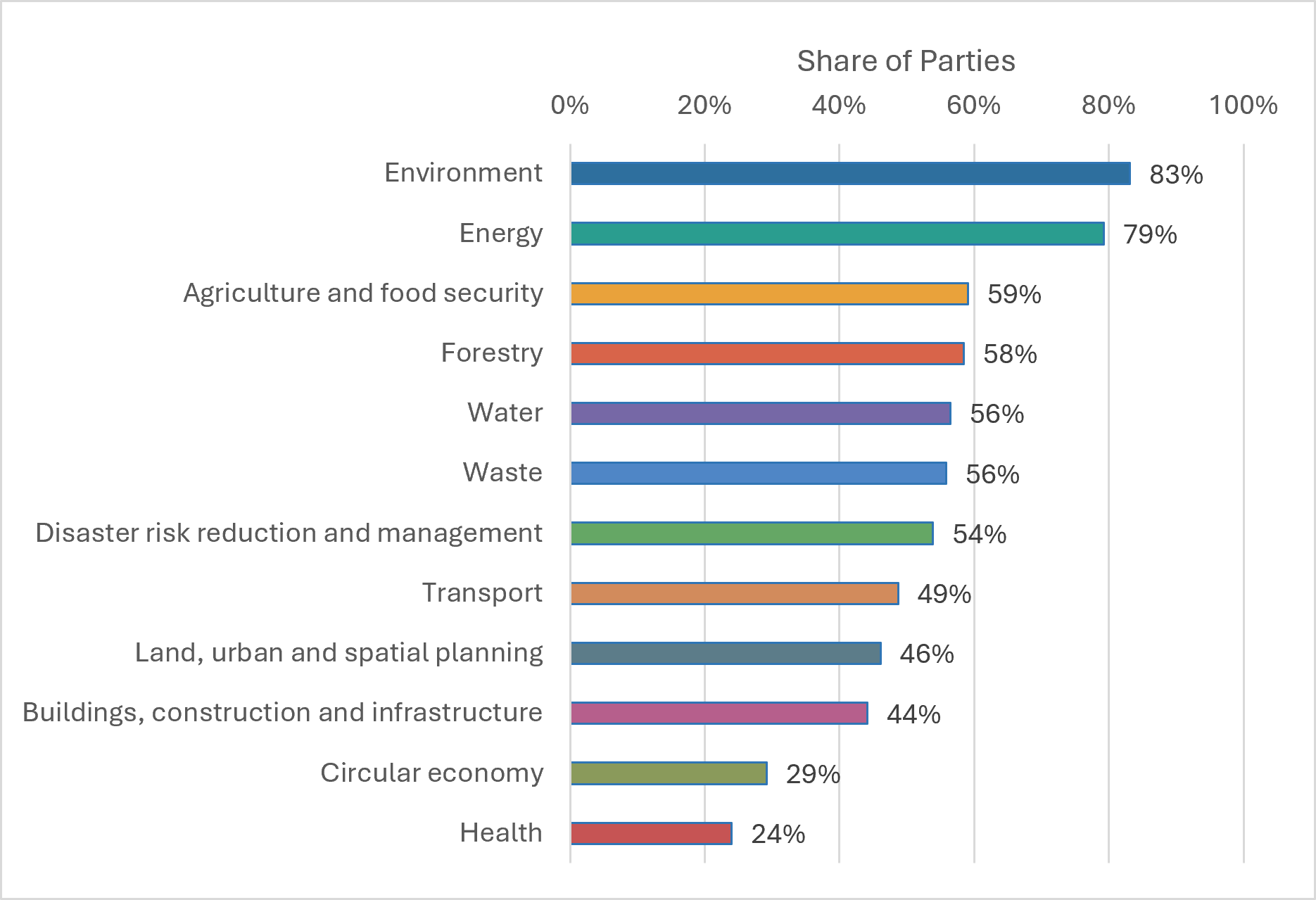
Parties have strengthened the legislative and policy foundations for implementing their NDCs. Overall, 98 per cent of Parties provided information on the legislative and policy frameworks that facilitate NDC implementation. The nature of such frameworks varies across Parties and includes acts, laws and decrees as well as policies, strategies, plans and programmes. The adoption of comprehensive climate change acts, laws or decrees that establish the legal framework for NDC implementation was pointed to by 45 per cent of Parties. On the policy side, 47 per cent of Parties referred to their national climate change policies and the same share referred to their national overarching climate change plans and strategies as important instruments for supporting NDC implementation. Further, 96 per cent of Parties reported on legislative and policy instruments that contribute to NDC implementation in key sectors such as energy, environment, water, waste, agriculture and food security, forestry, disaster risk reduction and management, health, urban and spatial planning, transport, and buildings, construction and infrastructure. Among these, the environment sector stands out, with 83 per cent of Parties providing information on environmental legal and policy instruments containing climate-related components. Climate change considerations have also been incorporated into sustainable development frameworks: 74 per cent of Parties highlighted sustainable development legislation, agendas, strategies and plans, including national development plans and green growth strategies, as instruments that underpin the legal and policy frameworks that facilitate NDC implementation. Regarding governance, 94 per cent of Parties identified entities or arrangements for coordinating NDC preparation, 93 per cent reported undertaking formal or structured stakeholder consultations in relation to their NDCs, and 91 per cent provided information on arrangements for facilitating NDC implementation.
Share of Parties that reported legislative and policy instruments that contribute to the implementation of their nationally determined contributions, by key sector
Parties are increasingly embedding climate action within a whole-of-society and whole-of-economy approach, reflected in stronger engagement of non-Party stakeholders and participation in voluntary efforts, initiatives and coalitions. The new NDCs reflect a deepening and more structured engagement of non-Party stakeholders in climate action. An increasing number of Parties are involving subnational entities, the private sector and civil society in both the design and implementation of NDCs. Notably, 98 per cent of Parties reported engagement of non-Party stakeholders in NDC implementation, up from 70 per cent in the previous NDCs. Subnational entities are increasingly involved as partners in planning, implementing and monitoring climate action, helping to embed national goals into local plans for coherent implementation. The private sector is often positioned as a co-implementer and/or financier, contributing through innovation, partnership and mobilization of investment. Civil society and academia play vital roles in shaping inclusive policies and providing scientific expertise. Parties are collaborating with non-Party stakeholders through voluntary efforts, initiatives and coalitions to mobilize resources for and scale up climate action, and reported in their NDCs that enhanced enabling environments, such as through appropriate incentives, regulatory frameworks and sectoral road maps, are supporting stakeholder contributions. This evolution from broad stakeholder consultation to multi-stakeholder implementation underscores an increasing whole-of-society and whole-of-economy approach to climate action, thus signalling alignment with the outcomes of the first GST and reinforcing the importance of collaborative climate governance.
Gender integration into NDCs is advancing, with Parties increasingly considering gender in promoting inclusive and effective climate action. In the new NDCs, 92 per cent of Parties provided information related to gender and 79 per cent affirmed that they will take gender into account in implementing the NDCs. Of the Parties that referenced gender, 12 per cent had not referred to gender previously in their NDCs and 45 per cent considered gender to a similar extent to previously. Of the Parties that referenced gender in their previous NDCs, 29 per cent elaborated more on the topic in their new NDCs.
Shares of Parties that referred to gender in the previous and new nationally determined contributions
Credit: UN Climate Change
The new NDCs show increased recognition of Indigenous Peoples and local communities as essential partners in climate action, highlighting their knowledge systems, participation and leadership. A total of 62 per cent of Parties reported an increased focus on the vital role of Indigenous Peoples and local communities in climate adaptation and mitigation, compared with 55 per cent previously. Parties not only acknowledged the particular climate change vulnerabilities of Indigenous Peoples and local communities but also emphasized the importance of strengthening climate action through integration of traditional knowledge, knowledge of Indigenous Peoples and local knowledge systems and the increased participation of these groups in climate leadership. Parties highlighted the benefits of combining traditional and modern practices while ensuring the participation and leadership of Indigenous Peoples and local communities in climate efforts. Adaptation action involving Indigenous Peoples and local communities includes developing community-based adaptation plans; implementing measures related to terrestrial and ocean ecosystems, food security, water resources and disaster risk management; and using indicators to monitor adaptation progress. Mitigation action involving Indigenous Peoples and local communities includes measures related to sustainable waste and forestry management, mangrove restoration, low-carbon maritime transport, solar-powered irrigation and clean cooking solutions.
Parties provided clearer and more detailed information than previously on ACE in the new NDCs. All Parties provided information on using at least one ACE element to promote implementation of mitigation and adaptation activities, generally communicating more clearly, and in more detail, than in previous NDCs on general principles, past achievements, future commitments, and needs and gaps in relation to ACE.
In the new NDCs, 92 per cent of Parties (compared with 72 per cent previously) included information, generally more clearly and in more detail than previously, on how children and youth have been or will be considered in NDC development and implementation, reflecting a stronger commitment to meaningful inclusion, with enhanced recognition of the role of children and youth as agents of change.
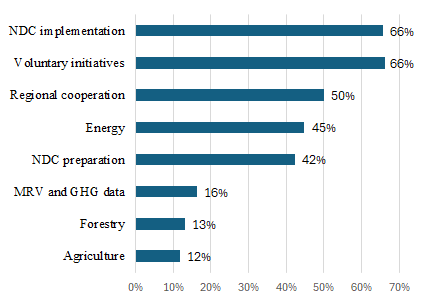
Parties reaffirmed in their new NDCs their strong commitment to climate multilateralism under the Convention and the Paris Agreement, recognizing international cooperation as indispensable for strengthening climate action and achieving the goals of the Paris Agreement to avert the worst human and economic impacts of global warming. International cooperation was emphasized as critical for mobilizing resources and bridging the gap between NDC ambition and implementation by 97 per cent of Parties. In addition to fulfilling commitments under the Convention and the Paris Agreement, such as NDCs, Parties described their engagement with international partners to promote effective and inclusive climate action through voluntary cooperation initiatives, regional collaboration and sectoral activities such as energy transition.
Shares of Parties that referred to areas of international cooperation in their nationally determined contributions
A total of 82 per cent of Parties considered just transition in preparing their NDCs and the majority of them plan to integrate consideration of just transition into NDC implementation. It is also evident that Parties considered just transition across all aspects of their NDCs, including mitigation, adaptation and means of implementation, and for a variety of sectors and stakeholders, which points to a whole-of-economy and whole-of-society approach to considering just transition. Some Parties contextualized just transition as helping to ensure that the shift to low-carbon, climate-resilient economies does not exacerbate existing or create new inequalities in societies, thus enabling climate action that is socially inclusive and economically empowering. Indicators for tracking just transition as part of NDC implementation were explicitly included or envisaged by 13 per cent of Parties, some of which proposed integrating them into their MRV systems. The share of Parties addressing just transition has continued to grow. Compared with the previous NDCs, more Parties included chapters on just transition in the new NDCs and described relevant institutional arrangements, implementation initiatives and means of tracking progress.
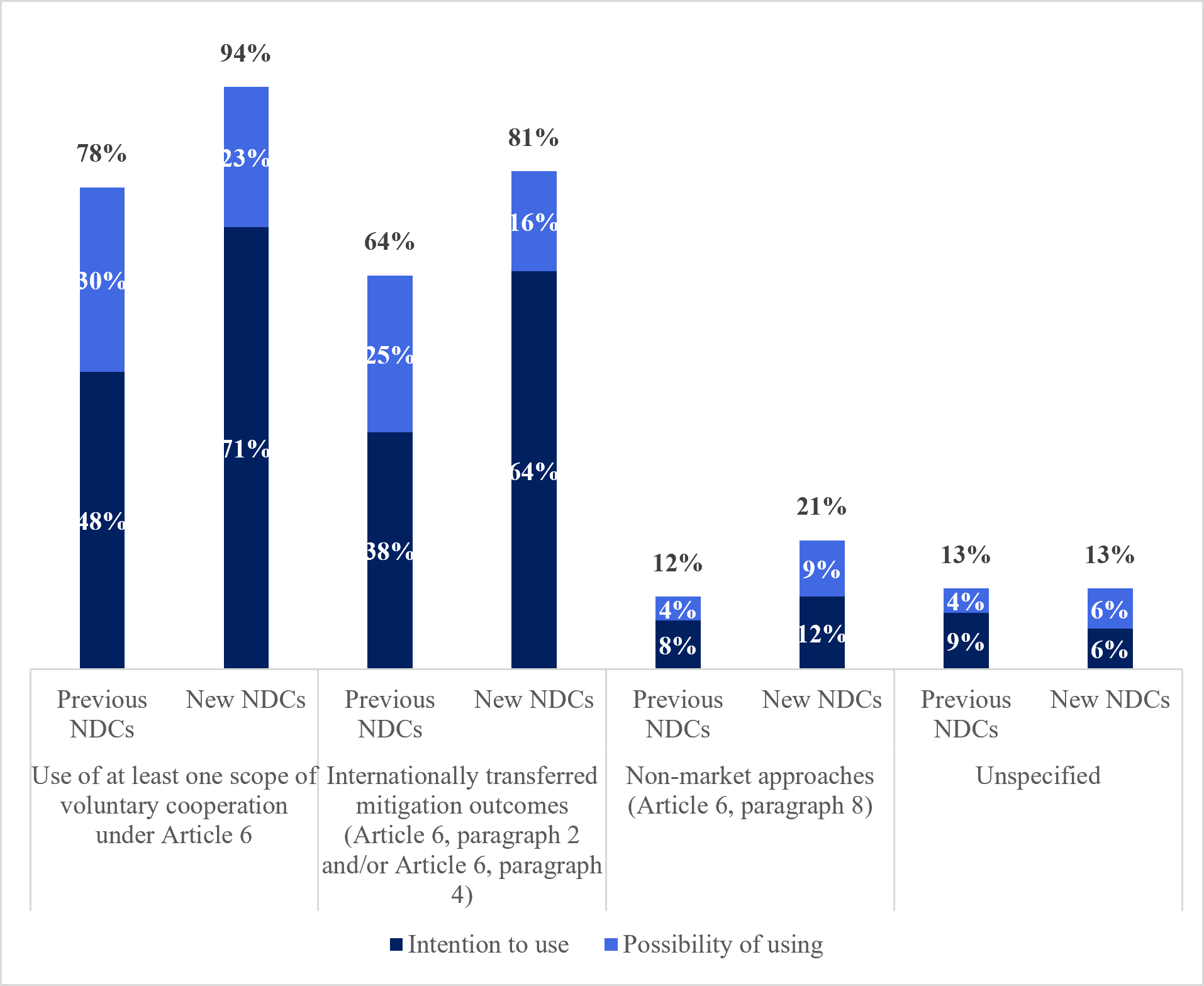
The increase in the share of Parties indicating their intention to participate in voluntary cooperation under Article 6 of the Paris Agreement to contribute to reaching their climate targets continued in the new NDCs. In total, 94 per cent of Parties indicated that they plan to or may use at least one of the scopes of voluntary cooperation under Article 6, in comparison with 78 per cent in the previous NDCs. Specifically, 81 per cent of Parties referred to the use of internationally transferred mitigation outcomes under Article 6, paragraphs 2 and 4; 21 per cent expressed interest in participating in non-market approaches under Article 6, paragraph 8; and 13 per cent mentioned general use of voluntary cooperation under Article 6 without specifying a particular scope. The new NDCs also show that Parties are increasingly translating their intention to participate in voluntary cooperation under Article 6 into more concrete approaches, including by identifying priority areas, sectors or activities, and setting quantitative limits or targets for cooperation, specifying criteria governing voluntary cooperation, and putting in place the legal, regulatory and institutional frameworks necessary for the implementation of voluntary cooperation under Article 6.
Shares of Parties that indicated in the previous and new nationally determined contributions the intention to use or possibility of using specific scopes of voluntary cooperation under Article 6 of the Paris Agreement
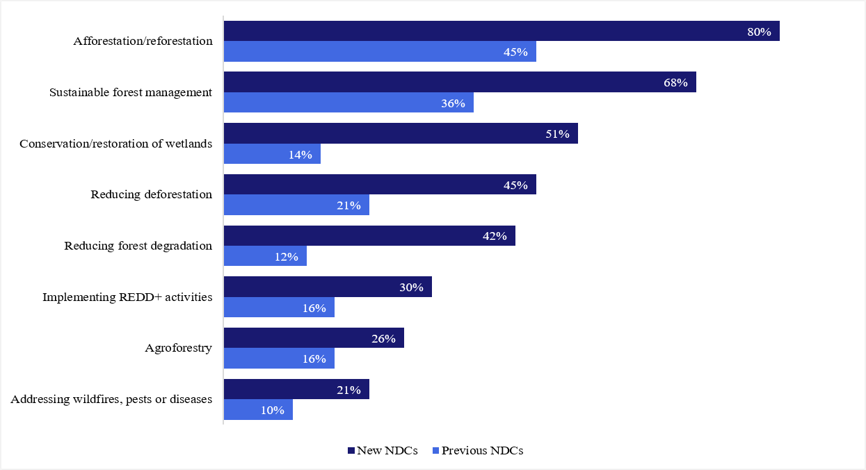
Recognizing the important role of forests in achieving the goals of the Paris Agreement, Parties have strengthened integration of forest-related climate action in the new NDCs, with 90 per cent of Parties including the LULUCF sector in economy-wide emission reduction targets and many defining separate LULUCF-specific targets. The outcomes of the first GST are informing the forest-related mitigation efforts of a number of Parties, including in the context of enhanced action to halt and reverse deforestation and forest degradation by 2030. More Parties than in the previous NDCs reported a broad range of forest-related climate action, including afforestation and reforestation, sustainable forest management, reducing deforestation and forest degradation, conservation and restoration of high-carbon wetlands, agroforestry and wildfire management. Developing country Parties highlighted the role of REDD+ implementation, encompassing REDD+ strategies, safeguards and results-based payments, in supporting forest-related mitigation efforts. In general, Parties emphasized the synergies between forest-related mitigation efforts and action towards achieving adaptation, biodiversity conservation and land restoration objectives, as well as co-benefits in terms of ecosystem resilience, sustainable livelihoods and green jobs. Parties outlined measures related to forest policy frameworks, forest monitoring systems, and relevant capacity-building and inclusive participation, with some identifying financing needs and highlighting the importance of international support in this regard.
Comparison of the shares of Parties that referred to forest-related climate action in the previous and new nationally determined contributions
Credit: UN Climate Change
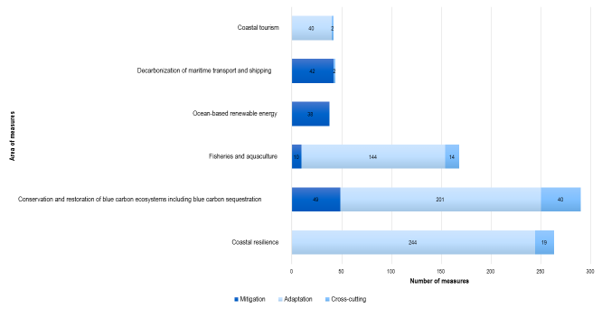
Parties continued to report a significant increase in ocean-based climate action compared with the previous NDCs, with 78 per cent of Parties including in the new NDCs at least one explicit reference to the ocean. Of the 69 per cent of Parties that reported finance-related needs for ocean-based action, 54 per cent have made conditional commitments, mostly small island developing States, to implement ocean-related climate measures. Ocean-based adaptation remains prominent, with measures reported relating to coastal resilience-building through integrated coastal zone management, marine spatial planning, strengthening the resilience of coastal and marine tourism and responding to sea level rise, conservation and restoration of blue carbon ecosystems through nature-based solutions and marine protected areas, and fisheries and aquaculture. Though fewer in number, reported ocean-based mitigation measures show increasing innovation and sectoral diversity, spanning renewable energy deployment, blue carbon sequestration, fisheries and aquaculture, and decarbonization of maritime transport.
Number of ocean-based adaptation, mitigation and cross-cutting measures reported in Parties’ nationally determined contributions, by area of measure
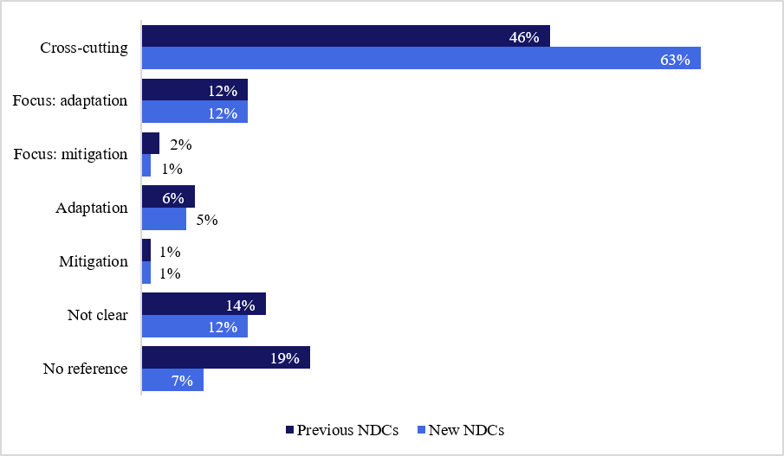
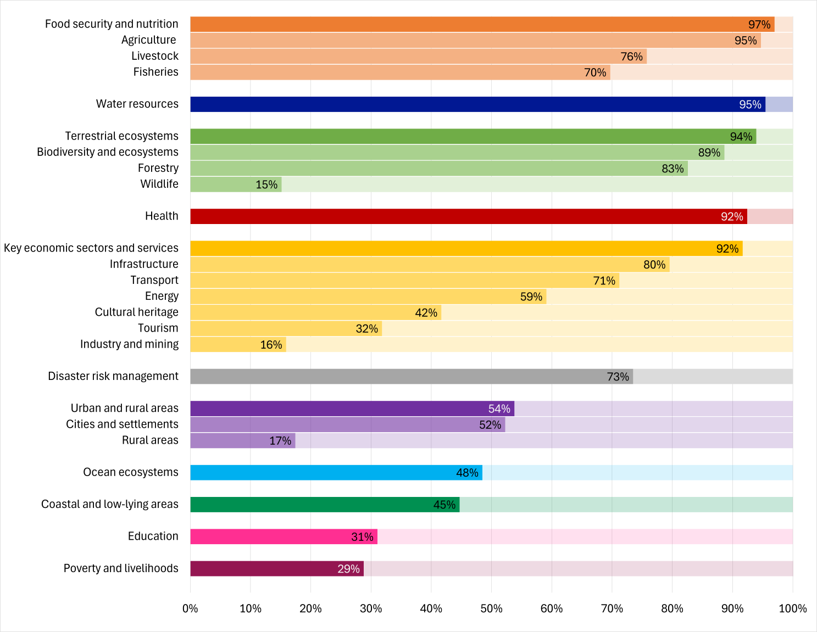
Adaptation is firmly embedded in the new NDCs, with most Parties reporting advancing adaptation planning and implementation while also addressing loss and damage. A total of 86 per cent of Parties included an adaptation component in the new NDCs, focusing on the adaptation priority areas of food security and nutrition, water resources, terrestrial ecosystems, health, key economic sectors, disaster risk management, urban and rural areas, ocean ecosystems, coastal and low-lying areas, education, and poverty and livelihoods. Parties demonstrated progress across several areas of adaptation, including in strengthening adaptation-relevant research, data and monitoring to support evidence-based action; developing and implementing adaptation-related policy frameworks; formulating and advancing NAPs; aligning adaptation strategies with the United Arab Emirates Framework for Global Climate Resilience; defining time-bound adaptation targets and indicators for tracking progress; and identifying synergies between adaptation and mitigation efforts, and linkages between adaptation action and efforts towards achieving the SDGs. A total of 92 per cent of Parties with an adaptation component referred to loss and damage in the new NDCs, compared with 56 per cent in the previous NDCs, outlining observed and projected loss and damage in various key sectors and describing planned or implemented measures for averting, minimizing or addressing it.
Shares of Parties that refer in the adaptation components of their nationally determined contributions to adaptation priority areas and sectors
Credit: UN Climate Change
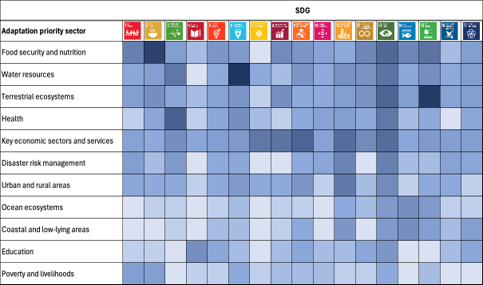
Synergies between efforts in adaptation priority sectors and efforts towards the Sustainable Development Goals identified in the adaptation components of nationally determined contributions
Cost-effective domestic mitigation measures featured prominently across the new NDCs, while aggregated targets for many global efforts and mitigation options remain below current implementation levels. Almost all Parties (99 per cent) communicated domestic mitigation measures in the new NDCs, with 90 per cent reporting measures for at least one of the six low-cost mitigation options with the highest mitigation potential (more than 2 Gt CO2 eq/year) in 2035, such as solar energy and industrial electrification. Of the 99 per cent of Parties that reported mitigation measures relevant to at least one global effort or mitigation option covered in recent CMA decisions, such as tripling global renewable energy capacity by 2030, 82 per cent also reported quantitative targets relevant to at least one such effort or option. While aggregated targets for some efforts and options are comparable to, or exceed, current global implementation levels, many remain well below current levels (e.g. 3 TW of aggregated renewable power capacity targets by 2030, compared with 5.2 TW of global renewable power capacity in 2025).
However, announced domestic pledges and projects indicate potential for greater ambition and implementation than reflected in the NDCs. In addition to the information in the NDCs, some Parties have announced domestic pledges and projects relevant to the above-mentioned global efforts, including tripling global renewable energy capacity by 2030 and expanding nuclear and CCUS capacity. Collectively, ambition reflected in these pledges and projects significantly exceed the aggregated targets reflected in the NDCs for the same global efforts (e.g. by 2.5 times for renewable energy capacity by 2030), indicating that the submitted NDCs do not fully cover domestically announced pledges and projects. Some Parties may nationally determine that progress in these global efforts, together with enhanced international cooperation and support, contributes to the potential for accelerated implementation and enhanced ambition.
Parties placed greater emphasis on measures for creating enabling conditions for renewable energy deployment, energy efficiency improvement and electrification in their NDCs. Measures to support renewable energy deployment and reduce related barriers were reported more frequently, with 70 per cent of Parties reporting measures to improve electricity grids and 56 per cent reporting measures to expand energy storage, up from 51 and 33 per cent respectively in the previous NDCs. Similarly, measures to support energy efficiency improvement and electrification were reported more frequently, with 73 per cent of Parties reporting measures relating to on-site renewables production in buildings, 50 per cent including measures to expand or improve charging infrastructure for road transport and 40 per cent reporting measures to improve material efficiency in industry compared with 32, 32 and 14 per cent respectively in the previous NDCs.
Accelerating reductions in CH4 emissions can be particularly effective in limiting peak global warming in the near term, and Parties widely reported measures to reduce CH4 emissions across key sectors. A total of 92 per cent of Parties included CH4 among the GHGs covered by their NDCs. Measures to reduce CH4 emissions from energy supply, including limiting flaring and venting and implementing CH4 leak detection and repair requirements, were communicated by 62 per cent of Parties. In addition, 77 per cent reported measures to reduce CH4 and N2O emissions from agriculture, while 89 per cent provided information on measures to reduce CH4 emissions from waste.
Against the backdrop of recent energy crises, 65 per cent of Parties highlighted the contribution of mitigation measures to energy security, particularly through renewable energy deployment and energy efficiency improvement. Of those Parties, 29 per cent identified renewable energy generation as a key supply-side driver of energy security by replacing imported fuels with domestic energy sources and thereby lowering expenditure on fuel imports, reducing fuel price volatility and diversifying the electricity mix. In parallel, 16 per cent emphasized energy efficiency improvement as a key demand-side driver by reducing fuel import needs and peak electricity demand and thereby avoiding the need for additional electricity generation capacity and grid reinforcement, while also helping to alleviate energy poverty through lower energy expenditure.
An increasing trend in NDCs mentioning mitigation co-benefits resulting from adaptation action and/or economic diversification plans continues to be observed. NDCs also continue to increasingly mention plans to address impacts arising from mitigation actions by embedding consideration of just transition in the NDCs and assessing the distributional impacts of mitigation actions among different groups of society, thus indicating growing recognition of the importance of just transition.
Shares of Parties that referred to domestic mitigation measures for priority areas and mitigation options with high mitigation potential costing USD 200/t CO2 eq in 2035 in their nationally determined contributions
Credit: UN Climate Change
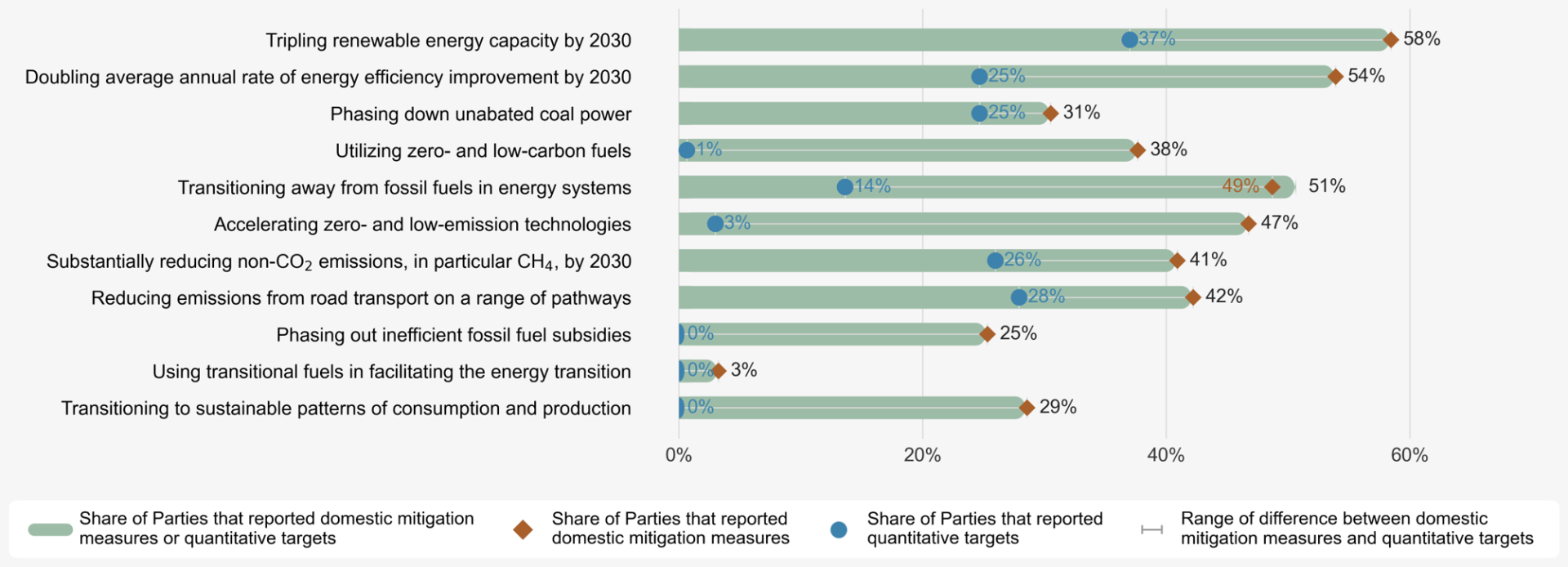
Shares of Parties that reported domestic mitigation measures or quantitative targets with direct references to energy-related global efforts or mitigation options in their nationally determined contributions
Credit: UN Climate Change
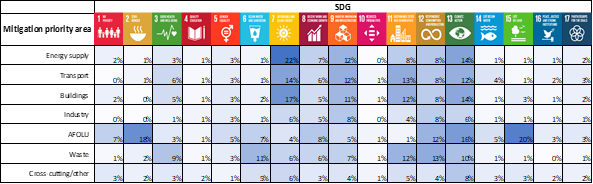
Shares of Parties that referred to synergies between efforts in mitigation priority areas and efforts towards the Sustainable Development Goals in their nationally determined contributions
Information on climate finance was included by 95 per cent of Parties in the new NDCs, most often in terms of Parties needing support for NDC implementation, with fewer Parties referencing their role as finance providers. Costed needs for NDC implementation were presented by 19 per cent more Parties for the first time in the new NDCs, while 13 per cent more Parties than previously provided information on climate finance needs for adaptation. Parties reported on broader sectoral coverage of their needs and efforts to integrate climate finance into national budgeting and policy frameworks. Nearly 66 per cent of Parties referenced efforts to develop climate financing strategies or investment plans to support NDC implementation. Parties reporting climate finance needs provided cost estimates ranging from aggregate totals to sector-specific breakdowns, amounting to USD 3,607–3,614 billion overall. Mitigation finance needs, estimated at USD 2,511 billion, are concentrated in the energy (including transport and power generation), AFOLU, IPPU and waste sectors; while adaptation finance needs, estimated at USD 893–898 billion, are focused on the agriculture, water, infrastructure, health, biodiversity, coastal zone, marine fisheries, tourism, and disaster risk management sectors. The time frames for costed estimates in the NDCs range from 2021 to 2040, with most of the costed needs (72 per cent) covering the period from 2025 or 2026 to 2035. A total of 81 per cent of the Parties that reported costed needs identified a mix of international and domestic sources of finance needed, including public and private sources. Parties noted that international support is sought through bilateral channels, multilateral climate funds, multilateral development banks and private sector investment. Parties reported that they are exploring the use of sovereign instruments including public and private green and sustainability bonds, as well as innovative finance such as maritime levies, de-risking instruments like credit guarantees, and green credit lines.
With regard to technology development and transfer, and innovation, 98 per cent of Parties provided information, at varying levels of detail, on their technology priorities and/or needs for climate action in the new NDCs, around 50 per cent of which included both qualitative and quantitative aspects. Around 76 per cent of Parties mentioned specific information on technology-related measures, often from a sectoral perspective, while others mentioned technology more generally. A total of 92 per cent of Parties outlined technology priorities and/or needs in support of mitigation and 80 per cent in support of adaptation. The predominant share of the needs and priorities for mitigation are related to the energy sector, followed by the AFOLU and IPPU sectors, which were mentioned with a similar frequency, and the transport sector, all of which were cited by a majority of Parties. In addition to technology measures related to agrifood systems and the water sector, which were among the most frequently cited priorities for adaptation in the previous NDCs, a majority of Parties referred to technology measures related to ecosystems and climate monitoring and observations in the new NDCs, with the latter often combined with geospatial tools and digital solutions, including use of artificial intelligence. The share of Parties (71 per cent) referring to measures related to technology innovation, research and demonstration for achieving their climate targets has more than doubled since their previous NDCs.
Capacity-building and institutional strengthening are increasingly being recognized as important for NDC implementation. Of the 94 per cent of Parties that referenced capacity-building in the new NDCs, 74 per cent indicated that NDC implementation is contingent upon receiving capacity-building support. Needs were identified across adaptation, mitigation and cross-cutting areas, including transparency, technology deployment and access to climate finance. A total of 33 per cent of Parties highlighted capacity needs related to addressing loss and damage and accessing related funds, which were not reflected in their previous NDCs. Parties referred to institutional arrangements and stakeholder engagement as part of their capacity-building efforts.