Organizers
Background
Processes for building climate resilience, managing climate-related risks, and transitioning to low-carbon development must be inclusive and participatory and include gender-transformative measures, empowering women, youth, and vulnerable groups to become agents of change and benefit equally. Channelling financial resources and technical capacity to generate equitable gender and social benefits through climate action and empower youth and vulnerable groups is essential to capitalize on the socio-economic resourcefulness of the whole of society and enable an inclusive, resilient, and gender-just transition.
The session will highlight capacity-building needs and approaches for mainstreaming cross-cutting issues into a just economic transition, including gender, youth empowerment, and elements of Action for Climate Empowerment (ACE). Solutions and case studies include gender mainstreaming into NDCs, comprehensive and participatory risk management mechanisms, climate-friendly and sustainable entrepreneurship, and youth engagement and empowerment through capacity-building and knowledge-sharing related to a just transition.
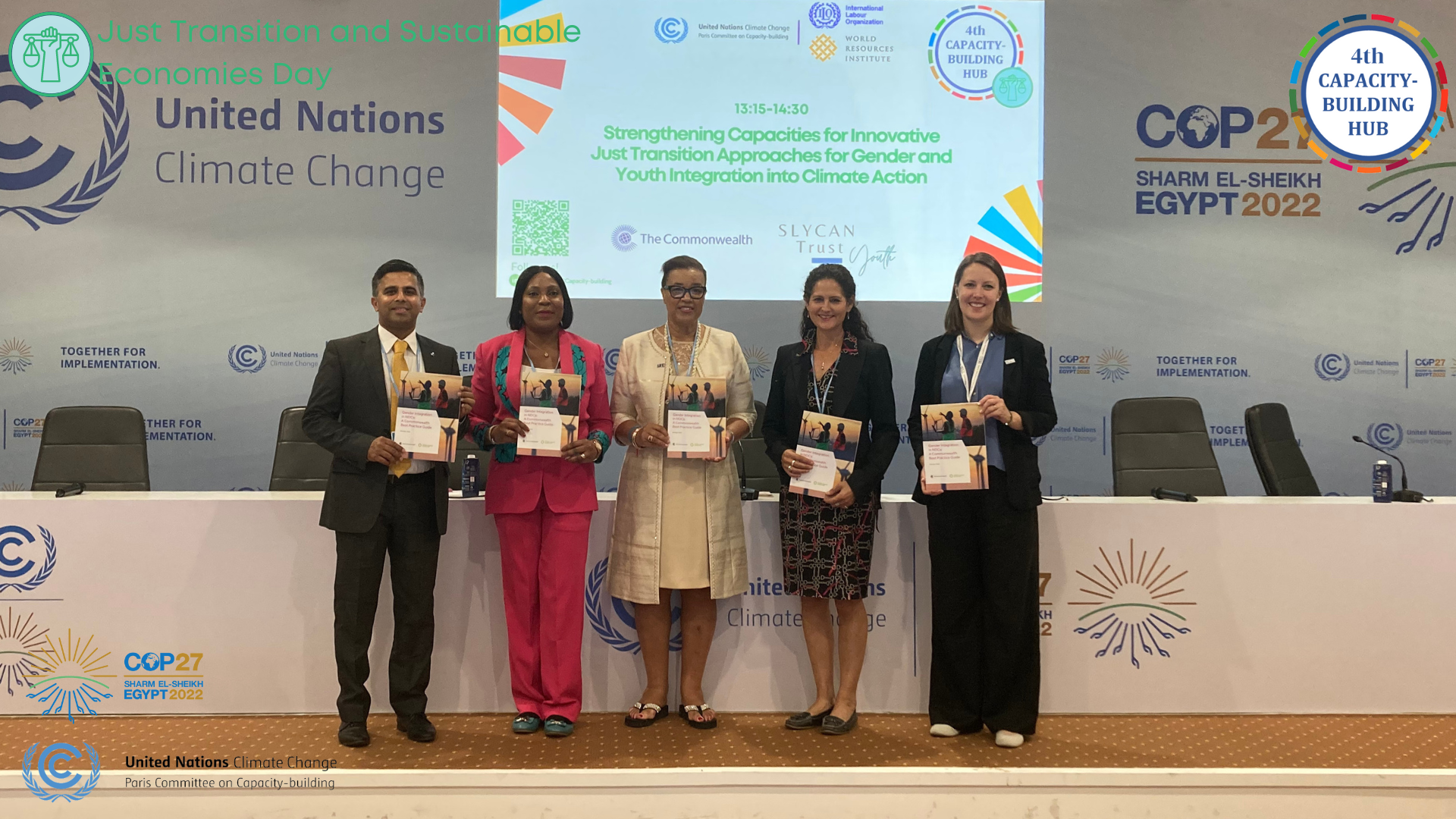
At the event, the Commonwealth Secretariat will also launch a new report titled ‘Gender Integration in NDCs – A Commonwealth Best Practice Guide’ to share practical experiences and examples from the Commonwealth on strengthening capacities and financing for a gender-just transition through climate action within and beyond NDC Implementation. SLYCAN Trust will present the Global Youth Forum on Climate Change, an initiative of SLYCAN Trust Youth to facilitate youth engagement and empowerment through partnerships and collaborations at national and international level.
Objectives
-
To enhance understanding of capacity-building needs for a gender-responsive, inclusive, and innovative just transition towards sustainable, resilient, and climate-friendly economies.
-
To contribute towards an improved understanding and appreciation of best practices and examples for adopting gender responsive, inclusive, participatory, and/or youth-centred approaches to integrate capacity-building towards a just transition in the design and implementation of NDCs and other policy processes.
-
To contribute towards increased knowledge- and experience-sharing as well as networking on practical ways and opportunities for financing a gender-just and risk-informed transition within and beyond NDC implementation, looking at both the public and private sectors.
-
To document innovative approaches and good practices in capacity-building for a just transition and sustainable economies.
-
To launch and raise awareness of the Commonwealth resource, ‘Gender Integration in NDCs – A Commonwealth Best Practice Guide’.
Structure & Speakers
| Time (13.15-14.30) |
Segements & Speakers |
| |
Moderator: Catherine Allison, Gender and Climate Change Consultant, Future Earth Ltd.
Co-Moderators: Catherine Allison, Gender and Climate Change Consultant, Future Earth Ltd. & Vositha Wijenayake, Executive Director, SLYCAN Trust
|
| 5 min |
Welcome and opening remarks
by Vositha Wijenayake, Executive Director, SLYCAN Trust
|
| 15 min |
Launch of the “Gender Integration in NDCs – A Commonwealth Best Practice Guide” by
- The Rt. Hon. Patricia Scotland KC, Secretary General of the Commonwealth
- Uzoamaka Nwamarah, Adviser, Climate Change, Commonwealth Secretariat
- Amanda McKee, Interim Director, Country Engagement, Head of CAEP, NDC Partnership Support Unit
|
| 25 min |
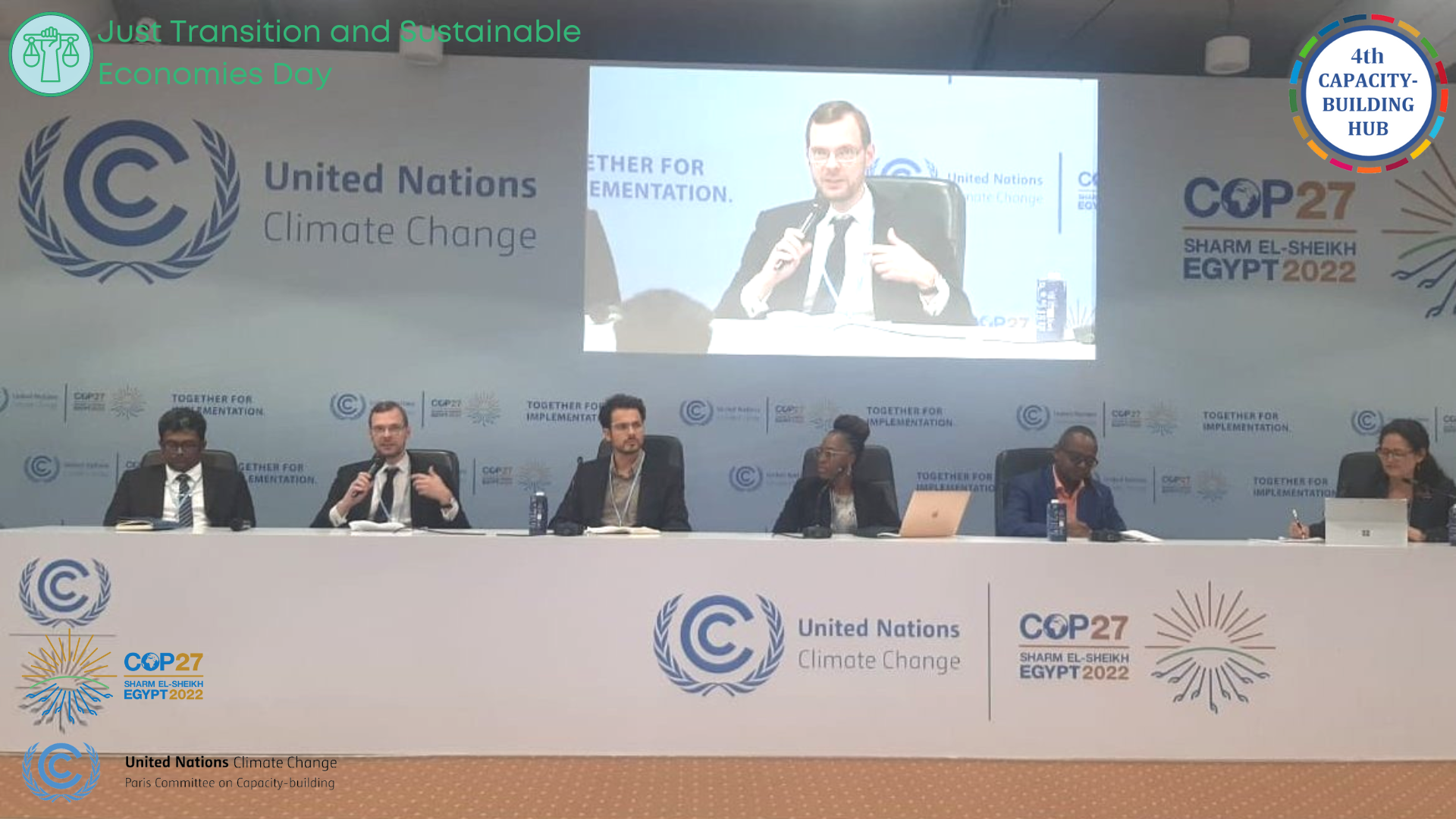
Moderated panel interventions by
- Country Representative, Department of Environment, Antigua and Barbuda (tbc)
- Kavindu Ediriweera, Global Youth Forum on Climate Change
- Dennis Mombauer, Director: Research & Knowledge Management, SLYCAN Trust
- Representative, InsuResilience Global Partnership Secretariat
- Julia Kendal, Senior Policy Advisor, Climate Global Advocacy Team, Tearfund (tbc)
|
| 20 min |
Breakout Groups
Guiding question: What are innovative solutions for building capacities for a just and climate-resilient economic transition?
- Group 1: Policy level – (Facilitator: tbc)
- Group 2: Gender (Facilitator: Carey Bohjanen, Founder, The Rallying Cry)
- Group 3: Youth (Facilitator: Sajani Ranasinghe, Sri Lanka)
|
| 10 min |
Reporting back
- Group rapporteurs – 2 min each (1-2 key takeaways)
&
Closing
by Dr. Ruth Kattumuri, Senior Director, Economic, Youth, and Sustainable Development Directorate, Commonwealth Secretariat
|
Key Outcomes
- Gender-responsive climate action leads to more equitable and effective climate outcomes.
- Channeling financial resources and technical capacity to generate equitable gender and social benefits through climate action and empower youth and vulnerable groups is essential to capitalize on the socio-economic resourcefulness of the whole of society and enable an inclusive, resilient, and gender-just transition.
- Resources and forums such as the Commonwealth Secretariat’s Gender Integration in NDCs: A Commonwealth Best Practice Guide and the SLYCAN Trust’s Global Youth Forum on Climate Change are useful and very practical tools in building capacity and knowledge sharing for a gender and youth just transition towards a low carbon and climate resilient future.
- There is need to increase the quantity and quality of data on youth and gender as the evidence base for policy making and strategic planning and as a tool for analysis of impact outcomes.